

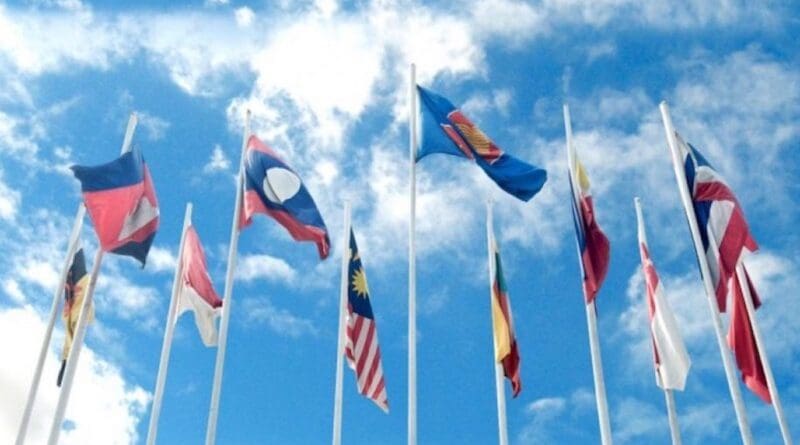
The South China Sea, one of the world’s most contested maritime spaces, continues to draw attention from regional and global actors as they seek to protect and assert their territorial claims and other interests in the region. The complex of historical, security, and economic claims to parts of the South China Sea is a supreme test for ASEAN of its ability to come together to protect the maritime rights and interests of its individual member states while at the same time seeking to promote economic and other cooperation with China and other external parties. The future of South China Sea diplomacy, therefore, will depend entirely on whether ASEAN can move beyond the cautious words of recent years and translate its collective aspirations into a coordinated and operationally robust program of action that enables it to assert and protect its strategic autonomy in the face of an increasingly assertive China.
ASEAN member states have historically struggled to speak as one body. The diverse and often intractable national interests of the individual member states mean that most decisions taken within ASEAN are reached with caution, much to the chagrin of the outside world. Moreover, there are individual member states within ASEAN that are more aligned with China’s goals within the region, such as Cambodia, and in recent times, Vietnam and the Philippines have been actively contesting China’s claims to resources within the sea, while at the same time, trying to maintain and grow their trade with China. It is in this regard that the Cebu Summit of 2026 came to play a historical significance, where for the very first time, ASEAN member states formally recognised and made the recognition operational that fragmented or “dysfunctional” diplomacy amongst its member states would do immense disservice to the collective leverage and bargaining power of ASEAN as a whole. As such, this recognition required to be translated into actions where ASEAN member states would collectively strive to operate as one and also where they would translate their plans of joint maritime patrols into reality.
To ensure maritime stability, in the future, diplomatic efforts have to change from solely negotiating the setting up of operational structures to concentrate immediately on setting up such structures that prevent risky incidents in the first place. The protracted negotiations on a Code of Conduct (COC) of ASEAN and China are of crucial importance. While the 2002 Declaration of Conduct of Parties has, to date, has till today no more than symbolic value, a finalised, binding COC must contain rules on concrete actions to be taken by states and other entities in the SCS that are not only easily comprehensible and generally acceptable but also verifiable and non-compliance sanctionable. Such rules would allow predictable interactions among SCS actors instead of the unpredictable standoffs and escalations of today.
Beyond the many issues already engulfing the South China Sea in the form of geopolitics, the many issues of maritime and environmental, which have heretofore been on the back burner, are now firmly centre stage and are further accentuated by the many multilateral, regional and global interactions taking place across the region. For ASEAN as a whole, its diplomatic posture and strategies must remain acutely tuned to the various external parties currently offering support and assistance to the regional organisation in its many challenges in managing the South China Sea, particularly when viewed through the prism of the organisation’s stated goals in maintaining its centrality in regional affairs and affairs generally. Thus, while certain external parties, such as the Quad and the European Union, for instance, are offering support and assistance to ASEAN in managing the South China Sea, their engagement with ASEAN can only be optimal if ASEAN were to allow them to play a supporting role to the regional organisation and not supplant it.
To this end, the many cooperative initiatives currently taking place among certain coastal states in the region, particularly in the area of coast guard capacity building and in the area of information sharing on maritime developments in the region, are examples of the kind of support and assistance which can be brought to bear by external parties to the region. In this connection, Singapore’s Information Fusion Centre (IFC) is a powerful example of what can be achieved by a regional coastal state through a focused effort at information sharing. Indeed, it is in such cooperative endeavors that ASEAN can most easily remain relevant in the many maritime issues currently besetting the region, given that China is ASEAN’s largest trading partner and that many of the member states are caught in a delicate balancing act between resisting what they see as Chinese aggression in the South China Sea and promoting economic integration with China on the one hand and economic diversification and the seeking of strategic partnerships with other external parties on the other.
In the context of future development of South China Sea diplomacy, the middle powers of Indonesia and Singapore will play critical roles in future developments. Indonesia can function as a neutral convener for the region, while Singapore is advocating a rules-based maritime order through its diplomatic agility. The future of South China Sea diplomacy will be further transformed by advances in information and communication technologies. The open-source data will enable total transparency of all maritime activities by providing irrefutable empirical evidence. This, in turn, will significantly strengthen the collective bargaining position of ASEAN in dealing with China. Thus, the South China Sea does not have to be a permanently contested and contentious geopolitical space. With a swift transformation of ASEAN’s current cautious rhetoric and practices into more operationally robust strategies and measures for risk-reduction and management, the region can be made to develop and prosper stably and peacefully for the long-term.
Source: Eurasiareview
Share:


<p>Time: November 2025<br /> By: WTO and International Trade Group, Legal Department – VCCI</p>
