

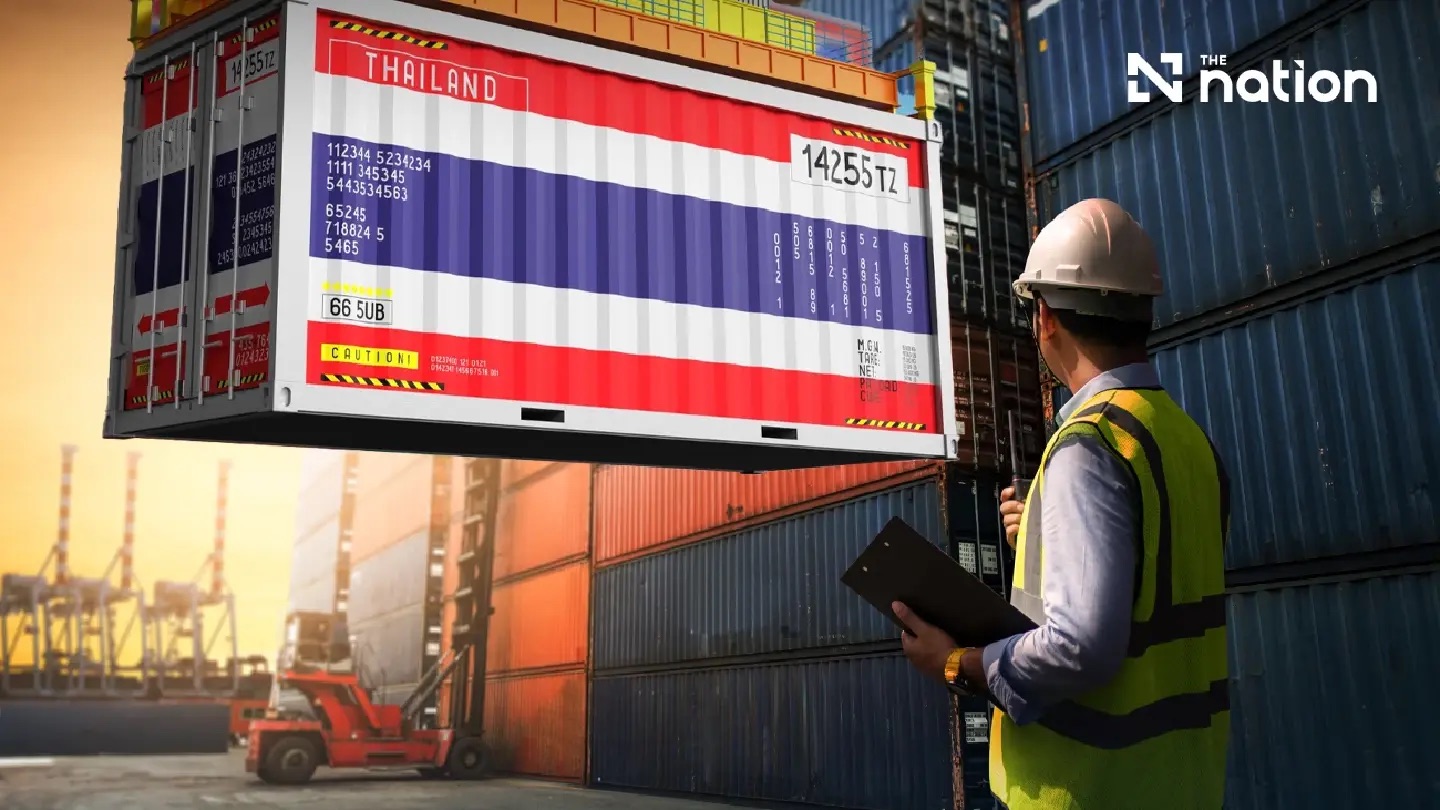
National shippers warn Thai exports face slower growth as risks mount
The Thai National Shippers’ Council (TNSC) expects exports to expand by around 2-4% year on year in the second half of the year, while full-year growth could still reach 3-5% if global trade avoids any major new disruption.
Thanakorn Kasetsuwan, chairman of the TNSC, said Thai exports performed satisfactorily in the first half, helped by front-loaded orders from importers in several countries. Many buyers brought forward purchases to reduce exposure to possible changes in trade measures and import tariffs.
That support, however, is expected to fade in the second half. The council warned that the export growth rate could ease from the first six months as businesses face a more difficult external environment.
Although a peace agreement has been signed between the United States and Iran, uncertainty remains over final negotiations within 60 days, as well as the reopening of the Strait of Hormuz. The council said these issues continue to pose risks to both the global economy and Thailand’s economy.
The most immediate concern is the possibility of wider conflict in the Middle East, which could push up energy prices and increase the cost of international transport.
Thanakorn said logistics volatility would be one of the most important risks to watch. Any blockage or restriction on major shipping routes, particularly the Strait of Hormuz or routes linking Asia and Europe, could rapidly drive up freight rates and cargo insurance premiums.
Such a development would weaken the competitiveness of Thai exporters, especially small and medium-sized enterprises, which have less room to absorb higher costs.
Demand from Thailand’s major trading partners also remains fragile. The United States, the European Union, China and Japan are all facing pressure from slower economic growth, high interest rates and consumer confidence that has yet to fully recover. As a result, orders in some industries may fall short of earlier expectations.
Despite the risks, Thailand still has strengths in several product groups. Food and processed agricultural products, pet food, fruit, health-related goods, rubber and products linked to food security continue to attract steady demand from global markets.
The TNSC also sees opportunities in diversifying export markets. Expanding further into the Middle East, South Asia, Africa and ASEAN would help reduce reliance on traditional major markets and create longer-term trade opportunities.
The council urged the government to keep supporting exports through measures to lower energy and logistics costs, improve trade facilitation, accelerate free trade agreement negotiations with key partners and help Thai businesses reach new markets.
Thanakorn said exports would remain one of the main engines of the Thai economy in the second half, even if growth slows from the first half.
He said the sector still had room to expand if external risks were managed properly and the public and private sectors continued working together to preserve Thailand’s competitiveness.
Source: TheNation
Share:


<p>Time: November 2025<br /> By: WTO and International Trade Group, Legal Department – VCCI</p>
