

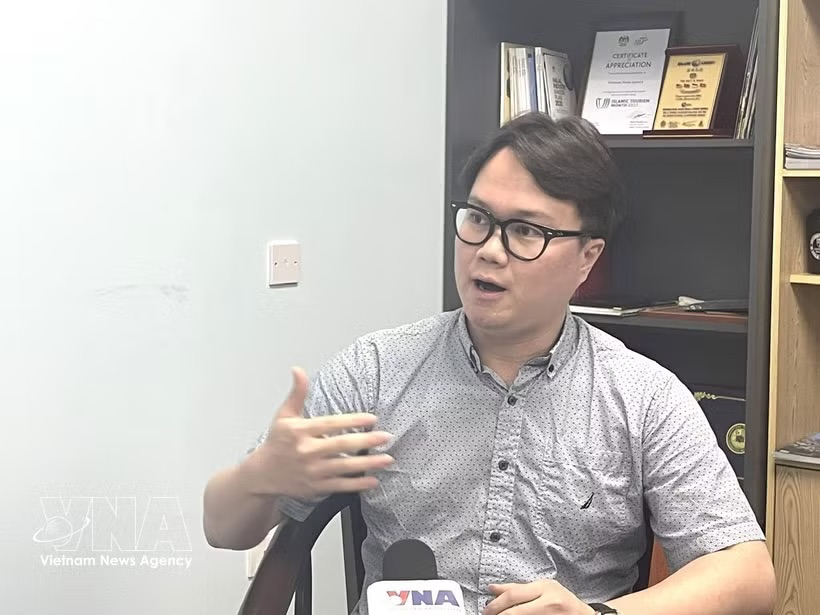
The ASEAN Future Forum (AFF) 2026 has evolved beyond a regular diplomatic gathering into a strategic platform through which Viet Nam is demonstrating a leadership role in shaping ASEAN’s future, according to Malaysia-based Southeast Asian history and defence researcher Enzo Sim Hong Jun.
Talking to Viet Nam News Agency correspondents in Malaysia, Enzo said the forum’s opening in Hanoi once again placed Viet Nam at the centre of regional diplomacy.
With the participation of leaders from Laos, Cambodia, Thailand and Timor-Leste, along with the ASEAN Secretary-General and representatives of the United Nations, the forum sent a strong message of a proactive and resilient ASEAN that is determined to shape its own destiny, the researcher said.
He noted that the forum highlighted a significant shift in ASEAN’s strategic mindset – from responding to external shocks to actively shaping regional rules and institutions.
In his keynote address, Vietnamese Prime Minister Le Minh Hung stressed that ASEAN should not merely adapt to global changes but play a role in influencing them.
According to Enzo, as technology, artificial intelligence (AI), data and green transformation reshape global competitiveness, Viet Nam is promoting a vision of transforming ASEAN into a hub of innovation rather than merely a traditional manufacturing base. This ambitious orientation challenges the bloc’s long-standing image as a cautious and slow-moving organisation, instead advocating for an ASEAN that is more agile, action-oriented and future-focused.
The researcher also pointed to remarks by Vietnamese Party General Secretary and State President To Lam, who emphasised that ASEAN’s success should be measured not by the number of agreements signed but by tangible benefits delivered to people, businesses and member economies. This, Enzo said, demonstrates Viet Nam’s efforts to move regional discussions beyond symbolism towards practical implementation.
Regional security emerged as another major theme on the forum’s first day, particularly the role of preventive diplomacy, he said, noting that rather than focusing only on early-warning mechanisms, leaders discussed early actions, strategic trust-building and enhanced information-sharing through ASEAN-led mechanisms.
For Viet Nam, this offers an effective way to advance discussions on maritime security, cybersecurity and international law while maintaining consensus-based and non-confrontational spirit within ASEAN, Enzo observed.
From an economic perspective, the forum highlighted a new understanding of resilience that resilience does not mean isolation or protectionism, but rather strengthening internal capacities while deepening connectivity and cooperation, he said, noting that this vision is reflected in efforts to deepen integration in supply chains, infrastructure and technology.
The Mekong sub-region was identified as a new growth engine of the region. Viet Nam’s support for strategic infrastructure projects, including the Hanoi–Vientiane expressway and the Laos–Viet Nam railway, not only benefits neighbouring countries but also reinforces Viet Nam’s position as a key logistics and manufacturing hub in Southeast Asia, he said.
Another key highlight of this year’s forum was Viet Nam’s decision to place emerging technologies, including AI and Fintech, at the centre of the strategic agenda. A session on AI governance underscored the principle of “leaving no one behind,” while a Fintech workshop called for the development of a secure, transparent and sustainable cross-border payment ecosystem, the researcher said.
He noted that promoting these issues reflects Viet Nam’s ambition to make science, technology and innovation new drivers of economic growth, sending a message that technological development must place people at the centre, underpinned by skills development, social welfare and responsible governance.
The scholar said AFF 2026 has further enhanced Viet Nam’s standing as a dynamic diplomatic hub. By establishing and sustaining the forum as an annual platform complementing ASEAN’s formal processes, Viet Nam has gained greater influence in shaping regional conversations before they evolve into the bloc’s official perceptions.
Such efforts not only strengthen the country’s soft power but also help safeguard the strategic autonomy of Viet Nam and other ASEAN member states amid intensifying major-power competition, he said.
On the forum's sidelines, Enzo added, Viet Nam also used the occasion to advance bilateral diplomacy through meetings with leaders from Laos, Cambodia and Timor-Leste, opening opportunities for deeper cooperation in economic development and governance.
Looking ahead, he said the forum’s long-term credibility will depend on whether discussions on AI governance, preventive diplomacy and financial connectivity can be translated into concrete mechanisms, resources and pilot projects.
AFF 2026 demonstrates Viet Nam’s transition from an active participant to a country that helps lead and shape ASEAN’s agenda, the researcher said, adding that Viet Nam now has an opportunity to transform the forum from a dialogue platform into a meaningful policy process that contributes to a stronger, more prosperous and influential ASEAN./.
Source: Vietnam+
Share:


<p>Time: November 2025<br /> By: WTO and International Trade Group, Legal Department – VCCI</p>
