

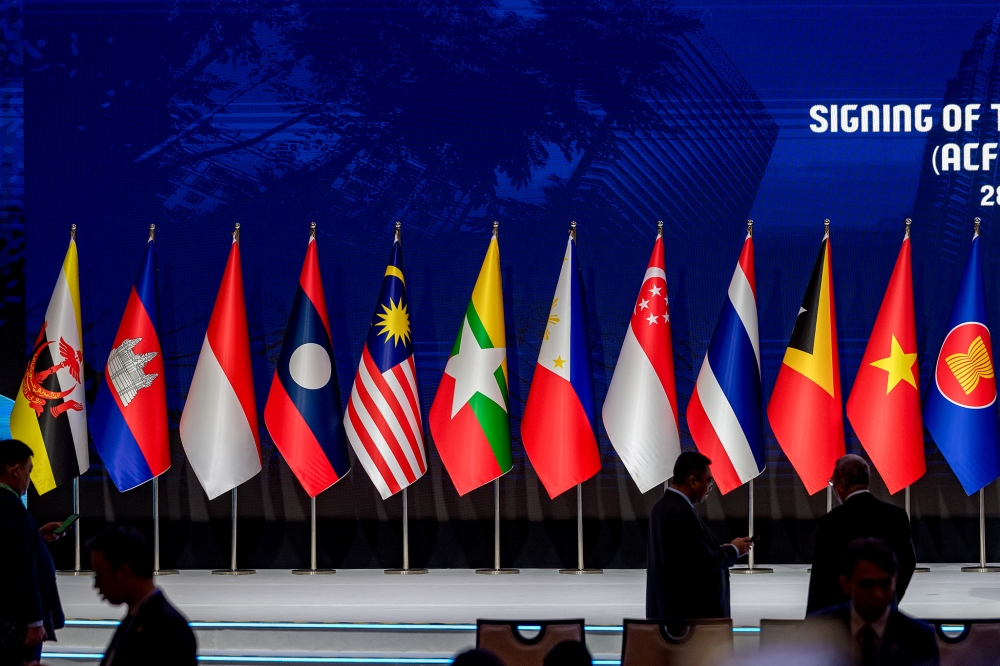
Following the food price crisis in 2008, Asean has stepped up to cooperate among member states to ensure long-term food security in the region.
Durian, Southeast Asia's "King of Fruits," is booming in China, where it has already become the country's top fruit import item in terms of volume and value.
Indonesia and the Philippines are the countries that have not ratified the Regional Comprehensive Economic Partnership (RCEP), said World Bank managing director of development policy and partnerships Mari Elka Pangestu.
This is the biggest trade promotion event held annually by the two countries' Ministries of Industry and Trade in the Lao capital city, with the aim of promoting exports and expanding the sale network for Vietnam's goods to Laos and the northeast region of Thailand.
With the United States midterm election scheduled in November, the American Chamber of Commerce of the Philippines (AmCham Philippines) said a free trade agreement (FTA) between the Philippines and the United States may not happen under the first term of the Biden administration.
The COVID-19 pandemic, climate change and the Russia–Ukraine conflict have exacerbated global food insecurity. The current crisis has highlighted the reliance of many ASEAN states on staple food and animal feed imports, as well as ASEAN’s lack of coordinated strategy for food production. ASEAN needs to reduce import dependency to minimise the impact of global market fluctuations on regional food security.
The development of National Road 67 (NR67), connecting Cambodia and Thailand, is expected to enhance the trade, tourism and investment ties between the neighbouring countries.
Singapore’s impressive recovery from the pandemic is outperforming similar economies, with total output exceeding pre-crisis levels last year, but the rebound has also been uneven.

<p>Time: November 2025<br /> By: WTO and International Trade Group, Legal Department – VCCI</p>
