

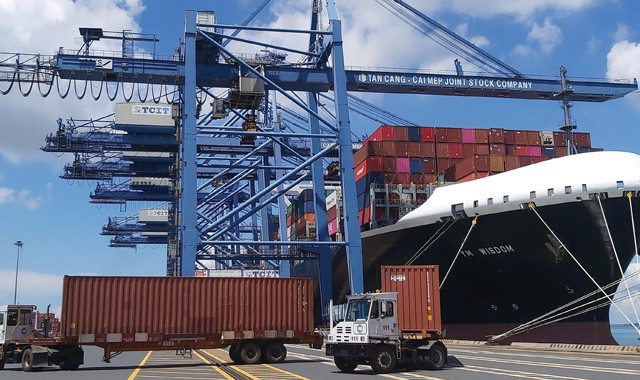
The Trade Ministry has encouraged businesses to take advantage of trade agreements under the Association of Southeast Asian Nations (ASEAN) and its partner countries to expand export markets, improve product competitiveness, and tap into opportunities across the Asia-Pacific region.
“Utilising ASEAN and ASEAN Plus trade agreements is a strategic step toward expanding market access for pharmaceutical, processed food, and seafood products across Asia and the Pacific,” Nugraheni Prasetya Hastuti, the ministry’s director for ASEAN negotiations, said in a statement.
She said businesses could benefit from preferential tariffs, strengthen their product competitiveness, and reach potential markets in ASEAN partner countries. These opportunities are also available to micro SMEs (MSMEs).
Hastuti made the remarks while opening a seminar titled “Export Expansion to Asia and Pacific Regions through ASEAN and ASEAN Plus Trade Agreements: Pharmaceuticals, Processed Food, and Seafood”.
Hastuti noted that ASEAN had eight trade agreement schemes in effect. These comprised one agreement among its 10 member states, six agreements with dialogue partners such as China, South Korea and Japan and one regional free trade agreement (FTA), the Regional Comprehensive Economic Partnership (RCEP).
“Indonesian businesses must be able to take advantage of the various ASEAN cooperation schemes because they cover large markets,” she said.
Highlighting market potential, Hastuti said several ASEAN partner countries under the ASEAN Plus One framework imported substantial amounts of pharmaceutical, processed food, and seafood products from around the world.
South Korea recorded the highest import value across the three product groups, at US$36.7 billion, followed by Australia at US$29.48 billion and New Zealand at US$2.39 billion. The Philippines and Thailand were also potential markets for Indonesian products.
Meanwhile, Indonesian Employers Association (Apindo) Deputy Chair for Trade Jahja B. Soenarjo said businesses needed supportive policies and regulations to make exporting easier and broaden access to international markets.
He said the strategy should include helping businesses meet product standards and certification requirements, providing structured training and export assistance for MSMEs, and making greater use of domestic and international trade exhibitions.
Improved access to global market information and data, along with a stronger role for business associations and Indonesian diplomatic missions, could also help expand the country’s export markets, he added.
“In addition, Indonesia’s diaspora networks in various countries can also be utilised to help expand export market access,” Soenarjo said.
Source: SME
Share:

<p>Time: November 2025<br /> By: WTO and International Trade Group, Legal Department – VCCI</p>
