

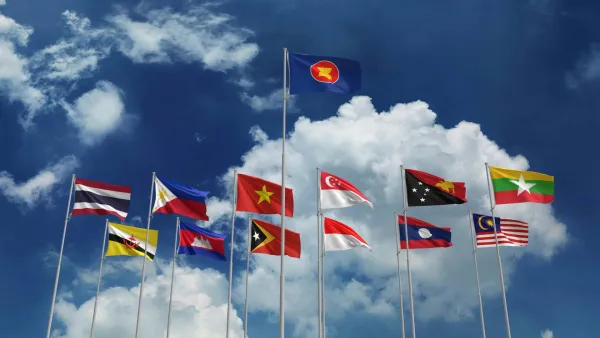
The British multinational bank Standard Chartered sees ASEAN’s upcoming digital economy pact as an impetus for cross-border payments, as the Southeast Asian bloc looks to sign the accord next month.
The group has spent the past few years negotiating the Digital Economy Framework Agreement (DEFA).
The document will set common rules for cross-border e-commerce and electronic payments to deepen digital integration.
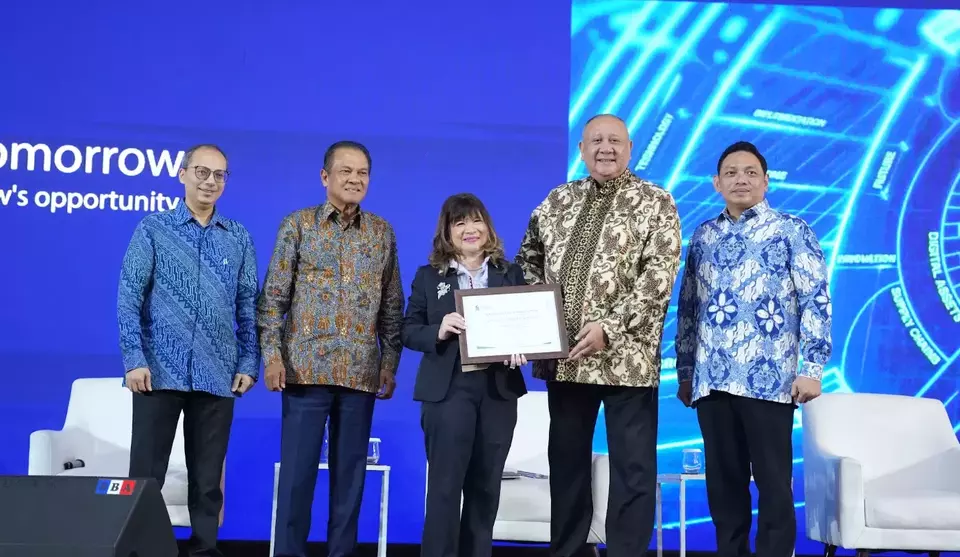
As the signing nears, Standard Chartered Indonesia's chief executive officer Donny Donosepoetro said Tuesday that the “DEFA signing could change” the way ASEAN economies do business with fellow members and its external partners.
“This will further accelerate the scaling up of trade, payments, and cross-border payments across ASEAN and the rest of the world,” Donny told the Indonesia Treasury Leadership Forum 2026 in Jakarta.
“Indonesia needs to position itself to take the opportunity and the biggest slice of the pie. We are Southeast Asia’s largest economy, so it’s befitting for us to do so.”
Bilateral frameworks have enabled Indonesian businesses to settle cross-border trade with Malaysia, Singapore, and Thailand, among others, in rupiahs or their respective currencies. Countries have been banking on this local currency transaction agreement to shift away from the dollar.
Bank Indonesia data showed that the country’s annual LCT volume with all of its eligible trading partners topped $49.4 billion as of August 2026.
Jakarta is aggressively trying to expand its QR-based payment system, better known as the QRIS, not just at home but abroad. It is now working on enabling Indonesians to pay in rupiah when traveling in other markets. The QRIS linkage is now live in the three aforementioned ASEAN markets.
Standard Chartered is the only international bank serving all ASEAN markets, except the bloc's newcomer Timor-Leste.
Indonesian Employers Association (Apindo) chairwoman Shinta Kamdani told the same conference that QRIS and LCT co-existing shows how cross-border connectivity has expanded beyond retail payments.
“The broader opportunity is to make regional business transactions more seamless,” Shinta told the same conference.
“For corporate treasury, the relevant priorities are settlement efficiency, foreign exchange conversion cost, currency risks, and access to relevant payment channels.”
ASEAN expects the DEFA to double its digital economy to $2 trillion by 2030, with a particular focus on the ever-growing artificial intelligence (AI). The group will sign the document when its leaders gather in the Philippines in November.
Source: Jakarta Globe
Share:

<p>Time: November 2025<br /> By: WTO and International Trade Group, Legal Department – VCCI</p>
