

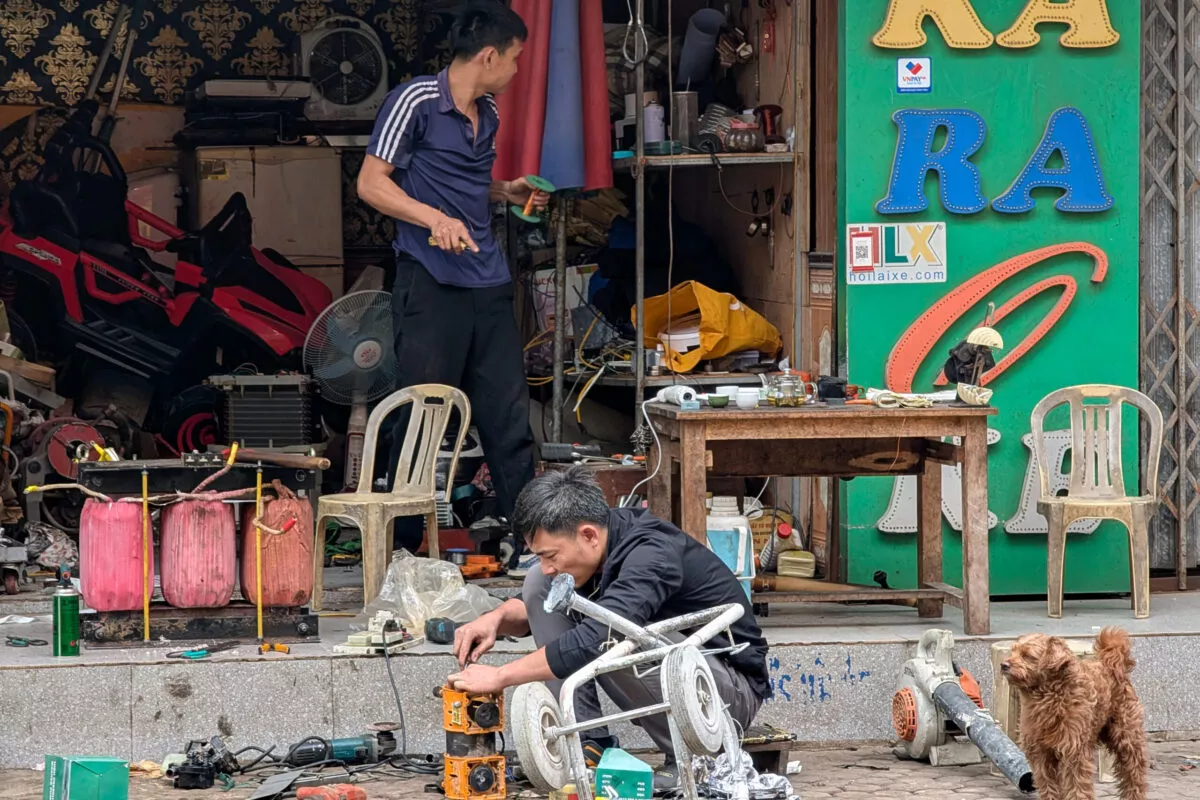
In Nhat Tao market, Ho Chi Minh City’s largest informal electronics-recycling market, workers have salvaged old computers for over two decades. With Asia Pacific governments and companies working to turn e-waste into a new channel for resource diplomacy in the region, the systems they are trying to build will depend on recycling networks across ASEAN, including markets such as Nhat Tao.
Before discarded electronics can become useful raw material for new components, someone must collect, sort and dismantle them, separate value from waste and move the material into a system trusted enough to support trade. Copper, gold, rare earth metals and battery materials can all be recycled into new components.
As e-waste becomes a credible source of strategic materials, Washington and Tokyo have an opening to build resource security through ASEAN systems. In 2022, ASEAN generated 4.4 million tonnes of e-waste, including 516,000 tonnes in Vietnam. Vietnam is particularly important because it combines a large informal e-waste supply stream with a clear diplomatic opening, given its involvement in existing discussions with the United States and Japan over collaboration on electronics recycling. But this initiative lacks the foundations to support a more concrete system.
Government agreements can open doors, but they cannot — by themselves — build a system that turns local supply networks into a fair and safe source of recovered materials that are commercially usable. For Washington and Tokyo to pursue resource security through ASEAN e-waste networks, they will need a workable strategy that starts with needs at the local level and builds upwards.
In May 2026, the US–Japan–Vietnam roundtable in Hanoi brought together governments, manufacturers, smelters, recyclers, retailers, trading companies, non-governmental organisations and international organisations to support strategic material recovery from e-waste. The event’s stated goal was to develop investment-ready projects from collected, dismantled and sorted e-waste. The United States is assisting with project preparation, financing and demand support. The US–Japan Action Plan on Critical Minerals provides a framework that could be replicated through similar recovery projects across ASEAN once materials are traceable, legal and marketable.
The more difficult part comes earlier, in Vietnam’s informal recycling networks. In this system, household devices move from collectors and repair shops to traders, dismantlers and craft villages, and finally to recyclers, exporters, smelters and buyers. Weak monitoring of these markets limits oversight, which reinforces the barrier between Vietnam’s e-waste economy and formal markets, while unsafe dismantling and burning expose workers and nearby residents to pollution.
For ASEAN, e-waste recycling should be treated as economic security infrastructure. It can help retain value from the electronics economy, reduce hazardous leakages, strengthen producer responsibility systems and create formal roles for local firms. Vietnam’s Extended Producer Responsibility system requires producers and importers of electrical and electronic equipment to meet specific recycling obligations for products at the end-of-life stage. While informal collection hinders implementation, Vietnam stands out among its ASEAN neighbours for imposing these obligations.
Across ASEAN, weak household collection leaves formal recyclers reliant on imported, higher-quality e-waste. Local collectors, workshops and recyclers should be incorporated into the formal system to support safety and recognise their economic significance, rather than being bypassed in favour of larger firms that arrive after valuable materials have been identified.
ASEAN’s 2021 Framework for Circular Economy, the 2023 ASEAN–Japan Circular Economy Initiative, the 2023 ASEAN–Japan Resource Circulation Partnerships on E-Waste and Critical Minerals as well as Japan’s 2026 Circular Economy Action Plan make up the regional policy base. Japan’s Resource Diplomacy Guideline calls for an Asia-wide recycling network that utilises e-waste collection and smelting facilities in Southeast Asia, supported by technology development and standardisation of traceability.
The Japan Business Federation’s circular economy proposal argues that Japan should promote international e-waste recovery, work with Japanese companies operating in ASEAN and extend cooperation to local companies. The next step is to bring local firms and communities into the system’s design earlier, because they determine the access and trust that make recycling systems durable.
ASEAN’s collection gap creates a regional role for Singapore. Technical partnerships between Vietnam, Japan and Singapore could move locally recovered material into formal regional markets. US development finance and corporate investment could support new capacity while Singapore’s local e-waste management framework offers a model for producer responsibility and licensed treatment. The aim should be to scale Vietnam’s local networks without displacing them or forcing ASEAN actors to choose between China and US-linked supply chains. This alignment links Vietnam’s interest in local upgrading, Singapore’s interest in regional market-building and the United States and Japan’s demand for more secure material supplies.
The United States, Japan and other Asia Pacific partners can support local upgrading while providing advance market commitments to ASEAN recyclers and processors. This would give ASEAN firms a commercial reason to formalise their operations without surrendering the material system to outside buyers.
Strategic resource diplomacy will endure only if it builds the system with local actors before asking that system to serve strategic demand. An ASEAN-first system must treat workers as stakeholders, not invisible suppliers operating beneath formal trade.
Source: EastAsiaForum
Share:

<p>Time: November 2025<br /> By: WTO and International Trade Group, Legal Department – VCCI</p>
