

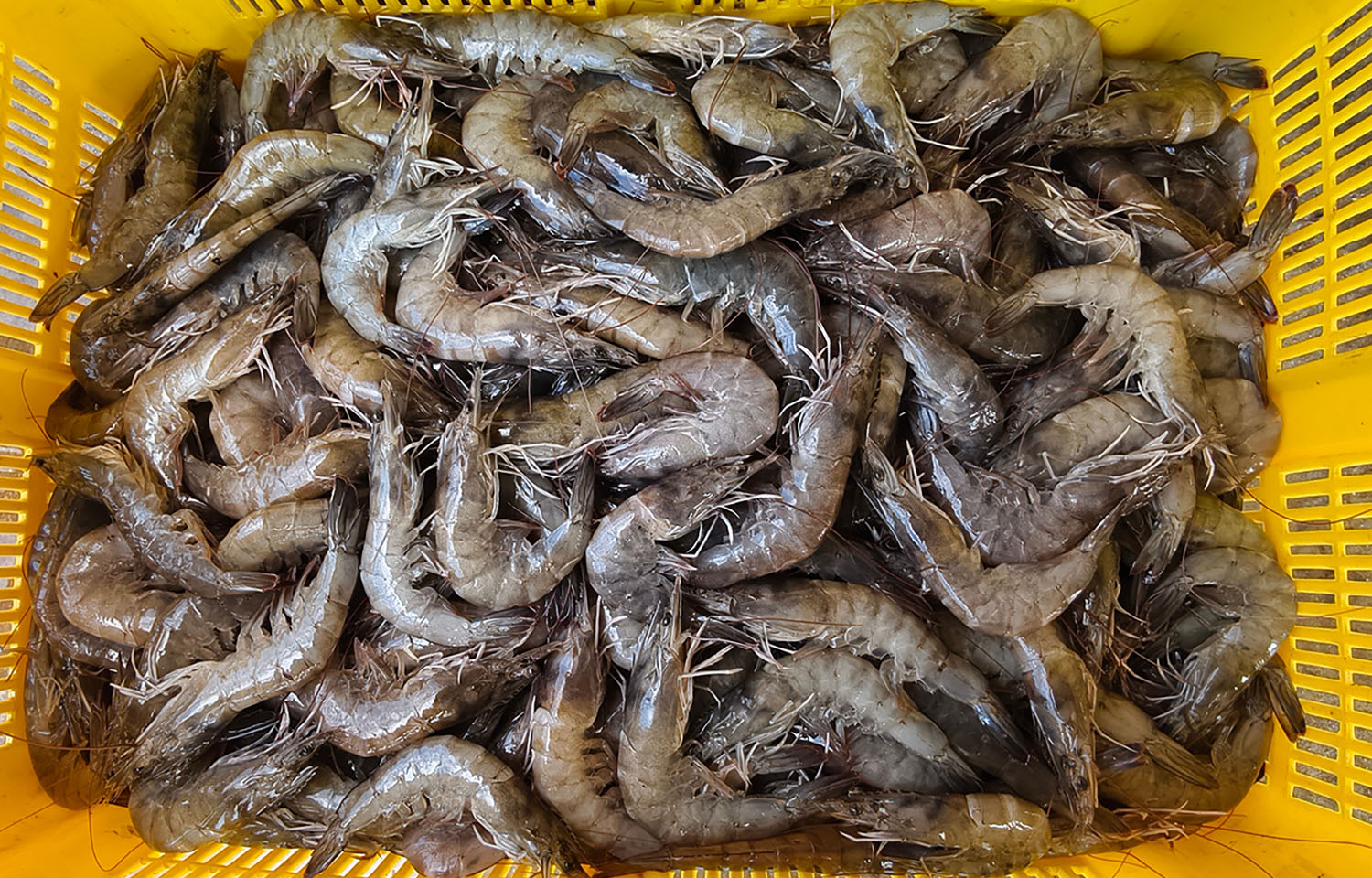
Indonesian shrimp exports declined sharply in October, largely due to recalls of Indonesian products which were found, upon their arrival in the United States, to contain traces of Cesium-137 (Cs-137), a radioactive material.
The first findings of Cs-137 came in August, when the U.S. Food and Drug Administration (FDA) issued an advisory to the public not to eat, sell, or serve imported shrimp processed by Indonesia-based PT. Bahari Makmur Sejati, a supplier to some Walmart locations.
After two months of stalled shipments and trade challenges, the FDA reached an agreement with the nation to resume imports after its Cs-137 task force identified the source of the contamination and cleared it.
Still, according to industry blog ShrimpInsights, issues persisted through October, as total export volumes in the month were down 59 percent year over year, dropping to 8,233 metric tons (MT). Total value was USD 76 million (EUR 64.7 million), down 55 percent year over year.
October saw drops across all categories of exports, including raw shrimp and value-added shrimp products.
“Heightened scrutiny and testing requirements by U.S. authorities led to shipment delays, holds, and, in some cases, rejected or postponed consignments,” ShrimpInsights Founder and Chief Analyst Willem van der Pijl said.
Despite the crash in October, which brought year-to-date export volumes to 152,434 MT – down 2 percent year over year – van der Pijl said that export value during the period was still up year over year by 8 percent, reaching USD 1.41 billion (EUR 1.20 billion), marking what he called an “otherwise resilient year” for Indonesian shrimp exports.
Van der Pijl said that while low volumes and values are likely to continue for the rest of the year but said he believed that the clearing of more than 600 containers of Indonesian shrimp in early December to the U.S. “may be the start of the normalization of Indonesia-U.S. shrimp exports.”
Japan was Indonesia's largest export market in October, buying a volume of 3,467 MT, a 20 percent year-over-year increase. Year-to-date volume through October was 27,637 MT, a 5 percent year-over-year increase.
Despite the radiation concerns, the U.S. was still Indonesia’s second-largest export market in October. Export volume to the U.S. was 1,860 MT, down 86 percent year over year. Year-to-date volume to the U.S. through October came to 101,000 MT, a 9 percent year-over-year decline.
China bought 798 MT of Indonesian shrimp in October, a 53 percent year-over-year decline, but 9,774 MT year to date, a 12 percent year-over-year increase.
The E.U. imported 609 MT in October, a 7 percent year-over-year increase. Year to date, shipments are up 47 percent year over year, amounting to 8,708 MT.
Canada imported 203 MT in October, marking a 41 percent decline; year to date was still up, however, with a volume of 3,502 MT, a 55 percent year-over-year increase.
Source:SeafoodSource
Share:



<p>Time: November 2025<br /> By: WTO and International Trade Group, Legal Department – VCCI</p>
