

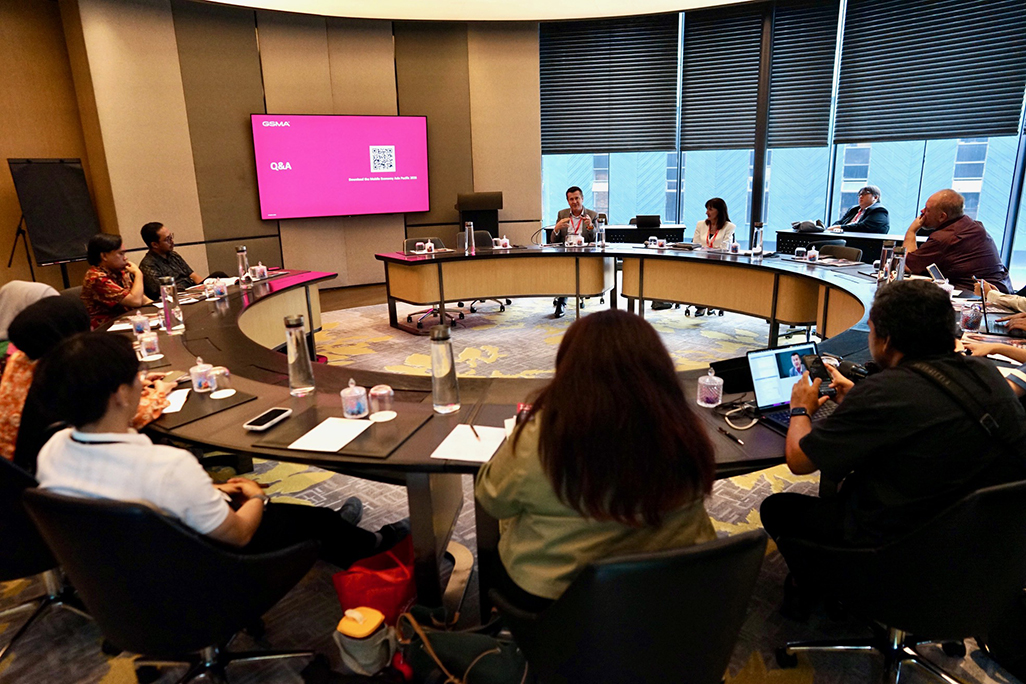
MALAYSIA must balance artificial intelligence (AI) regulation, online safety and the development of local digital capabilities while remaining open to international investment and cross-border data flows, said the Global System for Mobile Communications Association (GSMA).
According to GSMA head of Asia Pacific Julian Gorman, the challenge for policymakers was to protect users without introducing measures that could constrain innovation or undermine Malaysia’s position as a regional digital and data hub.
“I think the policy is that we need to draw a fair line between allowing innovation and making it as safe as possible. That is quite difficult to do.
“For a policymaker, they have to be very mindful that they don’t cramp that innovation. That is the key thing that we need to protect,” he said at a media briefing on Thursday (August 6).
However, Gorman said AI governance could not depend solely on regulation, as technology companies, mobile operators, schools, families and other stakeholders also had a role in promoting responsible and safe use. The effort would also require investment in education and training as AI became increasingly embedded in everyday devices, services and decision-making.
Meanwhile, Malaysia’s ability to attract digital infrastructure investment would depend partly on preserving its links with other markets, particularly as it seeks to host data and services for the wider region.
“Malaysia, over the last couple of years, has been a big beneficiary of international investment. Malaysia being able to host data for the region weighs into its competitiveness, and that is based on being able to interact with other markets,” he added.
GSMA’s Mobile Economy Asia Pacific 2026 report separately stated that Malaysia had attracted major cloud and data-centre commitments as companies expanded infrastructure for AI, cloud services and advanced connectivity.
These included Microsoft’s first cloud region in Malaysia and Oracle’s planned investment of more than US$6.5 billion to establish its first public cloud region in the country.
Nevertheless, Gorman cautioned that complete digital sovereignty would be difficult for most countries because the technology components, infrastructure and supply chains supporting digital services were distributed across several markets.
“Very few countries can have true data sovereignty, even if they want it. There are certain things you can say you can do and protect, but it is quite difficult to say you will have true, total digital sovereignty,” he said.
Therefore, greater ASEAN cooperation could provide member states with the scale needed to strengthen strategic digital capabilities while maintaining cross-border connectivity and access to global technology supply chains.
Gorman said not every country in the region had the market size or capacity to establish fully independent digital infrastructure, making regional discussions increasingly important as ASEAN economies competed for technology investment.
Beyond infrastructure, digital trust would also determine whether consumers and businesses adopted AI and advanced mobile services.
While consumers were increasingly concerned about scams, fraud and harmful online content, businesses wanted greater assurance that digital networks would remain reliable enough to support critical operations.
The proportion of ASEAN consumers reporting that they had been scammed rose to 45% in 2025 from 31% in 2024, according to the report.
Consequently, operators were increasing investment in fraud prevention, cybersecurity and cross-sector collaboration to protect consumers and businesses.
The report also stated that governments and industry were investing in local AI infrastructure, trusted cloud services, secure data environments and digital capabilities that supported national priorities while retaining openness and cross-border collaboration.
Source: Aufa Mardhiad, TheMalaysianReverse
Share:




<p>Time: November 2025<br /> By: WTO and International Trade Group, Legal Department – VCCI</p>
