

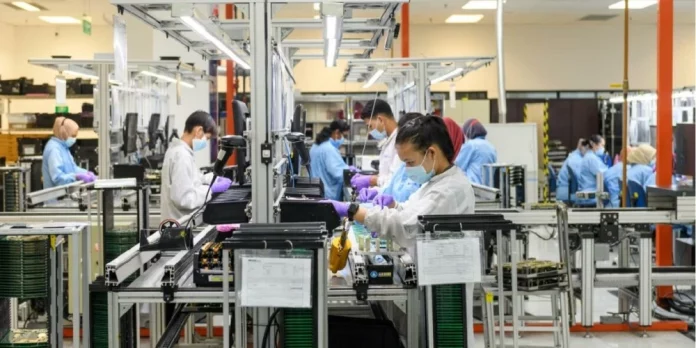
The debate over national sovereignty and interests in the Malaysia–US Agreement on Reciprocal Trade (ART) is a non-starter. Accusations and misperceptions abound, but Malaysia will get long term tangible and intangible benefits not only from the ART, but most importantly on the multi-faceted positive safeguard of our economic, security, technological and geopolitical strength and needs through enhanced ties with the US.
The opponents of the ART and the various agreements see them as a potential backdoor for foreign interference and erosion of policy autonomy but far from it, they form the needed push for a long term economic and security assurance from Washington, especially under President Trump’s renewed focus and presence in this region.
Trump’s presence in Kuala Lumpur is a strong message to the country and the region, that “Malaysia is not just a partner but a pillar of stability, innovation, and leadership in Southeast Asia.”, with the clear message that Washington is now back investing its presence in this region, and that Malaysia lies at the central stage to this strategy.
Malaysia has vulnerabilities in strategic sectors: semiconductors, energy transition minerals, digital security, and supply chain choke points, and this new strengthening of ties and agreement strengthens the country.
Here are 50 strategic arguments in why an elevated and deeply layered long term positive partnership with the US through ART and overall holistic ties directly benefit Malaysia and the region:
1. The ART provides access to American technologies, investments, and standards that will elevate Malaysia’s economic competitiveness. Technology defines power, and by aligning with the world’s most advanced innovation ecosystem and the most powerful tech hub, Malaysia naturally stands to gain.
2. More importantly, the US provides the perfect needed fallback to escape the Chinese dependence trap on technology, extractive capacity and capital, in areas of critical minerals and in creating new tiers and advancement levels for our semiconductor and digital economy spectrum.
3. Washington could increase the tariffs proportionately or in higher terms if Malaysia is not committing to a fairer trade system, but rates remain lower now at 19%, and will create a protective barrier for our industries and jobs in key sectors, with protective carve-outs for local industries.
4. The ART is grounded on rules-based capacity and normative values with transparent framework and regulatory oversight, something which is lacking with other countries’ overtures. It is grounded on the basis of transparency, capacity building, and mutual benefit to both sides.
5. It is fundamentally a non-military, resilience-oriented framework focusing on building security for supply chains, enhancing technological capability, protecting economic security, and crisis cooperation.This is very much needed for our own national security and securing our own technological autonomy, away from the dominance of Chinese led capacity in these critical industries.
6. The agreement is a resilience pact, with emphasis on supply chain security in semiconductors, pharmaceuticals, rare earths, and energy technologies – all sectors where Southeast Asia and Malaysia seek to move up the value chain.
7. This elevates returns of R&D, talent mobility, and technology transfer in high-impact areas such as AI safety, clean energy, advanced manufacturing, and cybersecurity.
8. On the chain impact, it will aim to harmonise regulatory practices, data protection approaches, and trade facilitation measures that will further link up our national productivity growth with interoperability with US and global markets.
9. The treaty also encourages joint response capabilities in pandemics, natural disasters, cyber incidents, and supply chain disruptions.
10. It is also not an exclusive partnership and nothing in the ART prevents Malaysia from deepening relations with other countries. It is not an “either/or” alignment.
11. The ART’s potential is formed primarily in how it synergises with both Southeast Asia’s economic potential and constraints. Three main fundamentals stand out for Malaysia and the region to gain: value-chain upgrading, talent and technology mobility, and geopolitical and security benefits.
12. Southeast Asia is mired in a structural trap: largely middle income with dependence on resource extraction, export based model, low-cost labour, and mid-tier manufacturing as the main fundamentals . To escape the middle-income trap, the region must now move into high-value, technology-driven segments.
13. This is exactly where the ART is the main backbone for this by expanding access to high-end US technologies, attracting advanced manufacturing and semiconductor investment with tech and expertise transfer and the training of local talents and workforce,increasing tie-in with global R&D networks, and aligning with international standards that open premium markets.
14. For Malaysia specifically, ART complements with our own National Semiconductor Strategy, rare-earth downstream objectives, and efforts to become the region’s advanced manufacturing hub. It also complements our New Industrial Masterplan and our overall quest to escape our middle income trap with emphasis on high tech manufacturing with energy transition and digital economy set-up, all of which will require the fundamental shift away from the trap of labour intensive and low skilled capacities and reliance on cheap capital and low value investment.
15. The region also is suffering from the onset of demographic decline, in terms of talent bottlenecks, an increasingly ageing population, brain drain and shortage of high tech skills and high skilled talents. This ART framework provides the exact remedies for that, with talent circulation and expertise transfer, and capacity building in AI, and digital advancement.
16. ART’s mechanisms provide Southeast Asia with the support tools it currently lacks, in the areas of cyber resilience, early warning systems, and coordinated responses in facing the new shifts of cross-border natural disasters, cyber threats and other non-traditional challenges. Hence, this will increase preparedness readiness and reduce vulnerability.
17. The U.S. brings not only the needed technological and knowledge transfer capacity, but most importantly, the values-based mechanisms and structural framework based on the pillars of trust, oversight, standards and rights compliance, all of which are critically needed for the nation’s transition from an extractive model and export based economy, to one that is values-based towards the high income ambition. This further integrates the U.S. presence in this region in providing the needed economic and security umbrella, while offering continuous access to the world’s biggest and most affluent market by far.
18. The US market matters more than ever now, where America remains the largest consumer economy in the world with a GDP of $30 trillion and a purchasing power unmatched globally. The US imports per annum almost matches the entire combined GDP of ASEAN members at almost USD4 trillion. For an export-dependent country like Malaysia, this market is oxygen, and a lifeline for the economy, jobs, social mobility and income levels.
19. In 2024, the US became one of Malaysia’s largest export markets, with over RM195 billion in goods exported. Malaysia’s E&E sector alone, including the semiconductor industry, shipped over RM119 billion to the US, and is projected to rise by 20% from the new tariff structure.
20. Zero-tariff access for certain Malaysian exports and items, especially in the fields of electronics, halal food, pharmaceuticals, rubber, palm oil, and green-tech components will create further positive chain impact for these industries and the millions of jobs that they hold. The zero-tariff access gained will outperform CPTPP and RCEP gains combined, according to MITI estimates.
21. This expanded access for our selected goods and resources with zero tariff creates the ultimate lifeline for these critical industries that empower the national economy, now with the capacity to enjoy an even bigger demand from the US with renewed purchasing power under Trump’s policies that brought wealth back to the US and controlling inflation.
22. Expanded exports for our rubber and palm oil will mean that our critical rubber and palm oil industries will be further boosted by the massive new purchasing demand from the US market, to circumvent the reliance on China and Europe, and bringing direct benefits to our palm oil stakeholders and planters.
23. Trump’s economic revival plan via tax incentives, deregulation, and reshoring will indirectly also enhance Malaysia’s growth by opening new supply chains that need agile, high-skill partners.For Malaysia, Trump’s leadership means a predictable, pro-business, alternative to China posture, which are exactly what we need to secure our economic and security interests.
24. The inclusion of digital trade and intellectual property protections create the pulling factors and incentives for more foreign direct investment (FDI).
25. In critical minerals, the agreement will secure an ever more holistic US access to Malaysian rare earths and critical minerals, enhancing presence and interdependence which will be vital for Malaysia’s defence and technology.
26. It commits the US to investing more in downstream processing, skills training, and tech transfer, and not just extraction. More importantly, this will protect against Chinese monopoly pricing.
27. The claim and narrative that “Malaysia gives away its rare earths” is false. The agreement has explicitly stated that Malaysia retains full sovereignty over licensing, environmental rules, and export controls.
28. It only seeks for non-discriminatory treatment for US buyers, and is aligned within the norms of the World Trade Organisation. In return, Malaysia will gain capital, expertise and capacity which are vital for a capital-intensive industry.
29. Malaysia sits on more than 16 million tonnes of rare earth deposits, which form the new frontier of global geopolitical yearning and competition. However, we lack the downstream capabilities to refine and produce semiconductor-grade materials.
30. There is greater tech know-how and access to critical minerals R&D funding through the U.S. Defense Production Act. The transfer of high-purity processing tech, currently blocked by China’s export controls, will elevate Malaysia’s rare earths industry.
31. The existing capacity of the Lynas processing plant, can be further integrated into the new ecosystem of a robust and trusted bulwark of a Western critical minerals supply hub, which will provide a secure and stable critical minerals development, one that is anchored on values and rules-based normative framework, as opposed to current gap and dominance on this industry by China.
32. President Trump has been strategic in securing a new critical minerals bulwark in this region, from Australia to Malaysia and Japan, and Malaysia must be equally strategic to seize upon this new trust given by President Trump, in being part of this new critical minerals advancement in breaking away from the China centric model of the industry.
33. The US procurement for Malaysian refined materials could generate thousands of new high skilled jobs and anchor Malaysia as a global rare earth hub.All these are offered by the US, while China’s economy is facing a demographic and structural crisis which cannot match the same capacity.
34. The claim that Malaysia’s sovereignty has thus been sold is also not true. There are no foreign bases or troops that will be stationed here and no permanent security installations under this agreement. This agreement is pure economic diplomacy that will benefit Malaysia more, not neocolonialism.
35. This in fact will further reinforce Malaysia’s strategic autonomy by jettisoning the conventional dependence on China and diversifying away from China’s pull.
36. Malaysia’s security needs will be hugely amplified and bolstered, with renewed Trump’s commitment and the new interlinked US interests and presence in this region with this synergised critical minerals and trade dependence, that will secure our deterrence and protect our oil and gas assets in the disputed South China Sea where aggressions and violations of the international law have threatened our sovereignty and rights and our RM300 billion in extractive value that lies under Malaysia’s rightful waters.
37. These violations of maritime law and norms and challenges to our rights which are enshrined under the Exclusive Economic Zone rights under the United Nations Convention of the Law of the Sea are what threaten our sovereignty, not this ART agreement.
38. Washington’s security commitment through defence support and Freedom of Navigation patrols reinforce Malaysia’s ability to protect its maritime rightsw, and will significantly bolster Malaysia’s capacities and capabilities to protect our rights and territorial integrity.
39. Since 2017, the United States has provided more than US$230 million (about RM1 billion) in maritime security assistance to regional partners, with Malaysia receiving a significant share through equipment transfers, training, and capacity-building programmes.
40. Unlike China’s approach which relies on infrastructure-for-resources swaps, US investment in Malaysia is mainly private-sector led, tech-driven, and high value, which encourages transfer of tech and enhances local advancement.
41. US foreign direct investment is the largest in Malaysia, with RM32.8 billion in approvals in 2024 alone, and the ART will serve as the parallel enabler to greater spinoff values from the already expanding tech firms in Malaysia including Intel, Oracle, and Google and the new agreements will train over 10,000 engineers and technicians through U.S.–Malaysia exchange programs.
42. The United States maintains its position as the world’s largest market and highest purchasing power holder because its economy operates through domestic consumption instead of state-controlled investment. The United States consumer market alone exceeds China’s entire GDP value, at US$19 trillion where China’s GDP is at around US$18 trillion while U.S. household spending makes up 27% of worldwide consumption compared to China’s 14%.
43. The United States maintains a higher GDP per capita at US$80,000 than China does at US$13,000 because its economy demonstrates stronger domestic spending power and better resistance to market fluctuations. The US maintains its position as the world’s leading economic power because of its young workforce and its capital markets and its ability to draw 50% of global venture capital investments.
44. China faces multiple structural challenges because its population decline continues while fertility rates have dropped to 0.97 and youth unemployment reached 21% before 2023 and property values decreased by US$3 trillion. Property sector collapse wiped out US$3 trillion in household wealth, and total non-financial debt per GDP ratio is more than 300%. China’s GDP growth forecast for 2025 is below 4%, according to the IMF, and with continuous downturn in domestic demand and purchasing power.
45. The internal challenges facing China damage its ability to generate domestic consumption while the United States operates as the world’s most affluent and open investment-driven consumer economy which will maintain its position as the largest market with strongest purchasing power in decades to come.
46. The US model offers diversification, upward mobility, and institutional compatibility, and with better and more resilient economic stability with the focus on quality of value per unit and the complete package that includes security and geopolitical returns. Most importantly, it offers technology Malaysia needs to cross the high-income threshold.
47. Malaysia’s new economic transformation that includes the various strategic visions including the New Industrial Masterplan 2030, Digital Blueprint, Energy Transition Roadmap, and Semiconductor Strategy, all converge on one core basis: that we must move beyond assembly lines and palm oil plantations.
48. In this regard, only the US offers the capital, technology, and market access needed to upscale AI, green tech, and digital industries, create new semiconductor design firms, develop clean-energy supply chains, and integrate into defence-grade electronics ecosystems
49. With the US as anchor investor and market, Malaysia can now have a realistic opening to join the ranks of South Korea, Taiwan, and Japan and not remain trapped in the middle-income conundrum.
50. Exit clauses still exist, and Malaysia will not be trapped.
Conclusion
The Malaysia–US ART is not a threat, but to future proof our future and to empower Malaysia and Southeast Asia to ascend the value chain.
The real question is not whether ART undermines Malaysia’s interests, but whether Malaysia can afford not to strengthen its resilience, readiness and deterrence at a time when economic security, resource security, technology access, crisis preparedness, and strategic diversification define the survival of middle powers like Malaysia.
In this regard, the US – Malaysia comprehensive partnership in security, economy, trade, technology and societal advancement that includes the ART and beyond stands as the needed final missing piece in the quest to secure security, economic, geopolitical, tech and social gains and resilience for the country, and to and to finally break free from the conventional economic, technological and political entrapments that have stalled our intended rise, empowering Malaysia to finally build a resilient, competitive and high-value economy moulded for the next century,enabled by peace and stability under the umbrella of the rules-based order and sanctity of international law.
Source:Business Today
Share:


<p>Time: November 2025<br /> By: WTO and International Trade Group, Legal Department – VCCI</p>
