

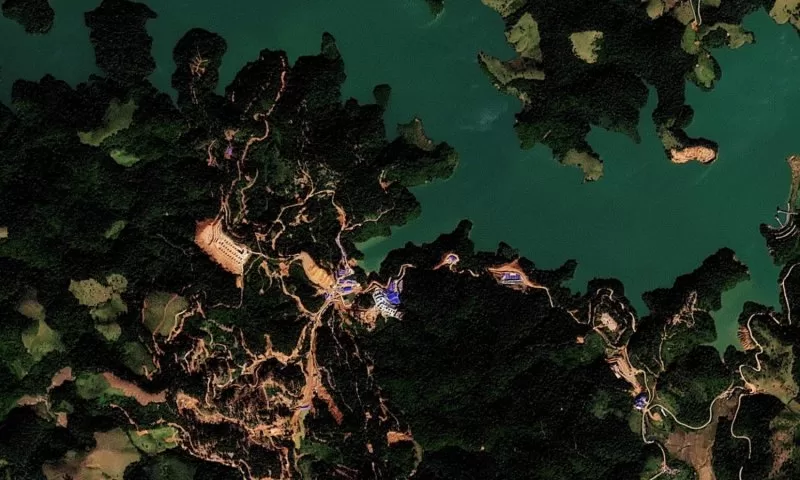
From Kuala Lumpur to Hanoi, Mr Trump inked trade pacts promising tariff relief on US exports in exchange for joint ventures in mining and refining the rare-earth minerals that power the world's clean-tech boom.
The timing could not have been sharper. Just days earlier, Beijing had moved to expand export restrictions on rare-earth compounds and semiconductor materials under MOFCOM Announcement No.61. With China refining roughly 92% of the global supply, the shock rippled fast -- NdPr oxide prices jumped about 40% in two months, and automakers scrambled for magnets. Ford idled production lines in June; Volkswagen flagged fresh delays in October.
At the Apec summit in Busan on Oct 30, Mr Trump and Chinese President Xi Jinping reached a temporary truce. Washington cut some tariffs by 10 per cent; Beijing suspended the new export controls until late 2026. For the Association of Southeast Asian Nations (Asean), this pause is a breathing space, but also a warning that the region's fate in the clean-energy race cannot hang on decisions made in Washington or Beijing.
The numbers tell the story. Asean's critical-minerals trade could top US$32 billion (1.04 trillion baht) by 2030, yet most ore still ends up in China for processing. Vietnam has around 3.5 million tonnes of reserves, plus the region's only operating light-rare-earth refinery. Indonesia has launched a Mineral Industry Agency to channel nickel experience into rare-earth refining. Malaysia, Thailand and Cambodia are following with smaller ventures.
These shifts mark a quiet but significant rebalancing. Rare earths are no longer just a niche industrial issue. They are now a test of regional resilience. If Asean can build an integrated network for mining, refining and recycling, it could position itself as the neutral ground in a fragmented global economy.
Of course, this won't be easy. Rare-earth processing is capital-intensive and environmentally messy. Indonesia's nickel projects already face pushback over pollution and labour issues, and few governments have clear safeguards in place. China's early dominance came at a heavy ecological cost; Southeast Asia must avoid repeating it. There's also the political question: Can Asean move collectively? The idea of a Rare Earth Working Group, floated in Busan, hints at a path forward -- pooling about copy0 billion via the Asian Development Bank for regional surveys and hydropower-based joint refineries in Laos. It's the kind of pragmatic cooperation that served the bloc well during the pandemic.
Japan could be the game-changer. Its carmakers rely heavily on rare-earth imports, and its government's Free and Open Indo-Pacific agenda fits neatly with Asean's diversification drive. Honda and Toyota are already scouting Vietnamese sites for EV battery plants. A Japan-backed consortium could bring both financing and environmental discipline, turning Asean's mineral wealth into a shared strategic asset rather than a contested one.
Global demand for rare earths is expected to triple by 2030 as electric vehicles, wind turbines and clean-energy storage take off. The Trump–Xi truce might last months -- or unravel overnight. Either way, the message is clear: Southeast Asia can no longer remain a passive link in someone else's supply chain.
If Asean acts now -- coordinating policy, enforcing environmental standards, and investing in its own processing capacity -- it can move from vulnerability to leadership. The region missed the semiconductor wave decades ago. It can't afford to miss the rare-earth one.
Imran Khalid is a geostrategic analyst and columnist on international affairs based in Karachi, Pakistan. He has been a regular contributor to publications such as Newsweek, The Hill, Nikkei Asia, The South China Morning Post, Foreign Policy in Focus, Info Libre, Brussels Morning, TRT World, among others.
Source: Bangkok Post
Share:

<p>Time: November 2025<br /> By: WTO and International Trade Group, Legal Department – VCCI</p>
