

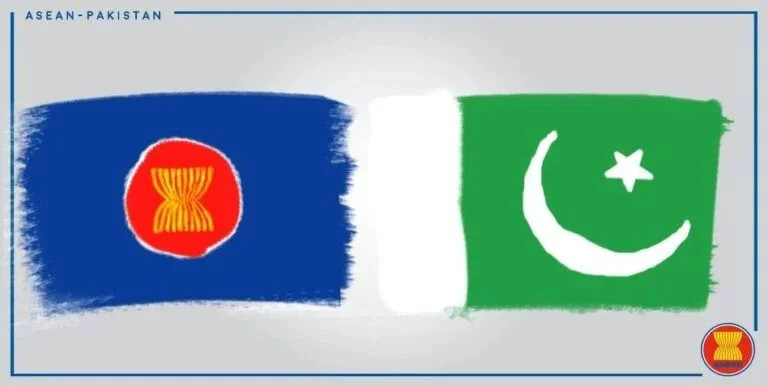
Pakistan exported around $3.5 billion worth of goods to ASEAN last year, while imports hit approximately $8 billion. Trade remains heavily concentrated in Indonesia, Malaysia, Thailand, Vietnam and the Philippines, countries that collectively account for the bulk of Pakistan’s commerce with the regional bloc.
To address the imbalance, Pakistan is pursuing multiple trade frameworks: an FTA with Malaysia, a PTA with Indonesia, and ongoing negotiations for an FTA with Thailand and a PTA with Vietnam. Policymakers are also pushing for technology transfer, value addition, and increased ASEAN investment in Special Economic Zones under CPEC to enhance Pakistan’s export capacity.
Officials stressed Pakistan’s strategic location as a connective hub linking ASEAN to Central Asia, the Middle East, Western China and the Indian Ocean, noting that infrastructure and policy upgrades are underway to position the country as a competitive production base for ASEAN industries.
Pakistan’s 2025 exports to ASEAN remain dominated by textiles, including non-knit suits, knit sweaters and house linens, alongside rice, seafood, leather goods, cotton, pulses and tree nuts. Textiles alone make up roughly 68% of export value, reflecting both market demand and export concentration.
Among ASEAN members, Indonesia, Malaysia and the Philippines recorded the fastest growth in imports from Pakistan this year. Malaysian demand for textiles, rice and leather goods increased under the FTA framework, while Indonesia continued expanding trade under its 2012 PTA.
The Philippines posted strong growth, particularly in textiles and agriculture-related imports. Thailand and Vietnam also expanded their imports but at a more modest pace.
The broader upward trend in Pakistan–ASEAN trade has been supported by bilateral agreements, diversification efforts, and improvements in connectivity and value-added production, especially in IT, textiles and food sectors.
FPCCI President Atif Ikram said ASEAN markets present “huge opportunities” for Pakistan’s 250-million-strong consumer base, urging further integration to unlock the region’s full economic potential.
Source: The Diplomatic Insight
Share:
<p>Time: November 2025<br /> By: WTO and International Trade Group, Legal Department – VCCI</p>
