

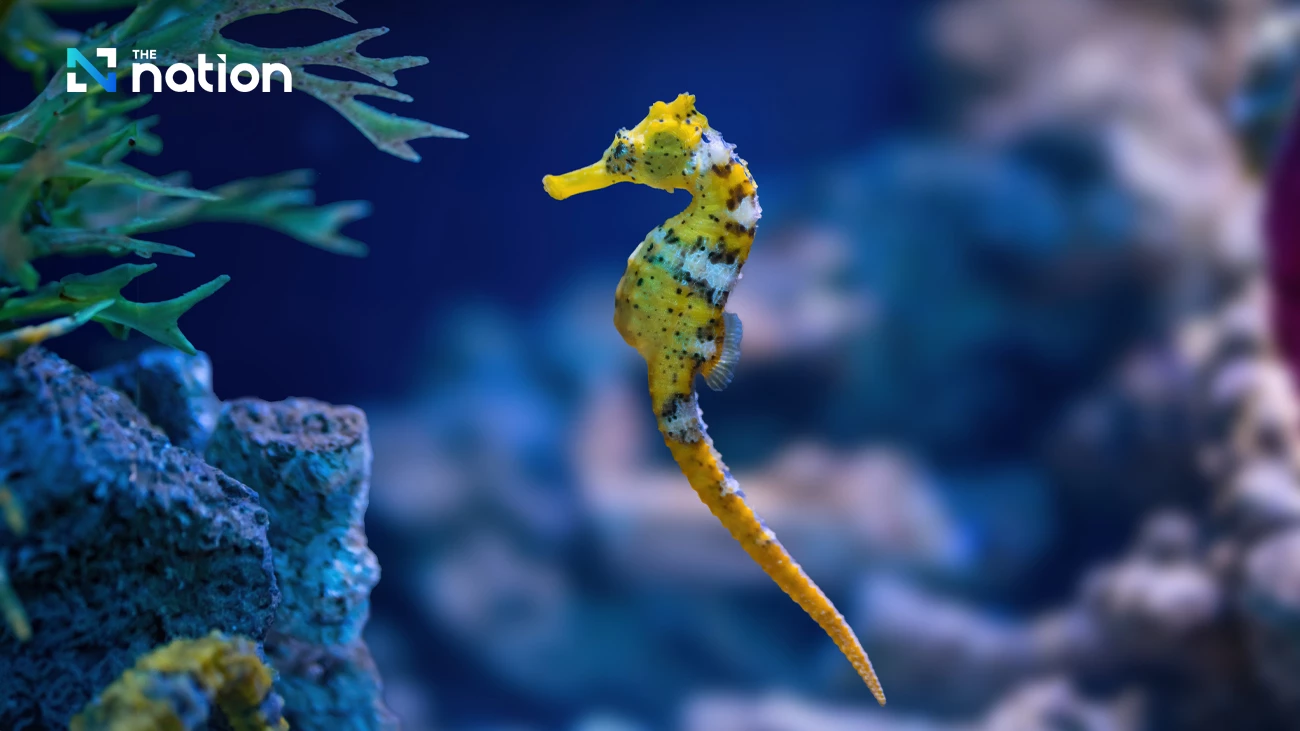
Thailand asks China to reinstate dried seahorses on its approved animal-based medicinal ingredients list, aiming to revive high-value exports.
Thailand’s Ministry of Agriculture and Cooperatives has held a bilateral meeting with China’s General Administration of Customs (GACC) to discuss cooperation on sanitary and phytosanitary (SPS) measures and to exchange technical information to support sustainable trade in agricultural and fisheries products.
After the meeting, Thitiporn Laoprasert, Director-General of the Department of Fisheries, said the department had formally asked China to restore Thai dried seahorses to its list of permitted animal-based medicinal ingredients. Thailand halted seahorse exports in 2016 after concerns were raised that harvesting from the wild could endanger the species.
However, demand for dried seahorses—particularly from China—remains high, and Thailand believes it now has sufficient capacity to supply the market sustainably. The Department of Fisheries has promoted commercial seahorse farming to reduce pressure on wild populations. So far, 20 farmers have been supported, with five already operating independently. Currently, one seahorse farm has been certified under the 2025 CITES-aligned regulations for aquatic wildlife breeding, with two more in the approval process. This demonstrates Thailand’s readiness to resume exporting high-value marine products to China.
CITES allows trade but requires strict control
Seahorses are valued in traditional medicine and sold at high prices, driving increased capture from the wild. They are listed in Appendix II of CITES, meaning international trade is allowed but must be controlled to prevent the species’ rapid decline. Exporting countries must ensure traceability and issue clear trade permits.
Thailand’s Department of Fisheries has therefore established a working group to compile Non-Detriment Findings (NDFs)—scientific assessments proving that exports will not harm wild populations. The department is currently preparing updated data on seahorse habitat, population status, threats and necessary conservation measures for submission to CITES.
“If GACC agrees to relist Thai dried seahorses as an approved animal-based medicinal ingredient, it will be a major opportunity to revitalise this high-value export sector,” Thitiporn said. “We expect that farmed seahorse production in Thailand will generate substantial income in the future.”
Source: Nation Thailand
Share:


<p>Time: November 2025<br /> By: WTO and International Trade Group, Legal Department – VCCI</p>
