

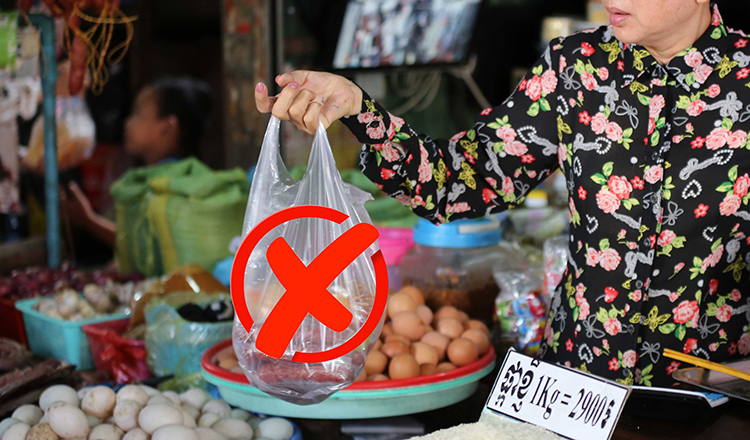
The United Nations Development Programme (UNDP) has issued an alert call over Cambodia’s growing dependence on a linear model of plastic use, cautioning that the trend could create mounting challenges for the country’s transition towards a circular economy.
In a recent statement, the UNDP noted that plastic consumption in Cambodia is rising rapidly as the material becomes increasingly embedded in everyday life.
“Its affordability, versatility and role in ensuring food safety have contributed to a shift away from traditional natural materials, making plastic the preferred choice across multiple sectors.
“Cambodia’s strong economic performance, averaging seven percent GDP growth over the last two decades, has elevated living standards and accelerated the integration of plastic into daily routines.
“This surge in use, the agency warned, is overwhelming existing waste collection systems and contributing to extremely low recycling rates.”
The UNDP stressed that transforming Cambodia’s plastic system requires coordinated interventions across the entire value chain.
It highlighted the need for upstream solutions that eliminate unnecessary plastics, expand reuse options and encourage alternative materials, while downstream efforts must focus on strengthening waste collection, improving recycling efficiency and preventing plastic leakage into the environment.
Ensuring the inclusion of low-income communities and informal waste workers—many of whom are women—is essential for achieving an equitable and resilient circular economy, the organisation pointed out.
The Ministry of Environment has already partnered with the World Economic Forum’s Global Plastic Action Partnership (GPAP). With UNDP’s technical support, the National Plastic Action Partnership is working to develop an evidence-based national action roadmap aimed at reducing plastic pollution, mitigating its economic and social impacts and accelerating the shift toward a circular plastics economy.
The roadmap establishes a comprehensive baseline for key plastic types, previously lacking in Cambodia, and proposes five strategic policy recommendations designed to increase plastic circularity from two percent to 52 percent and significantly cut plastic pollution by 2040.
It is expected to be officially launched towards the end of the current year and will align with the goals of the emerging Global Plastic Treaty.
The UNDP also emphasised the role of consumer awareness and behaviour, noting that informed choices can influence business adoption of circular practices.
Since 2020, the agency has been promoting the 4Rs and supporting alternatives to single-use plastics as part of its broader advocacy on environmental and health risks associated with linear consumption.
Under the Combatting Marine Plastic Litter in Cambodia initiative, supported by the Government of Japan, the UNDP and the Ministry of Environment have conducted extensive awareness campaigns reaching more than 10 million people nationwide.
The initiative promotes circularity not only for single-use plastics but also in sectors such as food and electronic waste. It has also fostered business innovation by supporting nature-based alternatives, including rice straws and banana-fiber packaging, and by testing plastic-modified asphalt for road construction.
In coastal areas, where marine plastic pollution is particularly severe, the UNDP has helped communities to upcycle 3,000 tonnes of plastic waste into durable boards and dispose of non-recyclable plastics through cement kiln co-processing as a waste-to-energy method consistent with circular economy principles.
These efforts complement the Ministry of Environment’s public campaigns, beginning with the 2019 supermarket plastic-bag charge and followed by the nationwide ‘Today, I Don’t Use Plastic Bag’ pledge. They also support the broader objectives of Cambodia’s Circular Strategy and the Sustainable Development Goals.
The UNDP underscored that circularity is not simply a waste management approach but a transformative pathway for resource efficiency, industrial innovation and improved livelihoods.
It identified recycling, agriculture and manufacturing as priority sectors where circular models could simultaneously reduce environmental pressures and open new economic opportunities.
Source: Khmer Times
Share:
<p>Time: November 2025<br /> By: WTO and International Trade Group, Legal Department – VCCI</p>
