

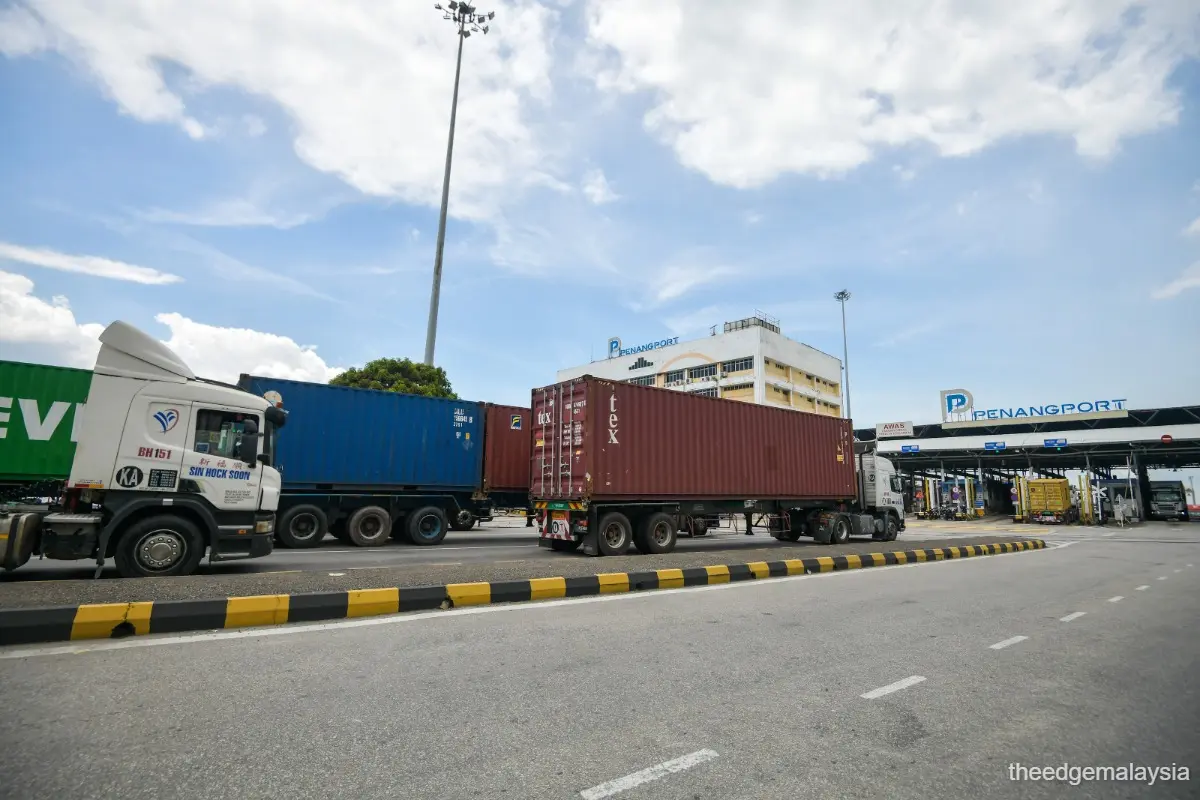
Malaysia’s trade landscape has entered a period of heightened uncertainty as the US, under President Donald Trump, imposes sweeping tariffs on its trading partners.
Even then, the Ministry of Investment, Trade and Industry (MITI) managed to secure a reduction in the so-called reciprocal tariff from 25% to 19%, a reflection of quick and coordinated diplomacy by the nation’s top trade negotiators.
Yet, the prospect of a tariff of up to 300% on semiconductors still hangs over the industry, underscoring the risks of a volatile global trade environment. In this interview, MITI’s Deputy Secretary-General (Trade) Mastura Ahmad Mustafa discusses the implications of the tariff measures for Malaysia, the strategies being deployed to protect key industries and the lessons drawn from navigating high-stakes negotiations with the United States Trade Representative (USTR).
To begin, could you explain what tariffs are?
In simple terms, a tariff is a tax imposed by a government on imported goods. It is an instrument utilised by a government to raise national revenue, protect domestic industries and reduce consumers’ reliance on imports. Typically, tariffs are paid by importers, but the cost is eventually passed on to consumers through higher retail prices, making imported products less competitive than locally produced goods.
US President Donald Trump revived the ‘Make America Great Again’ (MAGA) agenda, which featured prominently in his campaign. How did tariffs come into play under this policy?
During the US presidential election, President Trump campaigned on a promise to restore America’s past glory. He pledged to advance the MAGA agenda and Agenda 47. Among his economic commitments, he promised to:
To deliver on these pledges, some of President Trump’s earliest reciprocal tariff announcements included:
Why were these tariffs labelled as ‘reciprocal tariffs’?
On 2 April 2025, President Trump announced an additional 10% universal tariff on all products exported to the US, effective 5 April. At the same time, reciprocal tariffs at varying rates were imposed on countries running trade surpluses with the US, effective 9 April. Trump argued that these surpluses were the result of unfair, non-reciprocal tariffs on American products. In his view, the additional duties on countries with trade surpluses with the US were a justified countermeasure to correct the imbalance.
According to the US Bureau of Economic Analysis, Malaysia ranked 15th among America’s surplus partners in 2024 with a trade surplus of US$24.8 billion. As a result, Malaysia was initially hit with a reciprocal tariff of 24%, and later raised to 25%. On 31 July 2025 (US time), Trump announced a revised rate for its trading partners, including Malaysia, which was reduced to 19%.
It is understood that in 2024, 60.3% of Malaysia’s exports to the US comprised semiconductors. What is MITI’s view on President Trump’s recent announcement that semiconductor imports to the US could face a tariff as high as 300%? Should Malaysia be worried about such a drastic hike?
A 300% tariff on semiconductor imports would have a profound impact on trade, especially for major exporters like Malaysia. For now, Malaysian semiconductor exports to the US remain exempt from the reciprocal tariff.
In April 2025, the Trump administration, through the US Department of Commerce, launched an investigation under Section 232 of the Trade Expansion Act 1962 to assess whether semiconductor imports, related manufacturing equipment, and derivative products pose a threat to US national security. The outcome of this probe will guide the president’s next steps, which could include tariffs of up to 300% on related imports from all countries, except for companies that invest or build factories in the US.
In 2024, Malaysia’s exports of electrical and electronics (E&E) products to the US totalled RM119.9 billion, or about 20% of the nation’s overall E&E exports. Semiconductors alone accounted for RM60.6 billion, representing 19% of Malaysia’s total semiconductor exports. The industry employs more than 72,000 skilled workers and is supported by over 7,200 local suppliers, ranging from SMEs (small and medium enterprises) to large firms. The spillover effects from the E&E and semiconductor sector also extend to Malaysia’s automotive, medical device, renewable energy, digital and aerospace industries.
The consequences for Malaysia would be severe if semiconductors were subjected to tariffs under Section 232 or if the US trade policy shifts in the future. The country risks losing the US as a key export market if our products become less competitive due to such high tariffs. It must be stressed, however, that the US government has yet to set out in detail how such tariffs would be implemented.
Based on current indications, exemptions may not be country-specific but instead company-specific, likely favouring firms that invest directly in the US regardless of where their global operations are located. This means the impact would depend heavily on the investment structures and operational footprints of multinational corporations, as well as the final decisions of the US authorities.
The government — through MITI, the Malaysian Investment Development Authority (MIDA) and Malaysia External Trade Development Corporation (MATRADE) — is already taking key mitigation steps. These include engaging actively and regularly with the USTR and the Department of Commerce to ensure Malaysia’s voice is heard and taken into consideration favourably in the US policy process.
In parallel, MITI has stepped up its outreach and engagement programmes with major exporters and related industries, while accelerating industrial reforms and rolling out a supply chain mapping project to identify weaknesses and opportunities across Malaysia’s E&E and semiconductor ecosystem.
The government is also encouraging industry players to diversify into alternative export markets such as the Middle East, Africa, Latin America and Europe, while fully leveraging digital trade platforms such as the MADANI Digital Trade Platform, as well as support schemes like the Market Development Grant (MDG) and Services Export Fund (SEF). Close collaboration is also underway with key industry bodies such as American Malaysian Chamber of Commerce (AMCHAM), Federation of Malaysian Manufacturing (FMM) and Malaysia Semiconductor Industry Association (MSIA) to ensure timely ground-level feedback and coordinated responses.
Malaysia recently managed to reduce the reciprocal tariff from 25% to 19% through negotiations. As the chief negotiator, what lessons did you and your team take away from this experience?
The reciprocal tariff episode illustrates how a trading nation like Malaysia is exposed to global uncertainties, including sudden shifts in trade policy by major powers. Conventional methods, such as free trade agreement negotiations that typically take years, are no longer sufficient when policy changes are imposed abruptly.
In this regard, I would like to share two key lessons that could serve as guidance should Malaysia face a similar situation in the future:
Source: The Edge Malaysia
Share:

<p>Time: November 2025<br /> By: WTO and International Trade Group, Legal Department – VCCI</p>
