

Singapore’s manufacturing output picked up in September even as the Trump administration added pharmaceuticals, a major export from the Republic to the US, to its list of goods under tariffs.
Experts said the impact of the 100 per cent levy, which took effect on Oct 1, is likely to be limited as most large pharmaceutical companies here are building factories in America and could be exempted from the tax.
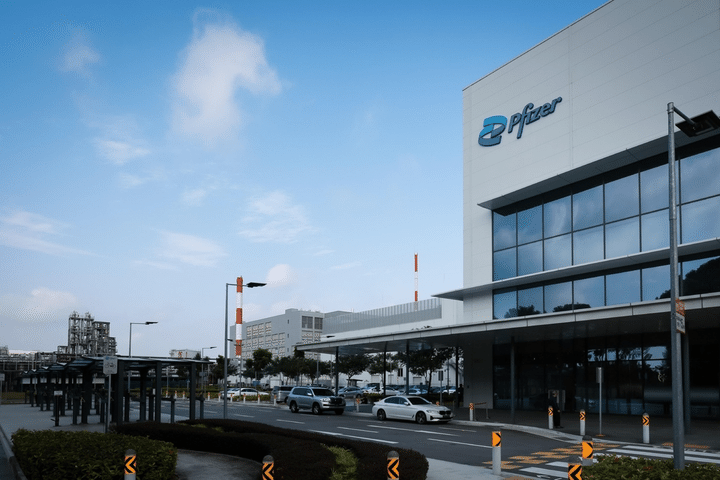
US pharma giant Pfizer, for instance, received a three-year reprieve from the sectoral tariff earlier this week. It is the biggest contributor to Singapore’s pharmaceutical manufacturing output.
The purchasing managers’ index (PMI) – a barometer of the overall manufacturing industry’s health – rose from 50 points in August to 50.1 points.
The electronics sector, which accounts for 40 per cent of manufacturing output, recorded a PMI of 50.7 points, marking its fourth straight month of expansion.
A PMI reading above 50 indicates growth; one below suggests a contraction in output.
The monthly survey, which is gathered and compiled by the Singapore Institute of Purchasing and Materials Management (SIPMM), did not offer a separate snapshot for the pharmaceutical sector.
The sector accounts for around 13 per cent or US$4 billion (S$5.2 billion) of exports from Singapore to the US.
“Despite numerous challenges of uncertain global trade policy and sectoral tariffs, the outlook of the Singapore manufacturing business remains positive as demand has started to build up towards the year-end festive season,” said SIPMM executive director Stephen Poh.
DBS Bank senior economist Chua Han Teng took a more cautious view. He said that although PMIs have edged up, they were lower than readings issued at the start of 2025, suggesting that manufacturers are contending with a volatile economic landscape and the risk of softening external demand.
He said firms were also dealing with “persistent uncertainty surrounding new rounds of US sectoral tariffs”.
He added that even if more pharmaceutical companies secure tariff reprieves, “existing muted business sentiment would still be negatively affected”.
US President Donald Trump, in announcing the tariff on Truth Social on Sept 25, said the levy on branded and patented products will not apply to firms building factories in America if “construction has started”.
He has since granted Pfizer, which has committed to growing its manufacturing in the US, a three-year exemption from the levy.
The company has also agreed to slash some of its US drug prices, and sell directly to American consumers and businesses.
Several pharmaceutical firms told The Straits Times that they expected to be similarly insulated from US tariffs because of their American manufacturing pledges.
Pfizer opened a new 429,000 sq ft plant in Singapore in July 2024 to produce active pharmaceutical ingredients – the biologically active component of a drug – for its cancer, pain and antibiotic medicine.
The state-of-the-art facility is an extension of its two-decade-old manufacturing site in Tuas Biomedical Park.
Source: The Straits Times
Share:

<p>Time: November 2025<br /> By: WTO and International Trade Group, Legal Department – VCCI</p>
