

Stock markets around the world may be reaching new highs but there isn’t much good news on the economic and political fronts.
The global economy is beginning to feel the harm from US President Donald Trump’s trade war. China’s economy appears to have stalled in August, with consumer spending and investment withering. And in the US, there are signs of a slowdown with lead indicators turning south and labour demand losing momentum. Conflicts in the Middle East and Ukraine are continuing, with a high possibility of further shocks that might have global implications.
Upside surprises should not be ruled out. Maybe there will be a massive policy stimulus in China that would turn the economy around. Or there could be a further burst of capital spending in the US as Trump’s tax cuts and deregulation open up new opportunities for profitable investment. However, for policymakers and businesses in our region, the more prudent assumption to make is that the world economy will become more challenging in the coming year or two.
So, this is the world that the region confronts. Given this, how well will the regional economies fare at fending off the tremors in the global environment? What factors will determine their performance?
First and foremost, it will be the strong political direction of the economy that will matter. This is the key to maintaining confidence and ensuring discipline in monetary and fiscal policies while providing the basis for sound long-term economic initiatives. Second, economies will need to be agile enough in their trade diplomacy to find ways around rising protectionism and still reap the synergies from trade and foreign investment. Finally, the capacity to promote sources of growth to offset protectionist headwinds will also help. This will depend on maintaining domestic demand and plugging into the future industries that are emerging.
Considering these factors, we find three likely outperformers in Asean — Vietnam, Malaysia and Singapore. This may appear counter-intuitive since these highly open economies are greatly exposed to the damage from trade wars and inward policies that many countries are pursuing. These are certainly vulnerabilities but these countries possess other strengths that are likely to help them weather the rough times ahead.
A supportive political system must be the starting point
The question about politics is not so much the frequent changes of government or the number of street protests. The critical factor is whether the political system supports sound policies.
At one level, this means credible monetary and fiscal policies that maintain economic stability. At a time of growing financial vulnerabilities, the ability to withstand potential financial market ructions will be more valuable. The disjoint between ebullient stock markets and more cautious bond markets cannot last long. We believe that some form of correction with all its dislocations is likely at some point in time. When that happens, it will be emerging economies whose credible central banks and finance ministries inspire confidence in global investors that will better absorb the shocks.
At another level, it also means that the system allows initiatives and reforms that promote long-term development — even if some of these measures might be painful in the short term. Does the political system facilitate a government that does the right things for long-term economic transformation? Can it make well-laid plans and demonstrate a strong administrative capacity to implement those plans? Has the system taken care to develop the skills and ecosystems needed?
Agility in trade diplomacy
The international trade order is in disarray and a new order is emerging. Trump’s trade wars have undermined the set of rules, norms and practices that protected small trading nations. These nations can no longer depend on institutions such as the World Trade Organization to provide much protection.
Two factors are important in determining how countries might better handle this challenge. One is how agile a country’s trade diplomacy is — whether it can find ways to negotiate with the US and other large trading partners so as to minimise tariffs and other forms of protectionism.
Another factor is the country’s ability and willingness to forge new trading arrangements that bypass US protectionism. After all, the US’ imports account for roughly 13% of global imports — there is still the remaining 87% of the world market to serve. Aggressively negotiating multilateral and bilateral economic partnership agreements will serve a country well, but not all countries will be able to pull this off.
Opportunities to plug into new engines of growth
Despite the wars and trade conflicts that we read in the headlines, there remain opportunities for economic development that the region can exploit if countries possess good fundamentals. We present here a few examples of the positive engines of growth.
We all know about the artificial intelligence (AI) boom that has triggered an explosion of capital spending that has broken all records. There are technological breakthroughs in other areas as well, such as in the biomedical field as well as in renewable energy. The resulting capital spending has raised demand for components manufactured in emerging economies, including in Southeast Asia. The huge investments in data centres in Malaysia and elsewhere in the region are a testament to the positive spillovers that our region is enjoying as a result.
Supply chains will continue to be reconfigured. The reasons for production to shift out of China remain in place. First, China’s rapid technological progress allows it to move up the value chain. In doing so, it is vacating lower-value niches that can be shifted out of China to other developing economies in a way that is good for China (releasing scarce labour and other resources that can be deployed to more profitable ventures) as well as other emerging economies. Many Chinese companies are moving production abroad, not only because of the trade wars and geopolitical tensions but because they are globalising and they find it beneficial to invest in regions such as Southeast Asia.
Second, even if the US strikes a trade deal with China, the two powers will remain engaged in a major and long-lasting contest for global power. That means the US tariff on Chinese goods will still be punishingly high compared with those that our region suffers. Moreover, many global firms will seek to produce outside China to avoid potential geopolitical pitfalls. Third, several emerging economies have improved their fundamentals in the past decade and can now offer global manufacturers a return on investment that is close to that of China.
Trade in services continues to grow. The past few years have seen a surge in exportable services out of countries such as India and the Philippines. Many of the world’s largest professional services companies have established “global capability centres” in these countries, hiring skilled accountants, analysts and even researchers at a fraction of the cost in developed economies. Yes, there are some potential risks posed by AI to these global capability centres but the available research shows that the effects need not be fatal so long as countries adapt to new technologies.
How do the regional economies stack up?
The most recent data on global flows of foreign direct investment shows that Asean has maintained a higher share of greenfield investments (that is, investments in new factories) compared with China and India. But there is also evidence of a two-tier Asean emerging — where there are a few countries that are performing well but the others are lagging. If we compare countries according to the factors that we determined are critical, then the reasons for this two-tier Asean become clearer.
First, in terms of political factors, some countries are clearly doing better than others. Singapore and Vietnam’s dominant-party system provides the stability that encourages long-term planning. But Malaysia’s more competitive set-up also does well because of its competent economic policy institutions. The key is whether the important institutions, such as the judiciary, police, military and other stakeholders, exert stabilising or destabilising effects on broader politics. In this context, it would appear that Thailand and Indonesia are currently suffering some degree of destabilising impact as various players jostle for power.
Vietnam, Singapore and Malaysia stand out on the second factor of agility in trade diplomacy. These countries are part of a select club that holds membership in both the Comprehensive and Progressive Agreement for Trans-Pacific Partnership (CPTPP) and the Regional Comprehensive Economic Partnership (RCEP). Membership of RCEP gives them tariff-free access to a broad range of Asian markets. At the same time, the CPTPP signals their commitment to high standards in market openness and regulatory standards, which in turn allows expanded trade into higher-income markets, including Japan, the UK and Canada. This dual participation enhances their attractiveness to multinational corporations looking to diversify supply chains away from China and to secure regulatory predictability.
Note also how Vietnam was quick off the mark to engage with the Trump administration on different levels, showing a good understanding of how the US administration worked and what its priorities were. The Vietnamese were adept at offering concessions, including a reported fast-tracking of a Trump golf resort, and were one of the first to secure a tariff deal that helped limit the damage from prolonged uncertainty.
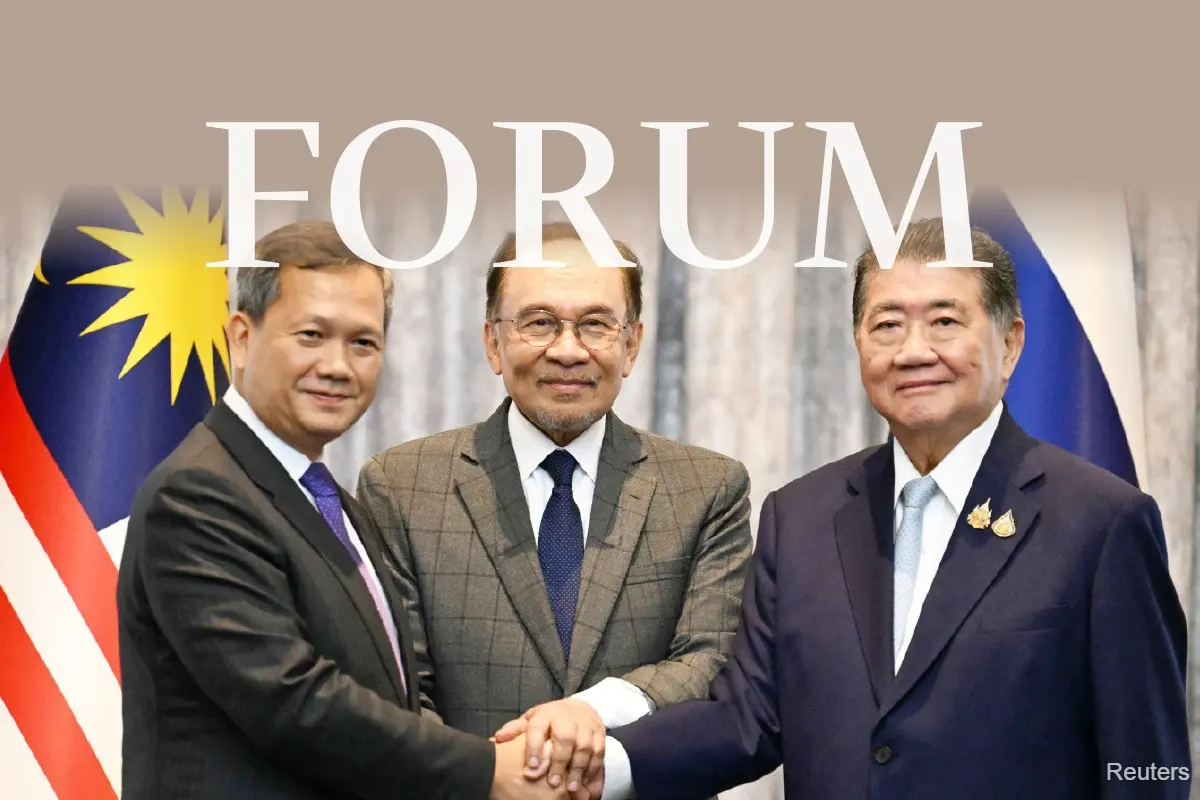
Malaysia also showed a similar agility. Its trade minister and other officials made multiple trips to Washington. Malaysia also leveraged off its adept diplomacy in brokering the Thailand-Cambodia ceasefire to win it brownie points with the White House. Singapore was also quietly engaged in intense trade diplomacy at multiple levels with the US administration and secured one of the best possible trade deals among US trading partners. In all these cases, the ability to quickly respond to emerging challenges and deliver on positive outcomes helped these countries to manage the fallout from global turbulence.
The third important determinant of relative performance is the capacity to develop new engines of growth. Vietnam, Singapore and Malaysia have shown an ability to be adapters to global technological change. Vietnam has successfully positioned itself as a hub for labour-intensive electronics exports, underpinned by sustained investments from major multinationals. Malaysia’s pre-existing advantage in the assembly, testing and packaging segment of the semiconductor supply chain is a strong base for the economy to expand into other segments that involve higher degrees of value-add. Singapore, while already a high-income economy, reinforces the region’s technological core through its position as a hub for logistics, finance and digital services, supported by predictable regulatory institutions.
Conclusion
The coming years are likely to throw up immense challenges for Southeast Asia. There will be unexpected and probably unpleasant surprises in geopolitics, financial markets and in the global economy. There will also be new opportunities to exploit in technology, supply chain reconfiguration and services. But exploiting these opportunities will not be straightforward because they demand more support from an efficient state than in previous economic transformations — investment in high skills, in good infrastructure and in developing with foresight a complex ecosystem that supports these new technologies.
This is where a supportive political system, trade openness, an appetite for reform and participation in global value chains will matter. It is these factors that will allow countries to capture opportunities from the ongoing waves of supply chain realignments and technological shifts. Sound institutional frameworks, while differing in form from country to country, will help provide sufficient stability to manage internal pressures and external shocks. Countries would do well to see how Vietnam, Malaysia and Singapore created these strengths in their own different ways.
Source: The Edge Malaysia
Share:

<p>Time: November 2025<br /> By: WTO and International Trade Group, Legal Department – VCCI</p>
