

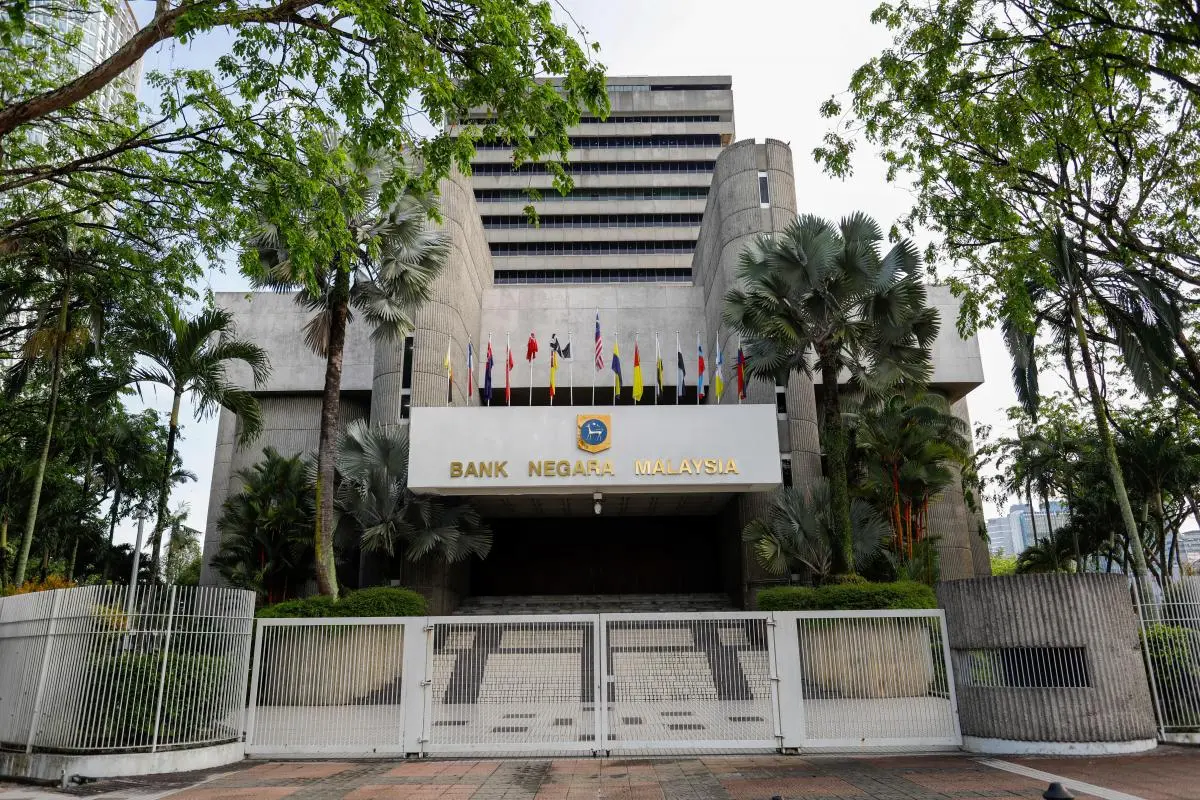
The market is pricing in a Bank Negara Malaysia (BNM) interest-rate cut in the coming months, while economists expect a hold, presenting a potential opportunity for a carry trade.
BNM cut rates by a quarter point last month, its first easing since 2020. A solid economy and better-than-expected US tariff rates may allow it to stop there for now. However, ringgit swaps are pricing a 50% probability of another rate cut in the next six months, offering the opening for the carry trade — borrowing in a low-yielding asset to invest in a higher-yielding one.
“We have a call to fade the current market pricing of rate cuts for Bank Negara Malaysia, which appears overdone relative to our expectations for the overnight policy rate to be kept unchanged through 2026,” said Jonathan Koh, economist at Standard Chartered Plc.
BNM said earlier this month that Malaysia’s economy is strong enough to weather an expected export slowdown due to US tariffs. The central bank is now expected to keep rates on hold until the end of 2026, according to a median forecast of economists surveyed by Bloomberg. The country received a final US tariff rate of 19%, which was lower than the rate of 25% threatened by US President Donald Trump.
Possible chip tariffs may also not hurt too much, “as most companies in Malaysia’s chip sector are US-based or have committed to continue investment and production in the US,” Koh said.
Standard Chartered recommends paying two-year ringgit non-deliverable interest-rate swaps with a target of 3.17%, opened on Aug 11 at 2.97%. The securities, which turn a profit when market rates rise, currently sit at 3.015%. Paying them while receiving the three-month Kuala Lumpur Interbank Offer Rate is a positive carry trade, Koh said.
BNM’s next rate decision is due on Sept 4. Ebbing expectations for near-term rate easing are showing up in auction demand for short- to mid-dated securities, which are more sensitive to changes in interest rates, as well. Malaysia’s 2030 bond auction on Aug 21 drew a bid-to-cover of 1.87 times, the second-lowest this year. The 2040 and 2044 note sales this month, by comparison, saw a cover of at least 2.73 times.
Predictions of further cuts also fuelled a rally in shorter-dated bonds that now stands at risk of an unwind. The spread between three-year Malaysian government bonds and the policy rate is currently around 22 basis points, a full standard deviation below its five-year average, and potentially vulnerable to a reversion back to the mean.
Source: The Edge Malaysia
Share:






<p>Time: November 2025<br /> By: WTO and International Trade Group, Legal Department – VCCI</p>
