

Thai exporters to retain US market.
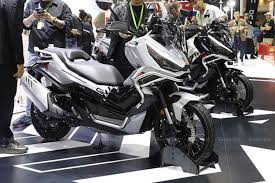
Thailand's medium-sized motorcycles (engines of 250-800cc), a key export product to the US, are likely to retain their market share despite the new 19% reciprocal tariff.
According to Pornchai Thiraveja, director-general of the Fiscal Policy Office, although the price of Thailand's medium-sized motorcycles is rising, they still remain 23-32% cheaper than Japanese competitors. This price advantage should allow Thailand to retain its share in the US market for this segment, he said.
"The tariff reduction by the US to levels similar to regional competitors helps lessen the incentive for manufacturers to relocate production bases to avoid high tariffs, while also preventing a partial loss of market share in the US," said Mr Pornchai.
"In some industries, Thailand's strengths in quality and production networks provide a competitive edge, even with higher tariff burdens."
Although these new tariffs present significant challenges, they also represent a valuable opportunity for Thailand to restructure its economy and strengthen competitiveness, moving towards an economy that relies more on innovation, technology and diversified markets, he said.
To achieve this, Mr Pornchai said the Finance Ministry must work with all stakeholders to ensure maximum effectiveness for its measures and build resilience in the Thai economy to withstand future changes in global trade conditions.
Exporters' ability to adapt is critical, as products with profit margins of less than 10% may need to urgently cut costs and improve production efficiency or they may be unable to fully absorb the added tax burden without raising prices, he said.
Small and medium-sized exporters with limited ability to adjust will be hit harder than large corporations because they have fewer resources and less bargaining power to share the tax burden or relocate production bases, said Mr Pornchai.
To address these challenges, he said the government recently approved a stimulus plan worth 157 billion baht, with projects under Phase 1 and Phase 2 already endorsed.
For Phase 1, on June 24 the cabinet approved 481 projects with a budget of 115 billion baht, focusing on infrastructure investment in water and transport (85 billion baht), tourism development (10 billion), export impact mitigation and productivity enhancement (11.1 billion), and community economy (9.20 billion).
These projects aim to provide short-term economic stimulus, create jobs and lay the foundation for long-term development, said Mr Pornchai.
For Phase 2, on Aug 5 the cabinet approved an additional 18.5 billion baht to enhance competitiveness and develop human capital. This phase covers two main projects, including the Competitiveness Enhancement Fund for Targeted Industries (10 billion baht), aimed at assisting businesses affected by the reciprocal tariff and global minimum tax, while also attracting investment in strategic industries.
The Human Capital Development Investment Project was allocated 8.48 billion baht to provide education loans through the Student Loan Fund to 139,481 new and existing students to prevent dropouts in the 2025 academic year.
Source: Bangkok Post
Share:

<p>Time: November 2025<br /> By: WTO and International Trade Group, Legal Department – VCCI</p>
