

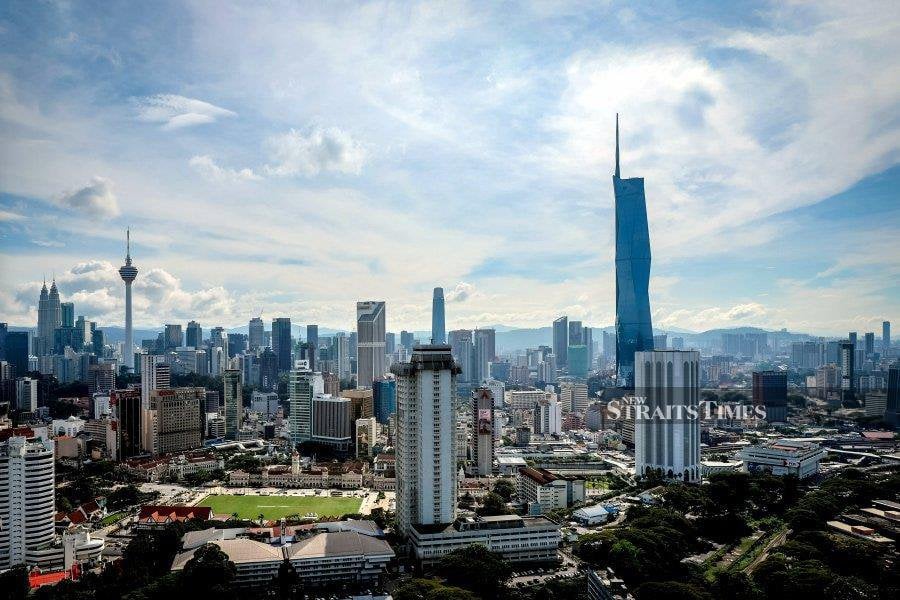
Malaysia's economy is gearing up for a measured but steady climb through 2025 and into 2026, balancing persistent global tariff pressures with robust domestic policy support and fresh growth catalysts on the horizon.
UOB Global Economics & Markets Research's latest assessment strikes a cautious note but underscores Malaysia's resilience in the second half of 2025 (2H25) as the economy adapts to shifting trade dynamics. A key shift came on Aug 1, when US President Donald Trump confirmed reciprocal tariffs of 19 per cent on imports from Malaysia and most trading partners – notably lower than the previously scheduled 25 per cent – which took effect on Aug 7. The White House also extended the deadline for new China tariffs by 90 days to mid-November, providing breathing space for global supply chains.
Some US measures – including sector-specific duties under Section 232 and a 10 per cent levy targeting BRICS nations and their allies – remain pending, keeping global trade uncertainty in play. But on the home front, Malaysia's pro-growth policies are expected to provide a buffer. Cash assistance to households, salary increases for civil servants, and ongoing infrastructure rollouts will continue to drive domestic demand, offsetting some of the external headwinds.
UOB noted that the introduction of new fiscal reforms – such as an expanded sales and service tax (SST), mandatory e-invoicing, and full enforcement of higher minimum wages – may temporarily temper business sentiment and spending in 2H25. Meanwhile, the oil and gas sub-sector faces potential output disruptions, posing another downside risk.
Bank Negara Malaysia has kept its 2025 GDP growth forecast unchanged at between 4 per cent and 4.8 per cent, saying it has already accounted for a range of possible tariff outcomes. The central bank governor Datuk Seri Abdul Rasheed Ghaffour sees no need to revise projections, noting that the completion of key tariff negotiations has helped reduce uncertainty.
UOB noted that on a seasonally adjusted basis, real GDP improved for the second straight quarter and the most in a year by 2.1 per cent quarter-on-quarter (QoQ) last quarter (from positive 0.7 per cent in 1Q25).
"Stronger domestic demand (particularly private consumption and total investment) was the main contributor to 2Q25 GDP growth, counterbalancing the weakness in external sectors."
UOB said that looking ahead, 2026 could mark a turning point. Growth is projected to pick up to 4.5 per cent, supported by a possible 25-basis-point cut in the overnight policy rate to 2.50 per cent by the end of the fourth quarter of 2025 (4Q25), an expansionary federal budget to be tabled on Oct 10, and the next phase of salary hikes for civil servants in January.
Tourism is set to be a major economic driver, with Visit Malaysia Year 2026 expected to draw strong arrivals from China thanks to visa exemptions, newly signed Malaysia–China tourism cooperation MOUs, and expanded direct flight routes.
Sector performance remains broadly encouraging. Hong Leong Investment Bank Bhd (HLIB) projects a healthy 4.3 per cent year-on-year (YoY) expansion in the second quarter of 2025, following a 4.4 per cent rise in the first quarter, underpinned by a rebound in agriculture and sustained growth in services, manufacturing, and construction.
Malaysia is poised to weather global trade turbulence in 2025, with domestic demand, targeted fiscal measures, and a robust labour market expected to offset external headwinds.
According to HLIB, private consumption will remain the country's primary growth engine, bolstered by steady employment, wage gains, and policy support. A key boost will come from a one-off RM100 cash transfer for all adults between Aug 31 and Dec 31, 2025. If fully spent, the RM2 billion injection could lift private consumption by 0.2 percentage points.
FISCAL AND MONETARY POLICIES TO SPUR GROWTH
Putra Business School Professor Dr Ahmed Razman Abdul Latiff said the country's GDP growth trajectory in both the short and long term will be shaped by how effectively fiscal and monetary policies are deployed.
He said that in the short run, fiscal and monetary policies can influence GDP growth through cash stimulus packages, tax restructuring, calibration of the overnight policy rate (OPR) and controlling the flow of money supply.
"In the long run, it is more on the policies that promote productivity, bringing in more investments into the country and reform on business accessibility and ease of doing business," he told Business Times.
On Bank Negara's challenge of balancing credit growth with financial stability, Ahmed Razman suggested broadening financing options.
"Bank Negara can maintain financial stability by diversifying financing platforms towards encouraging more equity-based financing as well as smart partnership financing, away from debt-based financing," he said.
Meanwhile, the Socio-Economic Research Centre (SERC) said the interactions between monetary and fiscal policy are complex given their mutual influence and impact, particularly on economic growth, consumer demand and investment spending via lower interest rates, inflation and debt.
SERC executive director Lee Heng Guie, meanwhile, noted that while interest rates can be lowered to make them less restrictive in supporting domestic demand amid current short-term economic uncertainties, the focus must remain on safeguarding price stability and preventing financial instability.
"During the previous periods of major economic shocks, low interest rates were needed during an economic recession or severe economic downturn.
"When the economy has recovered post-Covid, interest rates have been gradually normalised, as the extended periods of low interest rates pose a problem for economic and financial stability because they encourage excessive risk-taking," he said.
Lee added that while fiscal support is needed to complement less restrictive monetary policy to ensure continued economic growth, it should prioritise prudence, utilising fiscal space when needed and rebuilding buffers afterwards to ensure long-term debt sustainability.
Source: New Straits Times
Share:


<p>Time: November 2025<br /> By: WTO and International Trade Group, Legal Department – VCCI</p>
