

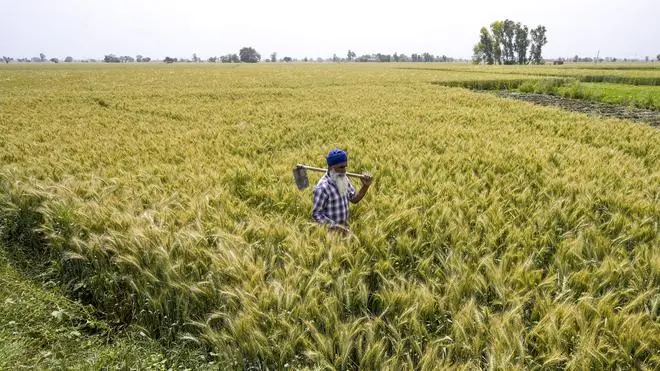
Indian exporters of agri, pharma, vehicles etc have not been able to take advantage of lower duties offered under the pact, notes study.
Amidst growing uncertainty over trade with the US, India is looking at extracting last-mile concessions from the ten-member ASEAN countries for products in sectors such as agriculture, pharmaceuticals and automobiles, where there is considerable under utilisation of the bilateral free trade agreement currently under review, sources have said. Both sides are hoping to wrap up the review process in October this year before the ASEAN summit.
The Commerce Department has put together a study analysing utilisation of the pact, formally called the ASEAN-India Trade in Goods Agreement (AITIGA), with a focus on countries including Indonesia, Vietnam, Thailand and Cambodia.
“The study identified items, such as agricultural products, vehicles and pharmaceuticals, where utilisation by Indian exporters of the preferential tariff route offered under the pact is low despite considerable exports to the ASEAN bloc. It was shared with the industry for inputs so that more pointed demands could be made to the ASEAN in the final rounds of review before its targetted conclusion by the year-end,” the source said.
Rising trade deficit
India’s trade deficit with the ASEAN ballooned to $45.2 billion in FY 25 from $8 billion in 2010 when the AITIGA was implemented. Poor utilisation of the FTA by Indian exporters, at 30-40 per cent or less, is seen as one of the main reasons for the deficit. The reasons for low utilisation include non-tariff barriers and stringent ROO (origin rules determining if a product qualifies for concessions) . “A review of the trade pact was initiated in 2023 on India’s insistence but so far it has not yielded favourable results,” the source said.
The study points out that in case of Thailand, vegetable oils and fat is a major export for India, but there is minimal utilisation of the trade pact for it. The same holds true for medicaments under the `others’ category. “It is important to note that the duty differential between the MFN rate (normal rate for all countries) and the preferential rate (lower rate for FTA partner) stands at 5 per cent,” the report noted.
In the case of Cambodia, 15 out of 20 commodities analysed have recorded a 0 per cent utilisation level despite the duty differential of 2-15 per cent. Although automobiles (HSN 87032191) is one of the top exports from India to Cambodia, utilisation of the preferential route for it remains low. “...utilisation remained at only 18.50 per cent in 2023, despite the substantial duty differential, where the MFN rate stands at 35 per cent compared to the AITIGA rate of 5 per cent,” the report noted..
In Vietnam and Indonesia, seven and 12 commodities have been identified, respectively, with high potential. One commodity, in the case of Vietnam, and four commodities in Indonesia, accounted for less than 10 per cent of total exports relative to their total imports, indicating potential scope for export expansion, the report noted.
Source: The Hindu Business Line
Share:



<p>Time: November 2025<br /> By: WTO and International Trade Group, Legal Department – VCCI</p>
