

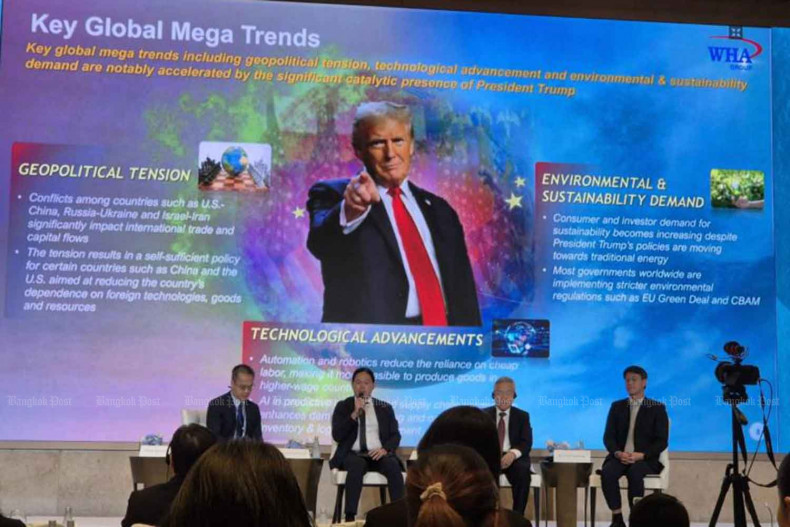
An economist is urging the government to adopt a three-phase strategy to cushion the impact of the newly-imposed 19% US tariff, warning that while the immediate effect may not be catastrophic, the move exposes deeper structural vulnerabilities.
Asst Prof Kiatanantha Lounkaew, of Thammasat University's Faculty of Economics, said on Saturday the tariff, which came into effect on Friday, should not only be seen as a threat but as an opportunity to reorient the economy for long-term resilience.
He proposed a phased response to mitigate shocks and drive structural reform.
In the short term (0–6 months), he recommended a relief fund be set up by the Finance Ministry and Board of Investment to offer low-interest loans and liquidity support to affected exporters, particularly SMEs.
Temporary tax relief and tariff cuts on essential raw materials should also be considered, along with aggressive market diversification into regions such as India, Africa, the Middle East and Latin America, he said.
The medium-term plan (6–18 months) should focus on restructuring supply chains, reducing foreign dependency and promoting industries aligned with sustainability goals, he said.
New investment incentives must align with global standards like ESG criteria and carbon border taxes, he added.
He also stressed the need for workforce upskilling and the integration of digital tools like AI and big data.
In the long run (1.5–5 years), Thailand must shift from being a low-cost manufacturing base to a regional hub for high-value services and innovation, he said. This requires robust investment in R&D, patent development and upstream technologies, he added.
Asst Prof Kiatanantha also proposed the formation of a Thai-US economic dialogue platform and active engagement in multilateral forums to avoid future trade frictions.
Source: Bangkok Post
Share:


<p>Time: November 2025<br /> By: WTO and International Trade Group, Legal Department – VCCI</p>
