

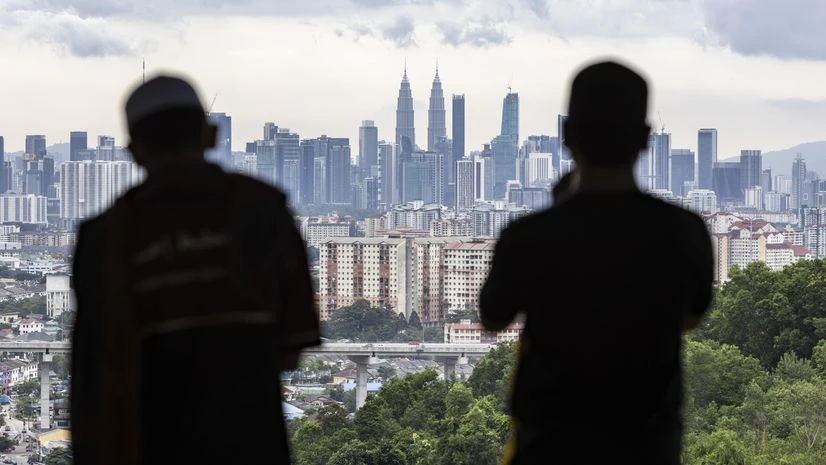
It’s become a familiar strategy in Southeast Asia. Companies from China, coveting the American market but blocked by tariffs, do an end run. They pour into a country, opening factories and filling supply chains. They invest billions of dollars and create jobs and business opportunities. The local economy prospers.
President Trump wants to stop that trade. On Friday he unveiled a new layer of tariffs — set at a global rate of 40 percent — on all goods that move through a third country before they get to the United States. The tariffs are aimed at stopping transshipment, a practice the administration says has allowed Chinese-made goods to skirt punitive tariffs.
The policy landed with a thunderbolt in Southeast Asia, where Chinese investment has helped the economies of poorer neighbors grow more quickly. A crackdown on transshipment will be an economic blow. It also complicates the supply chain in Southeast Asia, which depends heavily on Chinese raw materials and components. From Vietnam to Cambodia to Indonesia, officials and executives are rushing to assess the consequences.
The new tariffs raise hard questions for countries that have long used Chinese components to make the final products they ship to the United States. Does the Trump administration, which has yet to detail how it would enforce the new transshipment tariffs, want to tax it all?
One country offers a case study others could follow for what to do next: Malaysia.
Over the last decade, Malaysia rose to become one of the world’s biggest makers of solar panels. Ten companies, most of them Chinese, shoveled $15 billion into factories around the country, creating tens of thousands of jobs. Then, under President Joseph R. Biden Jr., the United States put tariffs on solar equipment coming from Malaysia of as much as 250 percent. Today, just two solar panel makers remain and one of them has ceased much of its production.
The upheaval has been a wake-up call for Malaysia, a nation of over 35 million people that is rethinking how to power its future economic growth.
“We’re trying to think about ourselves not just as recipients of investment, but actually creators of technology,” said Liew Chin Tong, the deputy minister of investment, trade and industry. “We want to think of ourselves not as a production site, but also as a consumer site with a sizable middle class.”
Officials in Malaysia, who had been trying to work out a trade deal, had said they were ready to work with the Trump administration to stop companies from passing off Chinese-made goods as their own. But they learned on Friday they would be hit with a base tariff of 19 percent. An additional 40 percent would be added for any goods deemed to have originated in China. Those are set to take effect this week.
The country finds itself caught squarely between the United States and China.
Malaysia believes that Chinese solar companies can play an important role in its attempts to increase renewable power sources. Its goal over the next five years is for half the country’s energy consumption to use clean sources like solar power.
Warehouses are stuffed with solar equipment that can no longer be exported to the United States, and the government wants companies to sell it to local solar farms.
One challenge for Malaysia is that it still needs China’s solar industry on its side. More than 75 percent of the solar panels that Malaysia uses locally are imported from China, where prices are much cheaper because of Beijing’s industrial policies that encourage exports.
Longer term, Malaysia wants the Chinese companies to restart their mothballed factories to make solar panels for the domestic market.
More than any other region, Southeast Asia has felt the brunt of the trade war between the United States and China that began in earnest during Mr. Trump’s first presidency.
Southeast Asian countries profited as Chinese and global multinationals relocated their factories out of China to avoid Mr. Trump’s first-term tariffs.
For Malaysia, the aim now is to blunt the collateral damage from the battle between the world’s two largest economies.
“I don’t like to see us just having to choose between US and China,” said Mr. Liew, adding “I want to see us strengthening ourselves.
Source: Business Standard
Share:

<p>Time: November 2025<br /> By: WTO and International Trade Group, Legal Department – VCCI</p>
