

Despite several rounds of discussions, the Anwar administration appears unable to secure a deal with the Trump administration.
US counterparts have already raised multiple requests to remove non-tariff barriers, including the foreign equity cap in strategic sectors, halal certification requirements, and medical technical standards. Yet no progress has been made.
These demands are politically untenable for Prime Minister Datuk Seri Anwar Ibrahim. Conceding on such issues would be tantamount to political suicide, given the sensitivities surrounding national identity, sovereignty, and domestic stakeholders. However, it's equally clear that Malaysia cannot expect tariff relief in exchange for “friendly” gestures like the procurement of 30 Boeing aircraft. Trump’s strategic intent is crystal-clear: use tariffs either to extract revenue or force open markets to benefit US companies: expand their global market share, stimulate job creation and boost tax revenues. In this zero-sum view, partners like Malaysia must either pay up or offer something of greater strategic value.
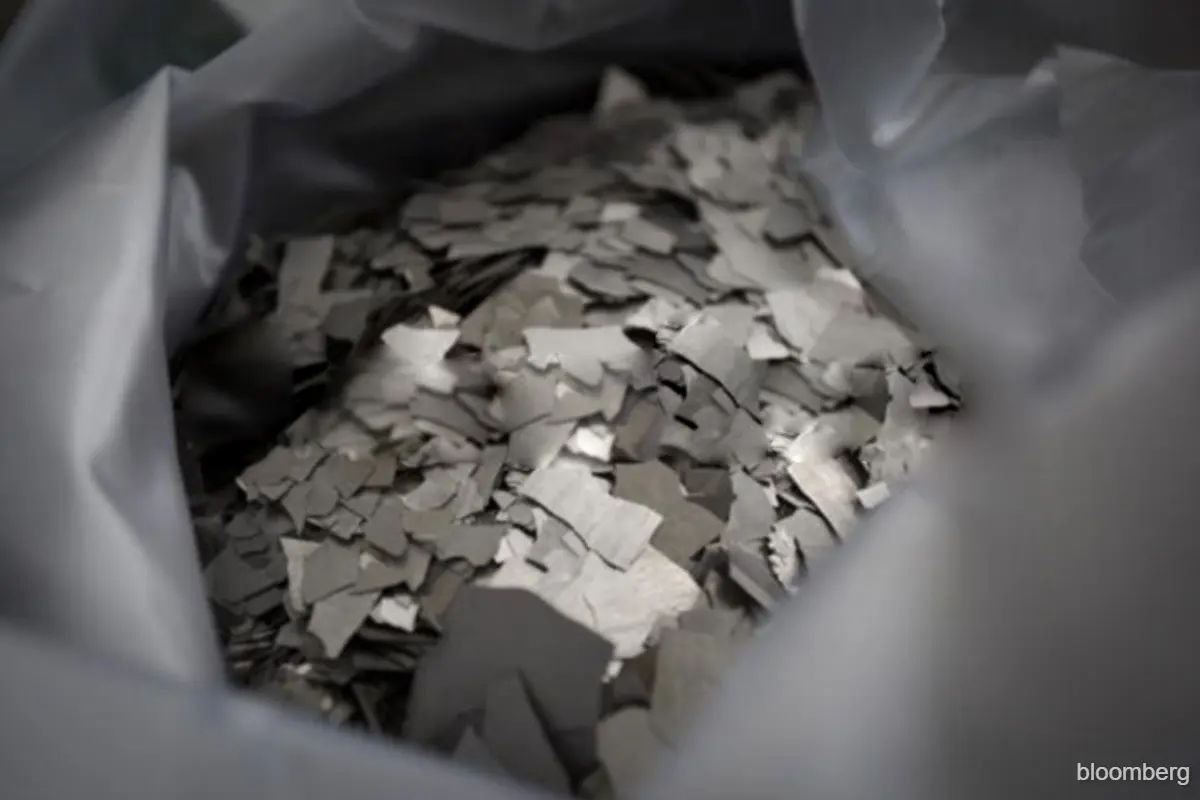
This wild card would be the Malaysian rare earth industries: the United States is in urgent search of non-China sources for rare earth materials, especially after China retaliated against US tariffs in April 2025 with export controls on seven critical rare earth elements. These controls, which escalated in June to include tracking systems requiring disclosure of end-users and volumes, have effectively cut off US access to these vital materials.
Why does China choose to weaponise rare earths? The answer lies in the strategic importance of rare earth elements nowadays to advanced technology manufacturing, including electric vehicles (EV), renewable energy, semiconductors, medical imaging and defence systems. And China has held a dominant position in the global rare earth mineral supply chain, with no competitive alternative supplier. It accounts for nearly 70% of the world’s rare earth oxide; extracts about 65% of the world's rare earth minerals from the ores; owns 90% of global rare earth refinery capability and their subsequent sales channel.
Ironically, the United States is one of the world's largest consumers of rare earth materials, particularly in high-tech and defence applications. For instance, the United States' most advanced jet fighter, the F-35, which made up majorly the 5th generation fighter fleet of the US Air Force and other western defence forces, contains approximately 450kg of rare earth material overall. A disruption in rare earth supply, such as China’s recent export chokehold, risks triggering manufacturing chaos, economic stagnation and even national security vulnerabilities.
In that case, can industries shift away from the rare earth elements? The simple answer is “No”, at least not anytime soon. The rare earth element dramatically enhances energy efficiency, enabling better performance with miniaturised dimensions. For example, the Neodymium (Nd) magnet provides a ten times stronger magnetic field compared to conventional ferrite magnet. It is a key component in the electrical vehicle motors. Without the Neodymium element in the magnet, the EV motors produced will be too large, hence not economically feasible for EV mass production. In short, rare earths are technologically irreplaceable in the near term.
As of now, China’s export restrictions have disrupted critical manufacturing and induced widespread concern among US and Western governments. In response, both policymakers and multinational corporations are racing to secure alternative supply chains, seeking non-Chinese rare earth sources through partnerships and investments. In this shifting global landscape, Malaysia has unexpectedly emerged as a key player. Once overlooked, Malaysia now holds a pivotal role in the rare earth supply chain, having quietly become the second largest rare earth metal producer in the world, second only to China. This rise has earned Malaysia a seat at the global negotiation table, reshaping its role in the unfolding trade war.
Malaysia’s rise to strategic relevance is largely due to the presence of the Lynas Advanced Materials Plant (LAMP), located in Kuantan. Since its establishment in 2012, the plant has been a lightning rod for political and environmental controversy, second only to the 1MDB scandal. Opposition to the refinery, driven by concerns over pollution, regulatory shortcomings and a lack of transparency, gained significant momentum and was one of the grassroots movements that contributed to the fall of the Barisan Nasional government under Datuk Seri Najib Razak in 2018. Despite widespread domestic opposition, the plant's strategic significance has been reframed by the escalating US-China rivalry, positioning Lynas and by extension, Malaysia as a key player in the global trade
What is lesser known is that the Lynas plant itself is a product of earlier geopolitical tensions, but back then it was between Japan and China. In September 2010, a Chinese fishing trawler collided with Japanese Coast Guard vessels near the disputed Senkaku Islands (referred to as Diaoyu by China). After the arrest of the Chinese captain, Beijing retaliated by halting rare earth exports to Japan. At the time, Japan relied on China for over 90% of its rare earth supply, and the embargo brought its high-tech industries to a standstill, exposing the vulnerability of a China-dependent supply chain.
This lesson had triggered the Japanese government to invest and nurture alternative supplies of rare earth metal to de-risk any future sanction from China, while the industries aggressively built up huge stockpiles to buy time for the diversification strategy. Lynas, an Australia mining company, was scouted by the Japanese government as a promising candidate to create the China-free supply chain. Lynas owned the Mount Weld mine, one of the largest rare earth deposits in the world located in Western Australia. However, Australia's stringent environmental regulations prohibited the refining of radioactive ore domestically. Lynas thus needed both an alternative site for refining and capital investment to build the processing facility.
This led to a strategic partnership between Japan and Australia. Japan provided funding through its state-owned Japan Oil, Gas and Metals National Corporation (JOGMEC) and trading giant Sojitz Corporation, while Lynas provided the resource and technical expertise. Malaysia, with its industrial infrastructure and more permissive regulatory environment at the time, became the chosen host for the Lynas Advanced Materials Plant, forming a critical link in what would become the first China-independent rare earth supply chain.
The Lynas trilateral pact, formed out of necessity and not by design between Malaysia, Australia and Japan, is now a crucial strategic global asset and strong leverage against the US tariff. It would be a mirror of the Quadrilateral Security Dialogue (“Quad”) once the US is invited to join this geo-political averting rare earth supply chain system. For context purposes, the “Quad” was formed between the US, India, Japan and Australia whose main aim is to strengthen security collaboration to deal more effectively with the rise of China in the Indo-Pacific region. Similarly, the potential Lynas “rare earth Quad”, with Malaysia replacing India while having the US, Australia and Japan remain, would provide a strategic off-ramp for the US and its allies to avert the rare earth choke enforced by China. For Washington, this collaboration would be nothing short of a strategic crown jewel, and one the Trump administration would highly value in shaping a broader economic security agenda. In turn, Malaysia would leverage on the Lynas Quad to extensively avert the US imposed tariff.
Despite numerous lawsuits brought against the company, there is no sign that Lynas would scale down or cease operation in the foreseeable future. On the contrary, Malaysia government has renewed its operation licences and agreed to further expansion of the plant by allowing the import of rare earth ores containing natural radioactive material after a long-running regulatory battle. Whether welcomed or not, Lynas is now firmly entrenched in Malaysia, both physically and geopolitically. The domestic debate may persist, but the time for reversal has passed. What remains is this: Malaysia must now extract every possible strategic and economic benefit from the status quo, and the first one would be the US tariff negotiation leverage.
Source: The Edge Malaysia
Share:


<p>Time: November 2025<br /> By: WTO and International Trade Group, Legal Department – VCCI</p>
