

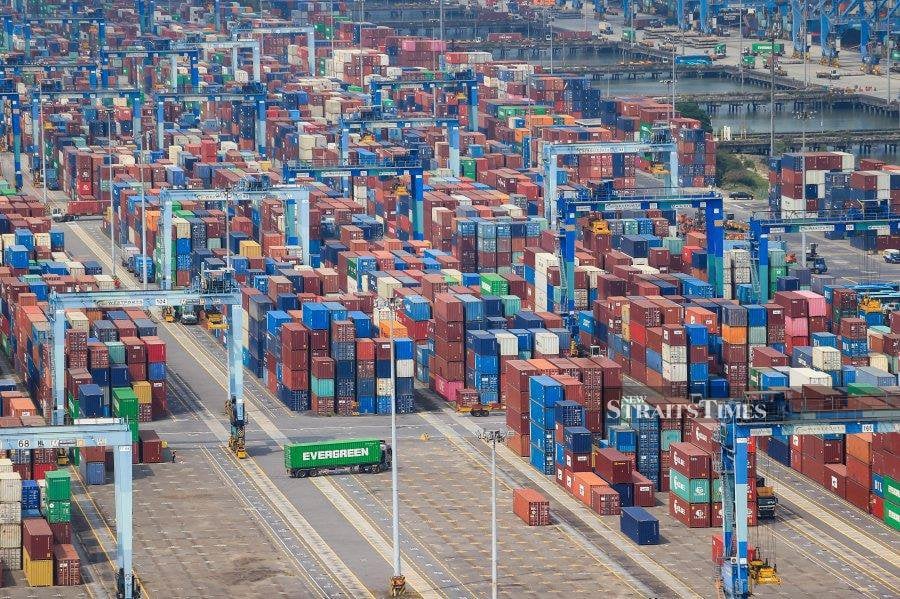
Malaysia may have clinched a deal with Washington to limit the incoming United States (US) tariff to 19 per cent on its exports, but analysts say the move still spells turbulence for trade flows and investor sentiment.
CIMB Treasury and Markets Research said while Malaysia avoided the steepest end of the 10 to 41 per cent US tariff range, the 19 per cent levy remains significantly higher than pre-existing levels and is expected to weigh on export competitiveness.
"The tariff reprieve offers short-term clarity, but it does not reverse the broader direction of US trade policy, which has clearly tilted towards protectionism," the research house said in a note.
Malaysia, along with Thailand, secured the reduced tariff through direct negotiations with the US, while other countries like Canada and Mexico faced steeper or delayed penalties under President Donald Trump's new executive order.
The tariff framework, effective Aug 7, targets countries based on their trade balances and bilateral deal status, with higher rates reserved for those without agreements or deemed uncooperative.
CIMB Research said Malaysia's insistence on maintaining national economic policies, such as Bumiputera equity quotas, during negotiations likely curtailed the extent of tariff concessions.
"Malaysia drew a red line on sovereignty and that limited room for further trade-offs," the firm said, adding that the final rate mirrors those granted to Vietnam and Indonesia in similar talks.
The research house noted that while the 13th Malaysia Plan (13MP) provides a medium-term blueprint with fiscal reforms and a 4.5 to 5.5 per cent growth target, new trade headwinds could complicate its execution.
In currency markets, the ringgit closed 0.6 per cent lower at 4.2650 against the US dollar, giving up earlier gains ahead of the 13MP tabling. The tariff news added pressure to Asian currencies more broadly, with the Thai baht and Indonesian rupiah also retreating.
"Market reaction reflects both uncertainty around implementation and the geopolitical tone underpinning these measures. Investors are increasingly pricing in trade frictions as structural rather than transitory," CIMB Research said.
Despite the downgrade in tariff severity, the firm does not expect a significant rebound in near-term investor flows, noting that capital markets remain sensitive to geopolitical risk.
"Investors will likely stay on the sidelines until there's more visibility on enforcement and retaliatory risks."
The Investment, Trade and Industry Ministry is scheduled to hold a press conference later today to issue an official response to the revised tariff. The US has set Aug 12 as the deadline to finalise its trade deal with China, which could further reshape regional dynamics.
"Any escalation, especially if major partners like China or the EU react, would put Malaysia in a difficult position. For now, we've sidestepped the worst-case scenario, but the road ahead remains bumpy," said CIMB Research.
Source: Business Times
Share:



<p>Time: November 2025<br /> By: WTO and International Trade Group, Legal Department – VCCI</p>
