

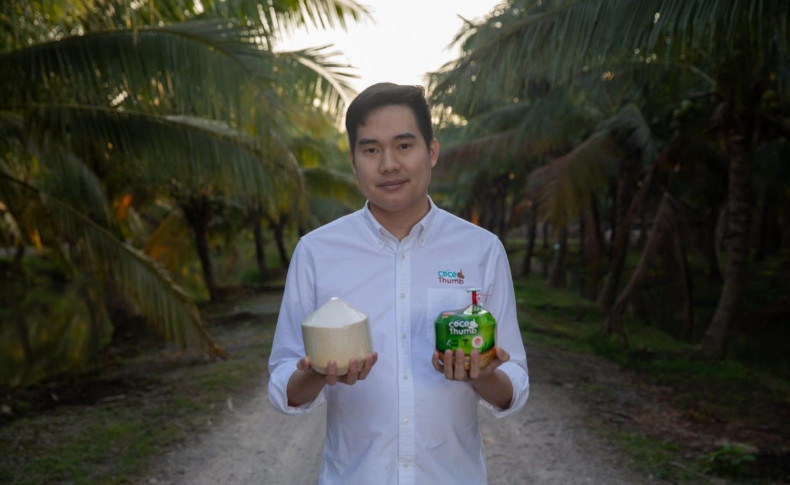
Thai coconut exporters could face significant challenges if the US imposes higher tariffs on Thai products than those exported from Vietnam, says K Fresh, a leading Thai producer and shipper of coconut products.
El Niño conditions raised temperatures in Thailand over the past two years, causing a decline in the coconut supply and leading to rising prices and disruptions in coconut-related factory operations, said Natthasak Manusrungsri, managing director of K Fresh Co Ltd.
Meanwhile, Vietnam significantly expanded its coconut export operations as it benefits from lower labour and production costs, said Mr Natthasak.
He said Thailand's "Nam Hom" coconut is unique, known for its sweet and aromatic taste that can only be grown in specific provinces, such as Nakhon Pathom, Ratchaburi, Samut Sakhon and Samut Songkhram.
Thailand's coconut supply remains lower than that of Vietnam, Indonesia and the Philippines.
The export value of fresh coconuts reached around 7 billion baht in 2024, said Mr Natthasak.
Coconut prices fluctuate with supply, and during low-yield periods prices can reach up to 30 baht a piece, he said.
Now that Thailand has entered a La Niña weather pattern with increased rain, supply has surged and prices have dropped.
Current farm prices for coconuts are 4-5 baht each, which helps Thai exporters to regain market share from Vietnam, said Mr Natthasak.
"If we can't compete with Vietnam, the entire Thai coconut supply chain will be affected," he said.
China remains a key market as its coconut demand grows, and it is important to use this opportunity to reclaim market share, said Mr Natthasak.
If Chinese buyers turn to Vietnamese suppliers, Thailand's coconut industry could suffer a severe impact, he said.
Mr Natthasak said trade negotiations between Thailand and the US on tariff rates are important.
As the agricultural sector is crucial to the Thai economy, it is essential for the government to carefully consider any potential impacts from tariffs to Thai industries, he said.
Even if Thailand secures the same tariff rate as Vietnam at 20%, it will still be difficult to compete due to Vietnam's lower prices, said Mr Natthasak.
"We need a lower tariff than Vietnam, ideally under 20%," he said.
K Fresh exports nearly 99% of its products, with its main markets China and the US, each accounting for around 30%.
If US tariffs on Thai exports are higher than those imposed on competitors, the company may shift its focus to the Chinese market, said Mr Natthasak.
Agricultural exports often rely on volume rather than margin, he said.
To remain competitive, Mr Natthasak urged the government to invest in R&D to enhance the value of Thai products.
Source: Bangkok Post
Share:


<p>Time: November 2025<br /> By: WTO and International Trade Group, Legal Department – VCCI</p>
