

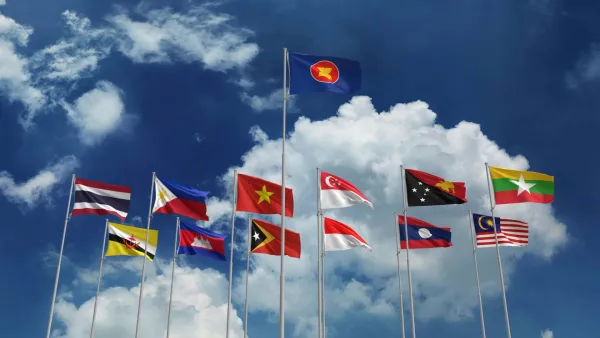
Asean needs a strong core of leaders to drive it forward into its next phase of growth, said Emeritus Senior Minister Goh Chok Tong at a forum in Bangkok yesterday.
WITH the arrival of 2018 fast approaching, comes renewed optimism for Asia-Pacific economies and their trade linkages that will determine the durability of the region’s growth turnaround.
In his keynote speech at this year’s Asia-Pacific Economic Cooperation meeting (APEC), U.S. President Donald Trump sent a clear message to the Asia-Pacific nations, asking them to take care of themselves by putting their countries first, just like he is “always going to put America first.”
APEC Year 2017, with the freshly-concluded APEC Economic Leaders’ Week in Đà Nẵng city the highlight, was comprehensively successful, Deputy Prime Minister and Foreign Minister Phạm Bình Minh told the media on Monday.
The 29th APEC Ministerial Meeting at Da Nang in Vietnam on November 10-11 would be recalled in the future as an occasion that witnessed all three major approaches to global trade—bilateral, regional and multilateral—championed by their proponents.
The South Korean government is showing signs of putting the Regional Comprehensive Economic Partnership (RCEP) before the Trans-Pacific Partnership (TPP) in free trade agreement (FTA) strategy management. President Moon Jae-in adopted a joint statement on the RCEP along with 15 heads of states on November 14, volunteering to say South Korea will act as an active coordinator in the RCEP.
The Association of Southeast Asian Nations and Hong Kong, a special administrative region of China, on Sunday signed a free trade agreement at the sidelines of the 31st Asean summit and related meetings in Manila.
Trade ministers from 11 member countries of the Trans-Pacific Partnership (TPP) have agreed on core elements of the pact, which is from now on called the Comprehensive and Progressive Agreement for Trans-Pacific Partnership (CPTPP).

<p>Time: November 2025<br /> By: WTO and International Trade Group, Legal Department – VCCI</p>
