

Vietnam, a country grounded on agriculture and an important player in the global food system, is partnering with other members of the Asia-Pacific Economic Cooperation (APEC) forum to ensure food security in the face of climate change.
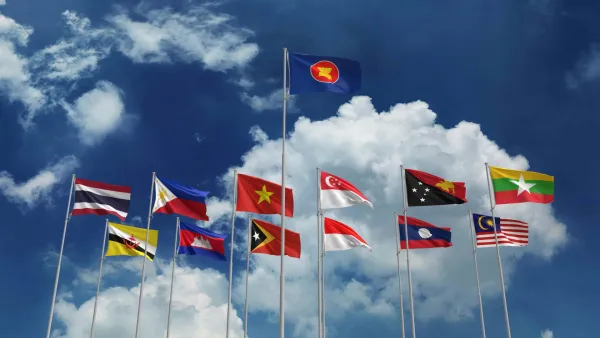
The Association of Southeast Asian Nations (Asean) is expected to become the world’s fourth largest economy in less than a decade but its 10 members vary substantially in terms of risks and opportunities, a Fitch Group unit said.
IN AN effort to encourage more international business activity, the Philippines registered the highest rate of foreign direct investment growth in the ASEAN region last year.
The successful organisation of the Asia-Pacific Economic Cooperation (APEC) Forum 2017 creates a new milestone in the process of international integration of Vietnam and demonstrates the country’s strategic vision toward the region, President Tran Dai Quang said at a ceremony to review the APEC Year 2017 in Hanoi on November 27.
ASEAN is now more integrated than ever but further progress can be made through continued efforts to reduce trade and investment barriers which can spur investment flows
The success of the APEC Economic Leaders’ Week 2017 in the central coastal city of Da Nang from November 6-11 has brought Vietnam to the centre of the world’s attention, according to President Tran Dai Quang.
On November 12, Hong Kong and ASEAN signed the ASEAN-Hong Kong, China Free Trade Agreement (AHKFTA), and the ASEAN-Hong Kong Investment Agreement (AHKIA). Prior to this, on November 10, Hong Kong and India agreed to a double taxation avoidance agreement (DTAA) with India.
Major countries, which are member economies of the Asia-Pacific Economic Cooperation (APEC), have become key markets for Vietnam’s garment and textile products, and are forecast to making up between 74%-75% of the country’s total apparel export turnover in the near future.

<p>Time: November 2025<br /> By: WTO and International Trade Group, Legal Department – VCCI</p>
