

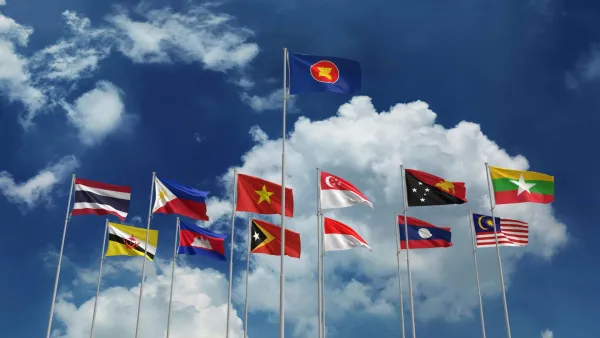
Leaders across Asia Pacific, including Myanmar, discussed at length the need for greater ASEAN solidarity and cooperation to withstand global protectionist policies on Monday and Tuesday in Singapore, as trade tensions brew between the US and China.
From Cambodian craftsmen to Indonesian sambal sellers, small and medium-sized entrepreneurs across South-east Asia will be able to tap with greater confidence the region's burgeoning e-commerce market in search of new customers.
Asian leaders gathered for a summit on Tuesday amid warnings that the post-World War II international order is in jeopardy and trade tensions between Washington and Beijing could trigger a "domino effect" of protectionist measures by other countries.
The ten-member ASEAN and its partners are meeting this week amid worries the US-China trade row will negatively impact the region. The summit is expected to see progress made on a China-backed regional trade pact.
Members of the proposed Regional Comprehensive Economic Partnership (RCEP), including the 10-member ASEAN, India and China, are likely to call for an expeditious conclusion of the mega-trade pact, instead of committing to a year-end deadline, when the heads of states meet in Singapore this week.
The 33rd summit of the Association of Southeast Asian Nations (ASEAN), being held here on Nov. 11-15, is expected to charter a new course for further regional integration and ASEAN's cooperation mechanisms with external partners.
Economic ministers from the Association of Southeast Asian Nations (ASEAN) on Monday (Nov 12) signed an agreement to facilitate cross-border e-commerce transactions within the region.
Several Asian member countries of the proposed Regional Comprehensive Economic Partnership (RCEP) have offered India a significant concession on the extent to which it needs to open up its markets, in a bid to encourage it to join the partnership quickly, according to a diplomat from Singapore.
<p>Time: November 2025<br /> By: WTO and International Trade Group, Legal Department – VCCI</p>
