

Singapore-based KrisEnergy company is expected to launch the extraction of crude oil in Cambodia in late 2019 or early 2020 but that oil will not be refined in the country.
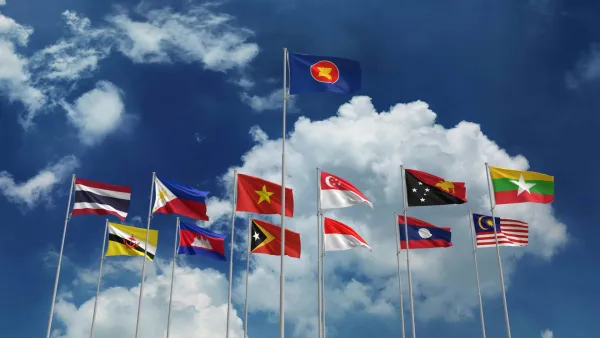
Japan to bolster ASEAN trade by loaning out Japan will dispatch specialists and advisers in areas such as trade to the Association of Southeast Asian Nations as part of a cooperation deal to be signed later this year.
In order for the Asean region to unlock its full potential through an Industry 4.0 transformation, collaboration among Asean member states will be key, Senior Minister of State for Trade and Industry Koh Poh Koon said on Tuesday.
Indonesia, along with two other members of the International Tripartite Rubber Council (ITRC) -- Malaysia and Thailand – will cut the export of natural rubber in an attempt to stabilize the commodity’s global price.
With the Comprehensive and Progressive Agreement for Trans-Pacific Partnership in effect, more opportunities will open up for Singaporean-based multinationals currently investing or looking to pour money into Vietnam in a wide range of sectors.
Indonesian President Joko Widodo on April 1 inaugurated three special economic zones (SEZs) covering 2,200 ha of land in the provinces of East Kalimantan, North Sulawesi, and North Maluku in a bid to attract investment and spur economic growth in less-developed areas of the country.
Indonesia and Australia have signed a comprehensive Free Trade Agreement (FTA) – the Indonesia-Australia Comprehensive Economic Partnership Agreement (IA-CEPA) – to open up their economies to mutually beneficial growth. Both nations are expected to benefit greatly from the new arrangement. Australia is promised better access to a highly restricted and regulated import market mainly for resource exports but also opportunities to sell its educational products. Indonesia on the other hand will gain from the elimination of most tariffs on exports to Australia as well as increased Australian investments in the local economy.
The Philippines’s economy is poised to grow at 6.4 percent in 2019 and 6.5 percent in 2020-2021 amid lingering global and local uncertainties, according to a report released by the World Bank (WB) on April 1.
<p>Time: November 2025<br /> By: WTO and International Trade Group, Legal Department – VCCI</p>
