

Chinese President Xi Jinping and Singaporean President Halimah Yacob met in Beijing, China, on May 14, discussing measures to promote bilateral ties.
Alarm bells are ringing across the globe as the United States (US)-China trade war continues to brew, and while the International Monetary Fund (IMF) has warned that a full-blown trade war would weaken the global economy, it may not be all bad news for ASEAN.
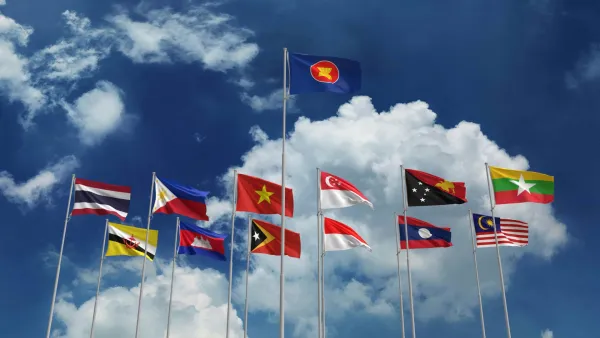
An ASEAN – Japan agreement on technical cooperation was signed in Tokyo on May 13, the first of its kind sealed between the bloc and its dialogue partner.
Singapore and the Republic of Korea (RoK) signed a revised double taxation avoidance pact on May 13, said the RoK’s Ministry of Economy and Finance.
Teresa Kok, Malaysia’s Minister of Primary Industries, visited Brussels and other European capitals this week in a last-ditch effort to kill new EU rules that will ban the use of palm oil in biofuels – a measure European adopted because of concerns about deforestation.
In December, it was revealed that the government of Thailand had passed a bill that it hoped would ensure more effective tax collection, especially from e-commerce businesses. The new law requires financial institutions to report customer accounts which receive either more than 3,000 deposits and money transfers or more than 400 deposits and money transfers with a total of at least US$61,087 a year to the Revenue Department.
The Government of Thailand is striving to turn Thailand into a transport hub for six countries in the Greater Mekong Subregion (GMS), following an infrastructure development project worth 100 billion baht (over 3 billion USD) in the Thai border provinces.
As part of the Free Trade Agreement (FTA) between Hong Kong and the Association of Southeast Asian Nations (ASEAN), tariff reduction and services market access between Hong Kong and three ASEAN members will come into force in June, the Hong Kong Special Administrative Region (SAR) government said Thursday.
<p>Time: November 2025<br /> By: WTO and International Trade Group, Legal Department – VCCI</p>
