

Việt Nam remains an attractive destination for foreign investors, including those from Singapore, thanks to the Government’s concerted efforts and measures to improve business climate and the expansion of free trade agreements.
Indonesian President Joko Widodo and Singaporean Prime Minister Lee Hsien Loong discussed measures to strengthen cooperation for post-COVID-19 economic recovery and vaccine recognition at the Singapore-Indonesia Leaders’ Retreat on January 25.
Indonesia is aiming to export cars to Australia in the first quarter of 2022, Industry Minister Agus Gumiwang Kartasasmita said on January 25, while not divulging details on the brand of the cars.
Malaysia’s economy is likely to expand at a slower rate this year as the country gradually recovers from the policies and measures implemented during the lockdowns, said Prof. Geoffrey Williams from the Malaysia University of Science and Technology (MUST).
The prospect for Thailand's food export is promising, with exports forecast to grow by 8.4 percent this year driven by higher global demand and a rise in the prices of commodities, energy and logistics.
Thailand's exports rose by 24.2 percent year-on-year in December 2021, helping the country's growth in the year as a whole hit 17.1 percent, the highest in 11 years, reported the Bangkok Post.
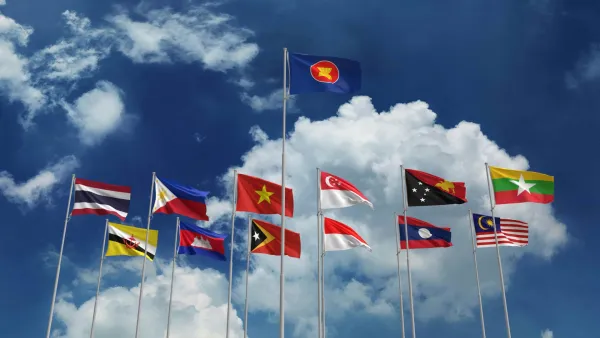
The COVID-19 pandemic caused global investment activities to fall – due to economic uncertainties, lockdowns, supply chain disruptions and postponement of investment by multinational enterprises. ASEAN also recorded a decline in foreign direct investment (FDI) in 2020 to $137 billion, down from its highest-ever inflow of $182 billion in 2019 when it was the largest recipient of FDI in the developing world.
Malaysia's Ministry of International Trade and Industry (MITI) on January 21 announced that the country submitted its Instrument of Ratification (IOR) to the ASEAN Secretariat on January 17, becoming ready to be the 12th member state to ratify the Regional Comprehensive Economic Partnership Agreement (RCEP).

<p>Time: November 2025<br /> By: WTO and International Trade Group, Legal Department – VCCI</p>
