

While Indonesian exports will benefit from the reduction in tariffs between RCEP members, the country’s downstream industries are also well poised to receive greater investments. Supported by an abundance of natural resources, Indonesia is actively seeking to climb up the global value chain – transitioning from an exporter of raw commodities to a producer of high-value products.
Southeast Asia will face a “big risk” of social unrest if there are “big surges” in food prices, an ASEAN economist at Bank of America Securities told CNBC.
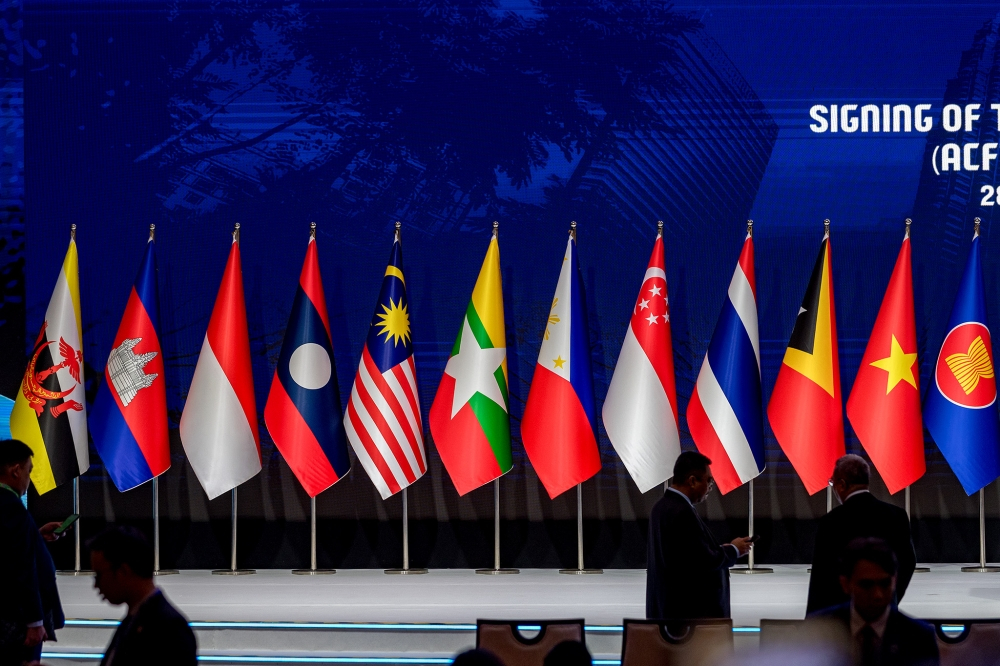
Cambodia, Indonesia and Thailand are each set to host a leaders’ meeting in November to advance global and regional agendas concerning peace, prosperity, and sustainable and inclusive development.
The role of the Association of Southeast Asian Nations (ASEAN) in the Regional Comprehensive Economic Partnership (RCEP) global value chains (GVCs) is smaller than that in ASEAN GVCs and ASEAN connectivity through production is, therefore, also smaller, partly because RCEP is less integrated than ASEAN, according to a study by Tokyo-based ASEAN-Japan Centre (AJC).
Ratifying a dubious regional economic deal is being touted as offering a miraculous solution to Malaysia’s lacklustre economic performance of the last quarter century. This naïve advocacy is misleading at best, and downright irresponsible, even reckless, at worst.
Hong Kong recently applied to join the Regional Comprehensive Economic Partnership (RCEP). The underlying aim of RCEP is to create an integrated market across the region. RCEP accounts for roughly 30 per cent of the world’s output, trade and population.
In March 2022, Thailand officially launched the Flexible Plus Program in a bid to attract high-net-worth foreign investors.
Brunei Darussalam’s economy is projected to grow 5.8 per cent this year, according to the International Monetary Fund’s (IMF) latest Regional Economic Outlook report.

<p>Time: November 2025<br /> By: WTO and International Trade Group, Legal Department – VCCI</p>
