

India's decision to curb rice exports is expected to lift world prices of the staple and trigger a rally in rival wheat and corn markets, deepening concerns over food inflation.
Vietnam and India have substantial opportunities to cooperate in the automobile industry as Vietnam is accelerating FDI attraction in the sector, an official has said.
Russia is set to strengthen its business ties with nations in Southeast Asia amid economic sanctions West imposed on Russia over its invasion of Ukraine.
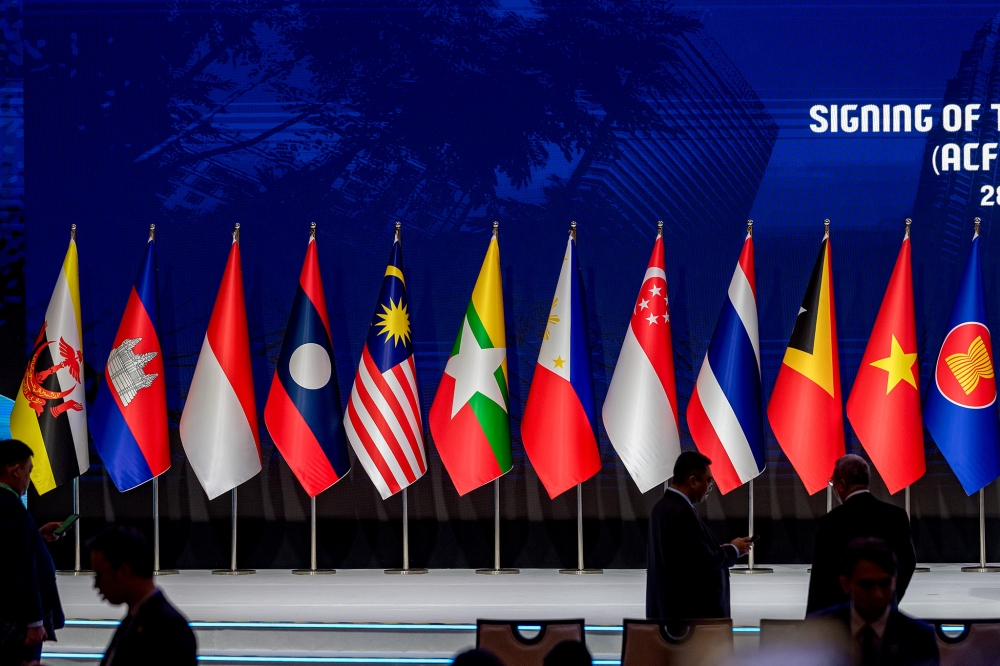
Timor-Leste gained independence in 2002. Since 2011, it has sought to become a member of ASEAN.
Vietnamese Minister of Foreign Affairs Bui Thanh Son and Second Minister of Foreign Affairs of Brunei Darussalam Dato Erywan Pehin Yusof on September 7 co-chaired the second meeting of the Joint Commission for Bilateral Cooperation (JCBC-2) between the two countries.
Malaysia has become an attractive regional and global investment destination, thanks to the Regional Comprehensive Economic Partnership (RCEP), says Datuk Seri Dr Wee Ka Siong.
THE conclusion of negotiations for a free trade agreement (FTA) between Singapore and Brazil and its Mercosur partners in July this year is indeed a big milestone, which will contribute to further enhancing the Brazil-Singapore bilateral trade relationship, says Brazil’s Ambassador to Singapore Eugenia Barthelmess.
MORE European businesses today expect Asean markets to become more important in terms of worldwide revenues over the next 2 years, according to a recent survey conducted by the EU-Asean Business Council.
<p>Time: November 2025<br /> By: WTO and International Trade Group, Legal Department – VCCI</p>
