

ASEAN is a community of people in Southeast Asia with hundreds of different ethnic groups, therefore, customs and practices are extremely diverse, creating a colorful and brilliant picture. At the same time, in the process of development, ASEAN countries had been invaded by Western powers, and have a history of intermingle between many cultures from countries inside and outside the region. In that context, regional cultures can be inevitably influenced and evolved differently.
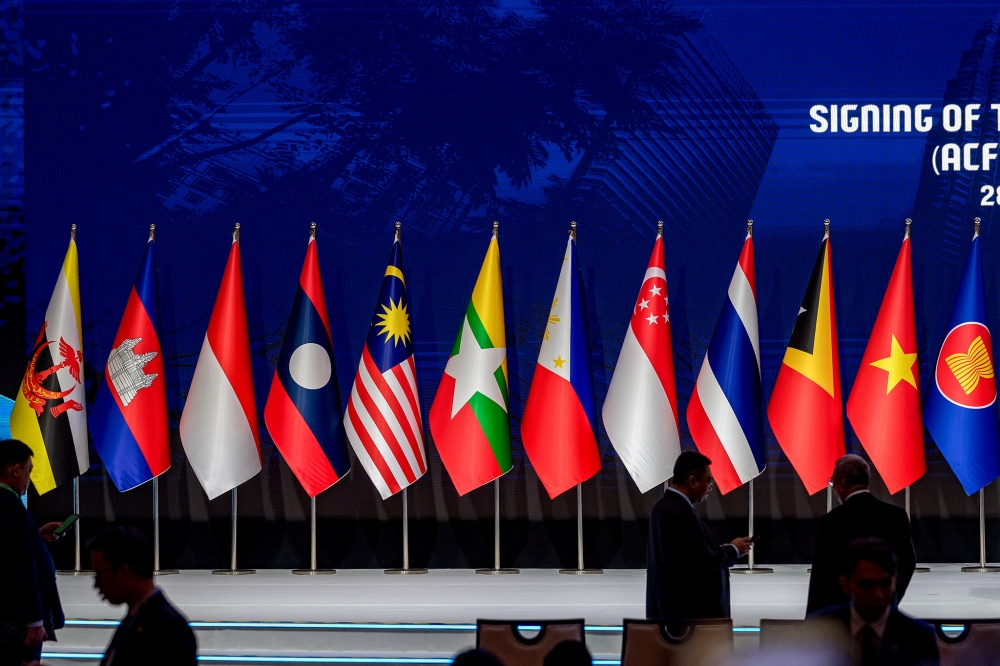
The Regional Comprehensive Economic Partnership (RCEP) free trade agreement has been importantly contributing to the Association of Southeast Asian Nations (ASEAN)'s economic development, Cambodian officials and experts said.
Minister of Industry and Trade Nguyen Hong Dien affirmed the importance of economic cooperation between Vietnam and Laos in the current world situation during his talks with his Lao counterpart Malaythong Kommasith on September 14.
Members of the Association of Southeast Asian Nations (ASEAN) and India on September 16 held the 19th consultation meeting on economic cooperation in Cambodia under the chair of Cambodian Minister of Commerce Pan Sorasak and India's Minister of State for Commerce and Industry Anupriya Patel.
Cambodia, the ASEAN Chair in 2022, applauded important discussions related to economic cooperation and development orientations among CLMV countries at the 14th Cambodia, Laos, Myanmar and Vietnam Economic Ministers' Meeting (CLMV-EMM 14) in Cambodia, including the approval of the CLMV Action Plan for the 2023-2024 period.
Permanent Deputy Prime Minister Phạm Bình Minh delivered a pre-recorded speech at the opening of the 19th ASEAN-China Expo (CAEXPO) and the 19th China-ASEAN Business Investment Summit (CABIS) in Nanning, the capital city of China's Guangxi Zhuang Autonomous Region, on Friday.
China is an important trade partner of the Association of Southeast Asian Nations (ASEAN), and greater ASEAN-China economic cooperation could further promote peace and stability in region, Asian Development Bank (ADB) country director for Cambodia Jyotsana Varma said Wednesday.
Australia considers Viet Nam as a crucial partner in ASEAN and the region and attaches importance to developing the strategic partnership with Viet Nam.


<p>Time: November 2025<br /> By: WTO and International Trade Group, Legal Department – VCCI</p>
