

Vietnam is ready to host the Asia-Pacific Economic Cooperation (APEC) Year 2017, all preparations having been being basically completed on schedule, said Deputy Foreign Minister Bui Thanh in an interview.
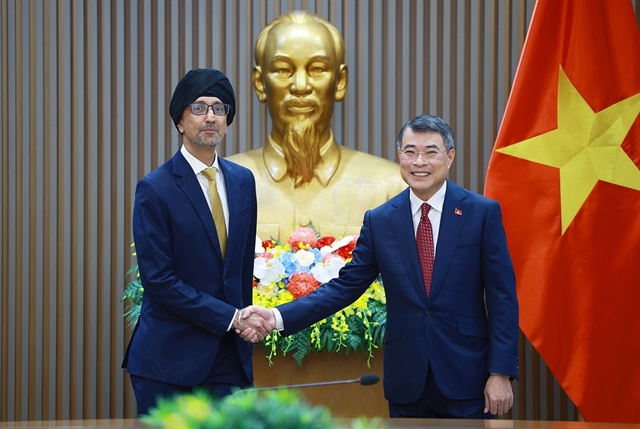
Việt Nam and Laos signed a series of vital agreements yesterday, pledging to boost co-operation between the two governments and countries.
The goal is to cut half the time needed for business registration and simplify customs procedures this year.
Vietnam’s economy has shown resilience in the face of global headwinds. In 2016 Vietnam GDP growth was an estimated 6.2 per cent — higher than the larger Asean economies of Indonesia, Malaysia, and Thailand.
Last week, India abruptly changed tack by expressing its willingness to drop three-tiered approach on tariff liberalization under the proposed Regional Comprehensive Economic Partnership (RCEP) agreement. This was communicated to trading partners at the fourth RCEP Ministerial Meeting held in Laos on August 5. India has been one of the key proponents of the three-tiered approach on tariff reduction under RCEP.
On December 20, 2016, Japan announced the Overview of Entire Revision to the Quality Labeling Rules for Textile Goods such as trousers, pants, hats, muffler, scarf, shawl and blankets. Under the Agreement on Technical Barriers to Trade (TBT), the all members of the WTO, including Vietnam, can make comments on this revision when identifying the possibility of unnecessary trade’s obstacles.
According to Secretary-General of Malaysia’s Ministry of International Trade and Industry Rebecca Fatima Sta Maria, adopted by the ASEAN leaders in 2007, the AEC Blueprint highlights about 600 initiatives, including measures to create a single market and production base and a highly competitive economic region with equal economic development and deeper integration into the global economy.
Conceived as a single market and production base, the AEC is part of broader efforts to integrate ASEAN economies. But one year on from its inception, about 74 per cent of Singapore companies polled in a recent Singapore Business Federation (SBF) survey said they do not think the AEC has benefited them.

<p>Time: November 2025<br /> By: WTO and International Trade Group, Legal Department – VCCI</p>
