

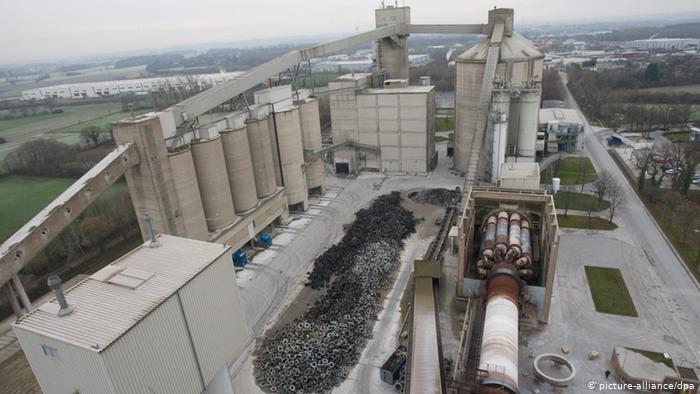
Cement producers expressed hope the Marcos administration’s policy of prioritizing local industries over imports — as what happened in sugar — would cascade to theirs and other sectors.
“We hope the Marcos administration would extend this policy to other local industries that are facing equal serious threats from the influx of imports. Like our peers in the sugar sector, we welcome the President’s action against the flood of imported products,” said Cirilo Pestano, executive director of the Cement Manufactures Association of the Philippines (Cemap).
The petitioners stressed the local industry needs effective and more permanent protection from unfair trade practices involving imports to survive and stay competitive.
The Tariff Commission has concluded its hearings on CeMAP’s petitions for safeguard measures and anti-dumping and is expected to come out with the ruling soon.
CeMAP had asked the Tariff Commission to impose anti-dumping duties against Type 1 and Type 1P cement imports from Vietnam, and to extend the safeguard measures slapped against cement imports in 2019 but which will expire in October.
CeMAP, supported by non-member local manufacturers, told the Tariff Commission that despite the safeguard measures, the volume of imports increased.
Reinier Dizon, Republic Cement vice president for Strategy and Business Development in the public hearings, said despite constant innovation and operational improvements the company has made, imports coming at dumped prices caused sustained injury to his company.
“We’re losing revenues, we’re losing volumes despite the operational improvements we have been making,” he stressed.
Citing Bureau of Customs data and the commission’s Staff Report, Zoe Sibala, Holcim Philippines Inc. vice president for sustainability, said the volume of imported cement continues to increase and at lower prices at the retail level notwithstanding increases in the prices of fuel and energy.
The share of imports to domestic production in terms of volume increased steadily from zero in 2013 to 5.3 million metric tons in 2019, increasing further to 6.88 MMT in 2021.
The share of imports to domestic production rose from zero in 2013 to 26.09 percent in 2019, rising further to 38.42 percent in 2021.
CeMAP’s data indicate that as of 2021 around 91 percent of cement imports were from Vietnam.
The petitioners also underscored that imports volume grew even if local demand for cement never outpaced domestic supply despite work stoppage caused by the pandemic.
With the Ukraine-Russia war fanning record-high prices of fuel and energy—which account for around 70 percent of the cost of cement cash production cost – the petitioners stressed the local industry needs effective and more permanent protection from unfair trade practices involving imports to survive and stay competitive.
Source: Malaya Business Insight
Share:


<p>Time: November 2025<br /> By: WTO and International Trade Group, Legal Department – VCCI</p>
