

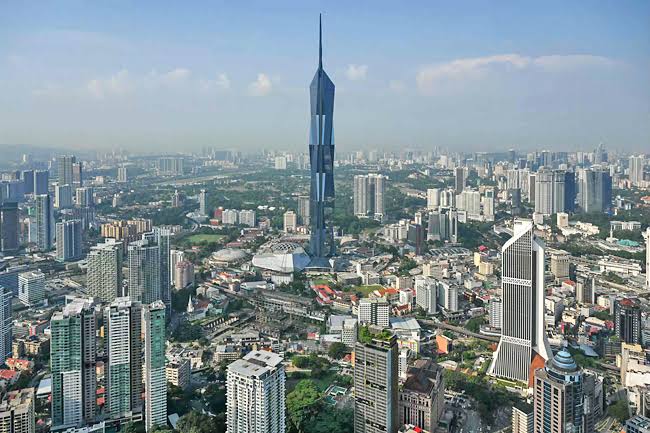
Malaysia recorded net foreign direct investments (FDIs) of MYR65.9 billion in 2025, marking the second-highest level seen in the past decade and a substantial 41.2 per cent jump year-on-year, according to the Statistics Department.
The upward trajectory in FDI aligns with the country’s ongoing success in securing massive inflows of international capital.
Data provided by the Malaysian Investment Development Authority revealed that total approved investments rose to MYR426.7 billion in 2025, representing an 11 per cent year-on-year increase from the MYR384.4 billion approved over the course of 2024.
However, there was a slight dip in approved investments in the first quarter of financial year 2026 (1Q26), as it fell marginally to MYR92.8 billion from MYR93 billion a year ago. Despite the drop, the absolute approved investments level remains commendable.
GEOPOLITICAL STRENGTH
In the recently released Global Peace Index 2026, published by the Institute of Economics and Peace, Malaysia was surprisingly ranked highly, securing 12th position among 163 countries globally, one rank better than the 13th position in 2025.
Malaysia was recognised as one of the safest countries, standing alongside Singapore and Japan as among the most peaceful nations in Asia.
Singapore was Asia’s top-ranked nation, coming in at eighth, followed by Japan in 10th.
Other ASEAN countries saw Vietnam ranked 41st, followed by Indonesia, Thailand and the Philippines at 69th, 101st and 102nd.
COMPETITIVENESS
In the recently released 2026 International Institute of Management Development World Competitiveness Ranking, Malaysia leapfrogged eight spots and was ranked 15th globally among 70 countries.
A formidable achievement, as Malaysia was ranked fourth globally in economic performance and 14th in government efficiency.
Malaysia also improved on business efficiency to 14th globally, and on infrastructure, ranked 33rd.
Malaysia’s position as a destination of choice for international investment improved by seven spots to 19th globally.
FOURTH IN ASEAN
The best way to rank ASEAN countries when it comes to FDIs is to use the statistically accepted database that is captured by the United Nations Conference on Trade and Development (UNCTAD).
Based on UNCTAD’s latest data for 2024, Singapore took the lion’s share of FDI inflows with a total of USD143.4 billion, followed by Indonesia at USD24.2 billion, Vietnam at USD20.2 billion, Malaysia at USD11.3 billion, Thailand at USD10.6 billion, and the Philippines at USD8.9 billion.
While Malaysia’s net FDIs have improved considerably in 2025 to about USD15.4 billion based on the ringgit average exchange rate of 4.28 to the dollar, Malaysia likely remained in fourth position among ASEAN countries, as Vietnam reported total FDI of USD27.6 billion in 2025, based on data from its National Statistics Office, a nine-per-cent rise y-o-y.
MALAYSIA VERSUS VIETNAM
It is no secret that China and the United States (US) play an important role when it comes to FDI inflows into ASEAN.
The regional bloc is now the world’s fastest-growing economic engine and, serving a population close to 700 million, ASEAN is a magnet when it comes to attracting new investments.
ASEAN stands tall as a global trading hub and is an oasis of prosperity, being away from geopolitical risk that is impacting some parts of the world, in particular the Middle East, and other conflicted zones.
In 2025, according to the International Monetary Fund database, the Vietnamese economy generated total nominal value of just under half a trillion dollars and was ranked fourth among ASEAN countries, after Indonesia, Singapore, and Thailand.
Based on the same data, Malaysia, with an economic output value of USD472 billion, was ranked sixth after the Philippines.
Not only is the Vietnamese economy today larger in absolute value compared with Malaysia, but the growth rate over the past decade has been phenomenal.
Vietnam is a natural destination for Chinese investments, especially due to its similar political ideology and its proximity, as well as a relatively cheaper cost. Hence, onshoring of Chinese companies into Vietnam due to the steep US tariffs for exports directly out of China is simply a no-brainer.
It has also, over the years, gathered significant investments from US-based companies, taking advantage of Vietnam’s many free-trade agreements, its ideal geographical position for the China+1 strategy, lower overhead costs, and a vibrant workforce.
Malaysia, on the other hand, also attracts vast investments from China and the US but for significantly different competitive advantages.
Malaysia’s infrastructure, legal, and education (well, at least for now) remain well in advance, and for Chinese investments, Malaysia has a strategic geographical position within the ASEAN region, especially due to the Strait of Malacca seaway.
Malaysia has a well-developed semiconductor ecosystem as well as an emerging hub for regional data centre activities, purely driven by cheaper costs and tax breaks.
The similar reasons mentioned above are also key attractions for US investment flows into Malaysia.
Malaysia can be argued to have “geopolitical luck” and based on the country’s position as a neutral country on global and international issues, Malaysia must make efforts to turn its pain points for FDIs that are flowing into the country into a major surplus, which would elevate Malaysia within the region as the biggest sweet spot in the region outside Singapore.
DEFICIT TO SURPLUS
While Thailand, Indonesia, and Vietnam are also eyeing FDI inflows, Malaysia should capitalise on the competitive advantage and convince these FDIs to pick Malaysia as their investment destination of choice by addressing some of the key pain points.
What are these pain points? On the surface, these include policies that are inconsistent and which may impact business structure and ownership.
Other key barriers include bureaucratic red tape that could potentially delay projects from being approved for execution.
Malaysia should also address issues related to our labour market.
Some of these new investments will require a larger skilled workforce, and should welcome new expatriate talents that could help alleviate shortages in certain sectors. Protectionism in certain industries, out of national interest, ought to be reviewed, as Malaysians are losing out on outdated policies.
Malaysia should strive towards win-win policies to attract new investments, especially in sectors or industries that we have significant control over or with superior market share.
There is no harm in opening up as done previously in other sectors. Malaysia must turn its superior geographical position within ASEAN into a sweet spot for investments to flow into the country – one that could take us to the next level.
Strong investment flows across multiple sectors will elevate not only the economy but also strengthen Malaysia’s ringgit, as well as boost income and demand for new jobs.
Source: Borneobulletin
Share:





<p>Time: November 2025<br /> By: WTO and International Trade Group, Legal Department – VCCI</p>
