

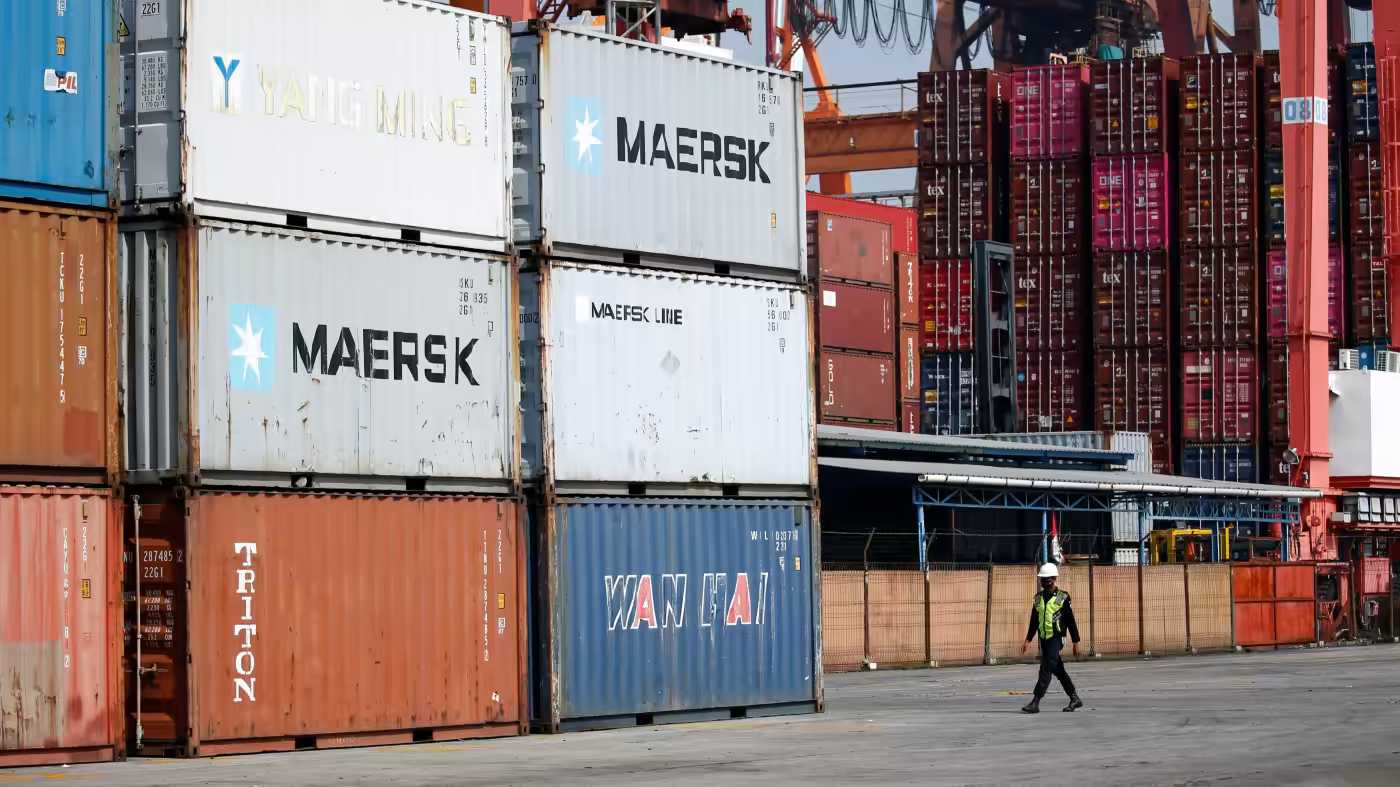
Indonesia's gross domestic product rose 5.44% in the April-to-June quarter, the country's statistics agency announced Friday, buoyed by exports and strong consumer spending during the Muslim holy month of Ramadan and the Eid al-Fitr holiday.
Economic growth held steady in Southeast Asia's largest economy in the second quarter of the year, according to data released by Statistics Indonesia. While the economy grew by 5.01% on the year in January to March, growth in the second quarter accelerated.
The result beat the 5.17% growth forecast by 22 economists polled by Reuters.
In the second quarter, Indonesia's economy accelerated as exports and private consumption lifted growth.
Private consumption, which makes up over half of Indonesia's GDP, rose 5.51% in the second quarter compared to the same period of 2021, while exports increased 19.74%.
"Amidst global pressures, the economies of Indonesia's trading partners continued to grow, with Indonesia earning windfalls from its international trade," statistics agency head Margo Yuwono said in a news briefing on Friday.
He added that the growth in the quarter was aided by improvements in COVID-19 conditions, which helped accelerated consumption and production.
Yuwono also mentioned that foreign tourism grew significantly, with room occupancy rates at hotels increasing. The government in May removed a requirement for foreign travelers to present negative PCR tests when they arrive at Indonesian airports.
With commodity prices rising around the world, the resource-rich nation has been enjoying an export boom. Indonesia's Central Bank Gov. Perry Warjiyo said on Monday before the GDP announcement that economic growth in the second and third quarters will continue, "supported by good export performance."
"Economic growth in Q2 and Q3 will continue to rise following Ramadan, with improved community mobility and encouraging private consumption," Warjiyo said.
Meanwhile, inflation accelerated to its fastest pace in seven years, hitting 4.94% in July. It is higher than expected and well above the central bank's target range of 2% to 4%.
Source: Nikkei Asia
Share:


<p>Time: November 2025<br /> By: WTO and International Trade Group, Legal Department – VCCI</p>
