


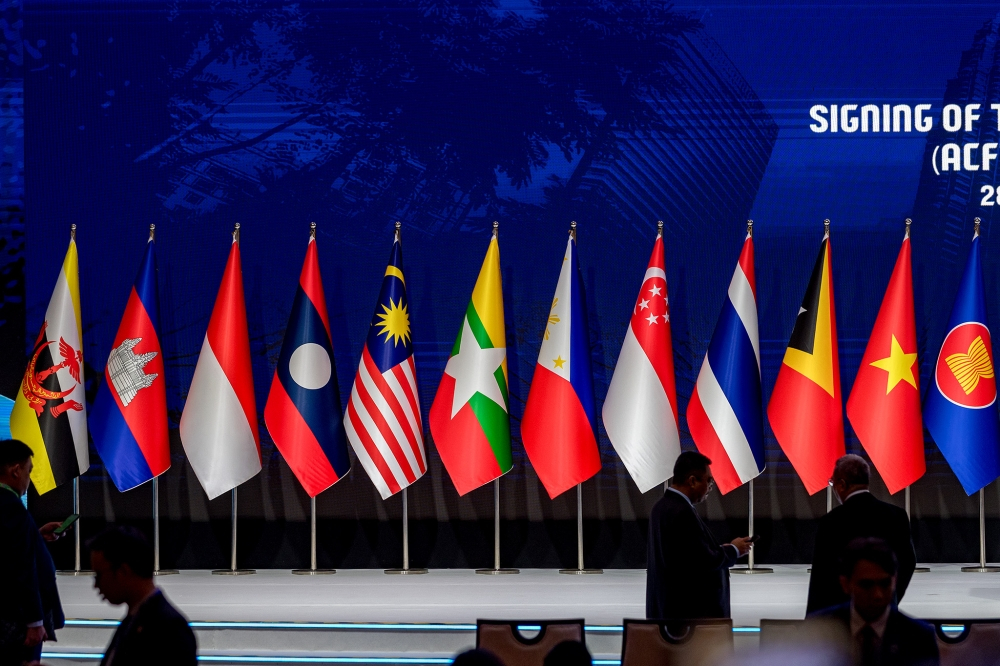
THE largest trade agreement in the world, the Regional Comprehensive Economic Partnership (RCEP), may be crucial in fostering regional cooperation, but stronger collaboration is needed given the other concerns—supply chain clogs and inflation—that countries face in the region.
This is according to Asian Development Bank (ADB) Economic Research and Regional Cooperation Department (ERCD) Principle Economist Jong Woo Kang and Senior Economics Officer Mara Tayag in a recent Asian Development Blog.
“Supply chain bottlenecks and growing global inflationary pressures call for closer collaboration among the region’s economies for cross-border movement of goods, services, and people,” Kang and Tayag said.
“While the Regional Comprehensive Economic Partnership is a crucial milestone in leveling up the region’s concerted efforts for freer trade and investment flows, stronger cooperation and collaboration are also needed in disaster preparedness and response, climate change mitigation and adaptation, labor mobility and facilitation of travel and tourism, among others,” they added.
Greater cooperation and collaboration can lead to sustained economic recovery after Covid-19, particularly through information sharing and other health control measures, the two authors said.
Specifically, these include cross-border travel requirements and vaccinated travel lanes which can prevent “flare-ups” that derail recovery.
“The region’s social and economic prospects will be significantly affected by how well it translates ongoing pandemic challenges into opportunities to forge closer economic relations and cooperation,” they said.
Based on data shared by Kang and Tayag, intraregional trade share increased 58.5 percent in 2020 from 57.5 percent in 2019. This marked the highest level of intraregional trade in 30 years.
This growth, the economists said, was driven by deepening regional value chains and has been undeterred by the pandemic. The People’s Republic of China has also played a key role as the region’s major trading partner.
South Asia’s share of trade within the region grew to 40.5 percent in 2020 from 38.9 percent in 2019. East Asian economies’ trade within Asia and the Pacific also strengthened, to 56.8 percent from 55.7 percent.
Intraregional trade for the Pacific and Oceania region increased to 72.6 percent from 72 percent. Central Asia’s intraregional trade share expanded to 36.8 percent from 36 percent, and Southeast Asia’s rose to 69 percent from 68.5 percent.
Source: BusinessMirror
Share:


<p>Time: November 2025<br /> By: WTO and International Trade Group, Legal Department – VCCI</p>
