

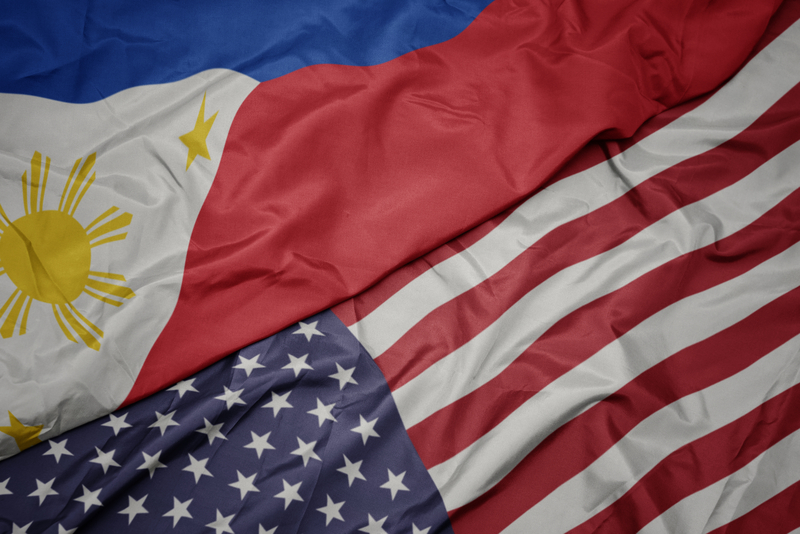
Trade experts and diplomats interviewed by the BusinessMirror said hopes for an FTA between the Philippines and the US should be tempered in the election of Joseph R. Biden as president. Scores of issues, from the Covid-19 pandemic to human-rights dispute, may prevent the Asia-Pacific allies from forging a trade deal.
Michael M. Michalak, senior vice president and regional managing director for the US-Asean Business Council, said domestic problems will prevent Biden’s trade officials from engaging in negotiations in the early stages of his presidency.
“Biden will be preoccupied with domestic issues for the first several months, if not longer,” he said in an e-mail. “Nevertheless, he will not be able to ignore trade so [he] will come up with a policy that, hopefully, will arrive at something, like rejoining the CPTPP or another, perhaps new grouping that would be similar.”
Upon taking oath in office, President Donald J. Trump withdrew the US from the CPTPP, or the Comprehensive and Progressive Agreement for Trans-Pacific Partnership.
Without the US, the CPTPP signatories are Australia, Brunei Darussalam, Canada, Chile, Japan, Malaysia, Mexico, New Zealand, Peru, Singapore and Vietnam. Combined, the 11 parties to the trade deal represent around 495 million consumers and 13.5 percent of global GDP.
The American Chamber of Commerce of the Philippines (AmCham) also declared pessimism on the prospect of negotiating an FTA under Biden.
AmCham Senior Advisor John D. Forbes explained that Americans oppose their country’s entry in any and new trade deals, especially in the heat of the pandemic. The contagion took away the jobs of millions of Americans; it would be an “unpopular” policy then to outsource labor.
“Although AmCham has long supported a bilateral FTA between the US and the Philippines, we do not think it will happen soon,” Forbes stated.
In October the unemployment rate in the US ballooned to 6.9 percent, from 3.6 percent during the same month last year, and this translated to about 11.1 million jobless Americans. Further, the US shows no signs of containing the spread of the virus, as it tops the world on Covid-19 figures with more than 10.2 million cases and roughly 240,000 deaths as of Wednesday.
International conventions
Former Tariff Commissioner George N. Manzano raised the possibility the US under Biden may start demanding the Philippines’s compliance with conventions on human rights and labor welfare to retain its Generalized System of Preferences (GSP) status.
However, he said this focus on human rights could be tempered by Washington’s economic and security interests in the region, particularly with the rise of China. Michalak, for his part, pointed out Biden, as a Democrat, will do what Trump did not in his four-year term: ask trading partners to abide by international protocols to keep their GSP status.
“Regarding human rights, I think Biden will pay more attention to those issues than Trump, but he is also going to pay more attention to allies and partners; how he balances those priorities will have to wait for a bit as he assembles his team,” Michalak said.
In February, six Democratic senators appealed before the Office of the US Trade Representative (USTR) to suspend the Philippine GSP over President Duterte’s human-rights record. They said granting the trade privilege in the face of extrajudicial killings under Duterte could be mistaken for condoning the bloodshed.
The GSP allows Manila to export a total of 5,057 products, or nearly half of the 10,600 US tariff lines, to Washington at zero or reduced tariffs.
Forbes gave his word that American investors here will block any proposals in their home country to sanction the Philippines. He called on policymakers from both parties to negotiate their issues and reach a compromise.
“AmCham will not support any proposals to sanction the Philippines as a country,” he said.
“Legislators that propose drastic actions in the Congresses of both countries are often making their proposals because of their domestic constituencies,” Forbes added. “Hopefully, they can take a broader view of the strong bilateral relations the two countries share.”
If there’s one thing the Philippines is sure to benefit from Biden’s election, it’s when he reverses Trump’s policies against China and stops the trade conflict once and for all.
Forbes and Manzano explained that the Philippines failed to net multinationals who fled China after Trump multiplied taxes on Chinese imports, mostly on farm and manufactured products. Since Trump took office in 2017, the US has increased the tariffs of up to 30 percent on $550 billion worth of Chinese goods.
“If Chinese exports to the US containing Philippine-made components increase, then there will be more jobs in the Philippines,” Forbes concluded.
“Ceasing the trade war will diminish country risks in Southeast Asia. Improved US-China trade would mean improved exports for the Philippines, as the country is part of the Chinese supply chain, especially for electronic products,” Manzano said.
Bilateral trade
Based on records from the USTR, merchandise trade between Manila and Washington reached $21.4 billion last year. Shipments to the US totaled $12.8 billion, while imports amounted $8.6 billion. As such, the Philippines maintained a goods surplus of at least $4 billion.
Capital inflows painted a different picture, however. Last year investments from the US dipped by close to 9 percent to P11.72 billion, from P12.85 billion in 2018, according to data from the Philippine Statistics Authority.
In 2017 Duterte conveyed to Trump in a bilateral meeting his desire to arrange an FTA with the US, to which the White House leader committed to study.
The Philippines has been seeking to negotiate a trade deal with the US to remove the tariffs on its export interests, such as on clothing products. The Philippines looks at the US as a priority market for wearables, as it tries to revive its domestic industry for garments manufacturing.
The US enforces an average MFN rate of 11.6 percent on clothing, making it the fourth product group with the highest tariffs in the country.
On the other hand, Washington has been assessing the prospect of securing a trade deal with Manila for its motor vehicle exports. It has been asking the Philippines to reduce tariff rates on finished cars and motorcycles, particularly the 30 percent on passenger cars, the 20 percent to 30 percent on vehicles for the transport of goods and the 15 percent to 20 percent on vehicles for the transport of persons.
The US has been demanding the Philippines to bring down duties on motor vehicles to near 5 percent, the rate applied to Japanese and Southeast Asian imports, as part of a bilateral and a regional trade deal, respectively.
Likewise, the US has been pushing the Philippines to open up its agriculture sector, particularly the meat industry. It has been writing letters and letters to the agriculture agency here to lift the two-tiered system for cold storage, wherein additional requirements are imposed on the sale of frozen meat.
Source: Businessmirror
Share:

<p>Time: November 2025<br /> By: WTO and International Trade Group, Legal Department – VCCI</p>
