

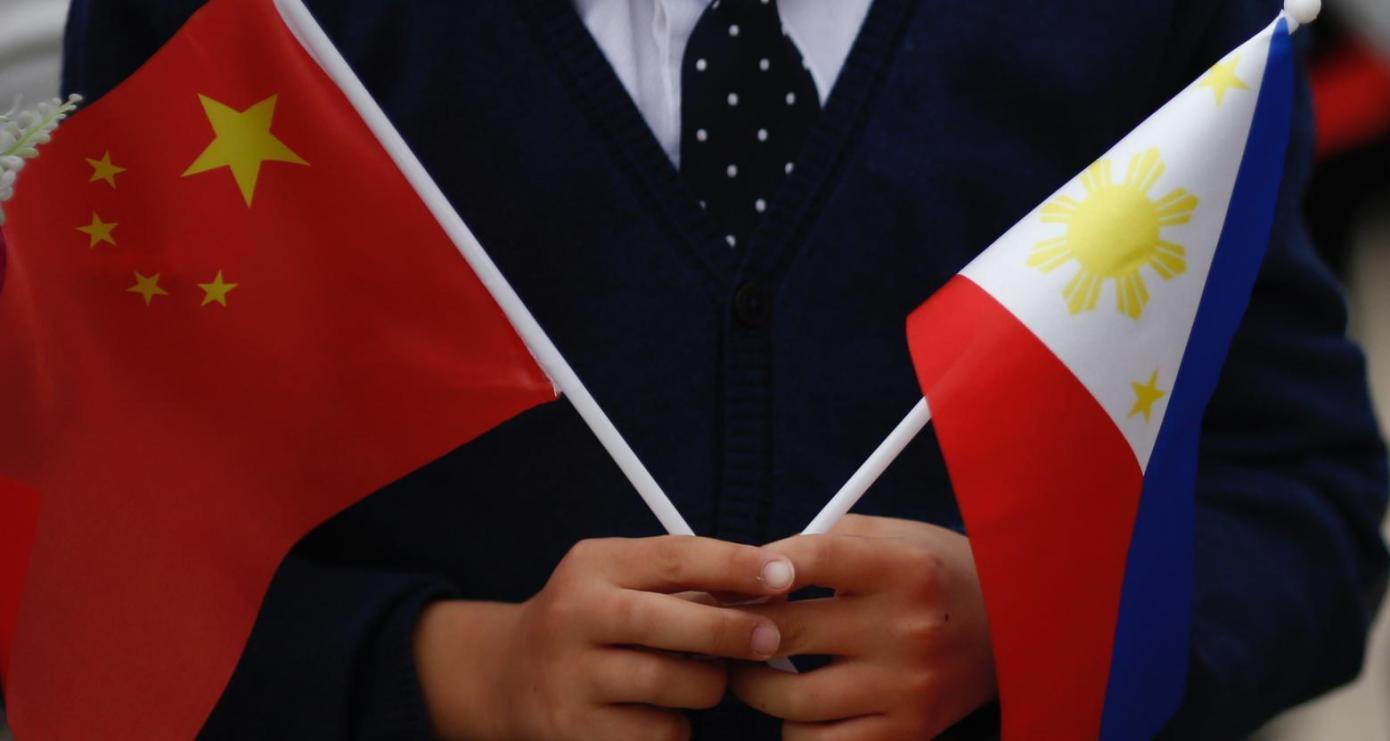
Speaking at the second China International Import Expo (CIIE) in Shanghai last week, Chinese President Xi Jinping pledged China will stimulate increased imports and continue to broaden market access. It is a part of Chinese “efforts to reduce tariff barriers and open up wider will lead to inter-connectivity in economic cooperation and global trade,” as Xi said two years ago at the World Economic Forum.
Amid the US tariff wars and diminished global growth prospects, that message is critical today — and it means new Philippine opportunities in China.
From world’s factory to world market
China is now promoting the Shanghai CIIE as the world’s first international import expo. Its partners include the World Trade Organization (WTO) and key United Nations trade organizations, which understand well that the CIIE reflects China’s structural rebalancing from investment and net exports toward innovation and consumption.
Shanghai, the most international Chinese megacity, is the natural host of the import expo. While the Canton Fair built its clout over several decades, the Shanghai CIIE could develop its international influence in a matter of years.
Despite international tensions, it attracted foreign leaders, such as French President Emmanuel Macron, diamonds from Belgium, Cambodian fragrant rice, and Kenyan farm products, along with US automaker Ford’s cutting-edge Ford and Lincoln brands. Despite the US tariff war against China, almost 200 US-based companies — from GE to Qualcomm — are participating in the CIIE and US companies have the largest exhibition space at the expo.
While the Canton Fair has morphed from traditional manufacturing exports to advanced technology, the Shanghai CIIE is focused on imports. It’s a massive shift in a country of more than 1.3 billion people. As China has prospered, Chinese companies have invested increasingly abroad, while Chinese consumers can afford foreign imports, thanks to reforms and opening-up policies, and Chinese innovation in e-commerce.
Middle-income consumers drive import growth
Recently, the European Union (EU) said that its firms had provided positive feedback on the CIIE last year, registered increased sales or met new potential buyers. Yet, the EU wants more to do more vis-à-vis the EU-China investment agreement.
Obviously, the US, the EU and Japan would like to see China implementing the kind of reforms that support their exporters in the near term. But such reforms cannot happen disruptively. Even the advanced countries fought two world wars and were engaged in a Cold War before import growth truly picked up internationally.
While the middle class is shrinking in the West, China’s gradual reforms will ensure a rapidly expanding middle-income consumer base, the new precondition of international trade. As the world factory is morphing into the world’s largest market, rising numbers of consumers fuel import growth.
As China’s intensive industrialization shifts toward a post-industrial society, GDP growth is decelerating, but living standards, as measured by per capita income, are rising (see figure). That is vital for import growth over time and provides a blueprint for middle-income groups in other large emerging countries, such as India.
As long as globalization advances in both rich and middle-income economies, imports to China increase. For instance, as the world economy was still recovering in early 2018, Chinese imports reached an all-time high. But after the US began imposing heavy tariffs on Chinese imports, businesses invested more cautiously and consumers became more cost-conscious. After all, China’s average per capita income remains at only 15 to 25 percent of that in the US and Western Europe.
China and CIIE as PH opportunity
The Shanghai CIIE allowed China and Asean countries to foster their economic ties and to try to adjust each other’s trade structure. In addition to well-known Thai exporters, Chinese media this time made note of companies from the Philippines — including Century Pacific Food, Fisherfarms and Monde Nissin — that promoted their offerings, ranging from coconut-based products and bananas to fruit preserves, mango flour, dried fruit and fruit juices at the fair. China has been the biggest importer of Philippine bananas since 2018.
Last year, top Philippine exports to China included electronic products ($4.9 billion), manufactured goods ($613 million), cathodes ($579 million), bananas ($540 million) and mineral products ($447 million), according to the Philippine Statistics Authority. In spring, Trade Secretary Ramon M. Lopez said his agency hoped to nearly triple CIIE exhibitors to 100, and to double sales from the CIIE to $250 million this year.
The Philippines seeks to expand trade with China, while diversifying exports to balance its trade sheet. Obviously, the government would like to further expand trade via higher-value products, such as luxury furniture, automotive parts and electronics.
As the US tariff wars have forced a reconfiguration of global value chains, there is a Philippine opportunity in value-added and electronics, particularly as offshoring base for Chinese information and communication technology giants. Attracting such investments requires continued structural reforms, zero patience for corruption and thriving bilateral ties with China.
In addition to the value-added, offshoring and product diversification, Philippine exporters could diversify export destinations in China. While most exporters focus on first-tier Chinese megacities, particularly Shanghai and Beijing, these maturing urban centers are costly and competitive. The growth momentum of urbanization in China is in the lower-tier cities, which require different targeting, however.
Choosing the ways of export competition matters because the Philippines must compete with and against other Asean economies. After the US tariff wars, China is diversifying its trade structure with the US, particularly its reliance on US imports in agricultural and primary commodities; that is, in areas where Asean economies, including the Philippines, possess significant advantages.
While many countries have similar objectives in the Chinese mainland, the timing is favorable to Philippine exporters. As President Duterte has dramatically improved bilateral ties, the doors are now open in a new way.
Source: The Manila Times
Share:

<p>Time: November 2025<br /> By: WTO and International Trade Group, Legal Department – VCCI</p>
