

Among the upcoming annual post-ministerial conferences of the ASEAN Foreign Ministers’ Meeting, the ASEAN-China Foreign Ministers’ Meeting will be one of the most important events.
As President Xi Jinping pointed out in his congratulatory letter to the opening ceremony of ASEAN-China Year of Media Exchanges in February, ASEAN-China relations have entered a new stage of all-round development, which I believe can be characterized by the following points.
First, the pathway of the development of ASEAN-China relations is clearer. Leaders of both sides are always in the driver’s seat steering the development of ASEAN-China relations in the right direction. President Xi proposed to build a higher-level ASEAN-China strategic partnership and a closer ASEAN-China community with a shared future, charting the course of long-term development of these relations.
Second, strategic mutual trust is deeper. Leaders of China and ASEAN maintain frequent high-level exchanges. Besides intensive bilateral visits, leaders of the 10 ASEAN countries and the deputy secretary-general of the ASEAN Secretariat attended the second Belt and Road Forum for International Cooperation last April, demonstrating the deep mutual trust between the two sides. We remain committed to resolving differences through dialogue and consultation and getting rid of external interference to jointly safeguard peace and stability in the South China Sea.
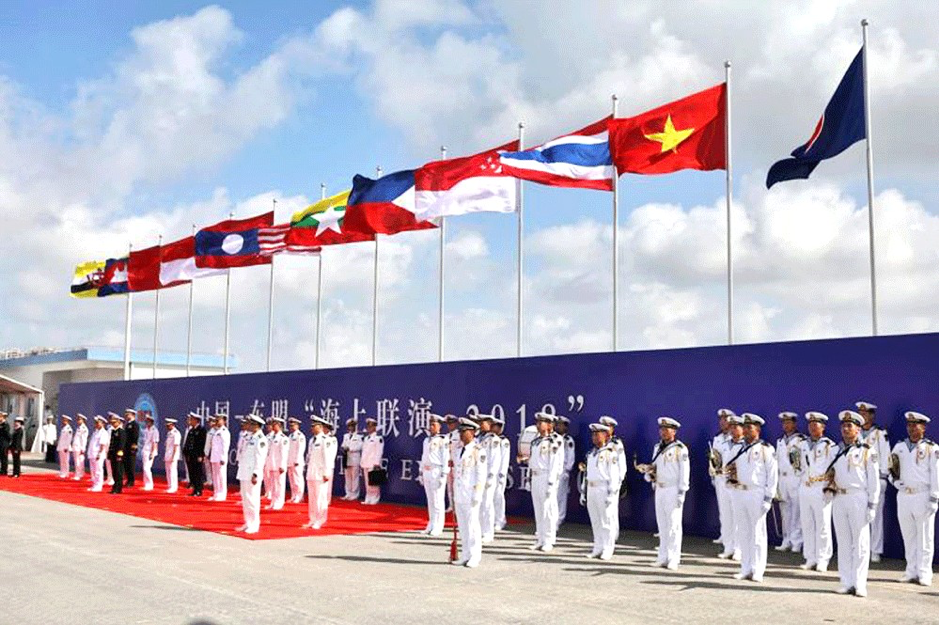
We have accelerated Code of Conduct (COC) consultations to jointly explore the formulation of regional rules at sea. We also held the first joint maritime exercise, as part of our efforts to enhance defense and security cooperation. Thanks to these concerted endeavors, the strategic mutual trust between the two sides has risen to an unprecedented new height.
Third, economic and trade cooperation is growing faster. Against the backdrop of sluggish global growth and rising trade protectionism, ASEAN-China trade volume hit a record high in 2018, reaching US$587.8 billion, with a growth rate of 14.1 percent year-on-year. In the first half of 2019, landmark progress was achieved, with ASEAN overtaking the United States to become China’s second-largest trading partner.
Trade volume reached $291.85 billion in the first six months and is expected to exceed $600 billion by the end of the year. The industrial sectors in China and ASEAN, which are at difference stages of development, are increasingly complementary to each other.
Cooperation in emerging industries is accelerating as well, including in digital economy, e-commerce, smart city and 5G. The significance of economic and trade cooperation between the two sides, just like an invaluable treasure house, has been even more prominent.
Fourth, people-to-people ties are closer. Last year, there were 57 million mutual visits in total and nearly 4,000 flights per week between ASEAN and Chinese cities. China remains ASEAN’s largest source of tourists, and more and more people from ASEAN countries are working or studying in China.
Fifth, ASEAN-China engagement in the region and beyond is broader. China and ASEAN countries stand together to reject protectionism and unilateralism, speed up the negotiation of the Regional Comprehensive Economic Partnership Agreement (RCEP) and jointly uphold a rules-based multilateral trading regime.
We jointly contribute to ASEAN Community building by promoting subregional cooperation, including Lancang-Mekong cooperation and Brunei Darussalam, Indonesia, Malaysia and the Philippines-East ASEAN Growth Area (BIMP-EAGA)-China cooperation. We uphold multilateralism with East Asian characteristics and protect the common values of our region featuring openness, inclusiveness and mutual learning between civilizations.
Committed to jointly maintaining regional peace and stability, China and ASEAN have strengthened communication and dialogue on regional hot issues. ASEAN-China relations serve as anchors that release strong positive energy amid the fluid and unstable situations in the region and beyond.
Since ASEAN is high on the Belt and Road Initiative (BRI) agenda, new progress has been achieved in ASEAN countries under the initiative.
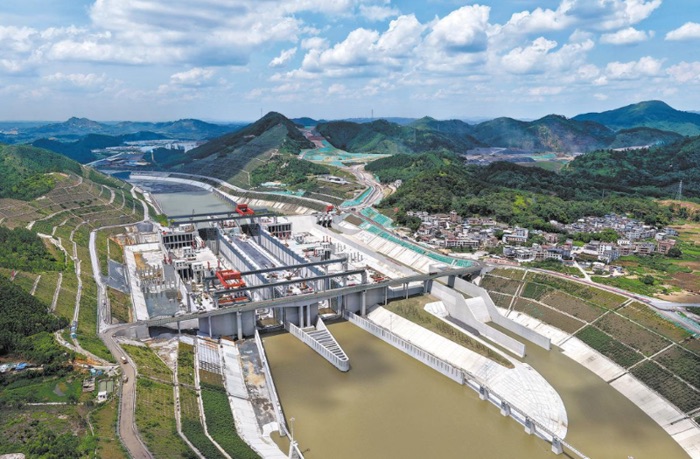
Major BRI projects have been delivered one after another. For instance, initial progress was made in the China-Singapore New International Land-Sea Trade Corridor. The Jakarta-Bandung high-speed rail, the China-Laos railway and the light rail project in Hanoi are advancing steadily. Construction has started on the expressway from Phnom Penh to Sihanoukville and on phase II of the Thailand-China railway that links Nakhon Ratchasima with Nong Khai. A Chinese-built petrochemical complex in Brunei and a Chinese-invested thermal power plant in Vietnam will be soon put into operation.
A special loan on China-ASEAN infrastructure development has provided intent financing for 55 ASEAN-proposed projects in areas including power, transportation, communications and overseas industrial parks.
The BRI and ASEAN’s development plans, especially the Master Plan on ASEAN Connectivity 2025 (MPAC 2025), are common in upholding shared principles and pursuing comprehensive connectivity of things, information and people. Apart from infrastructure connectivity, China and ASEAN are also working together to expand cooperation in policy, trade, finance and people-to-people connectivity.
ASEAN countries, however, have raised concerns about China-US trade frictions, which are feared to lean toward trade protectionism.
I believe the US-provoked trade war will eventually harm its own interests as it attempts to hurt those of others. In recent days, an increasing number of data has come to prove that the US-provoked trade frictions have boomeranged against itself with worse casualties, taking tolls on the US public and enterprises. Therefore, there is ever-rising opposition to protectionism among the right-minded people in the US and the rest of the international community.
As important participants and beneficiaries of the multilateral trading regime, China and ASEAN countries have the responsibility and obligation to jointly uphold free trade and multilateralism.
RCEP is a powerful tool against protectionism in our region. No parties would disagree that against the headwinds of protectionism and unilateralism, regional countries must unite with renewed collective strength and speed up the building of regional free-trade areas to enhance economic integration.
Parties involved are more eager to accelerate RCEP negotiations and determined to make substantive breakthroughs by the end of the year. China will continue to respect and support ASEAN centrality in RCEP negotiations and work with all parties to conclude the negotiations by the end of the year.
Despite the headwind of the US-China trade frictions and the global economic slowdown, China’s economy has been growing steadily due to innovation-driven reforms and new macroeconomic approaches.
According to data from the National Bureau of Statistics, China’s gross domestic product expanded 6.3 percent year-on-year in the first half of 2019. This number indicates stable and quality growth that is in line with the government’s annual target of 6 to 6.5 percent set for 2019.
We believe China’s sustained and quality growth will bring more opportunities to ASEAN and ASEAN-China economic cooperation.
Source: The Jakarta Post
Share:


<p>Time: November 2025<br /> By: WTO and International Trade Group, Legal Department – VCCI</p>
