

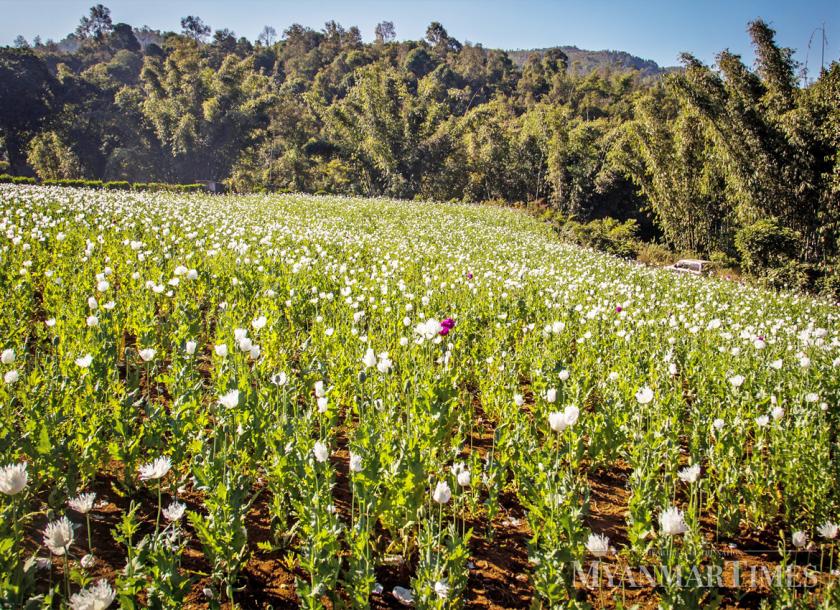
Myanmar will develop and harvest coffee as an alternative crop to substitute opium poppy cultivation.
Last week, the United Nations Office on Drugs and Crime (UNODC) and French coffee company Malongo together launched a high-quality coffee, Shan Mountain Coffee from Myanmar, in France.
On March 22, Shan Mountain Coffee was introduced in the French Parliament and launched in Malongo stores in Paris and Nice.
Produced in Shan State, Shan Mountain Coffee is being cultivated as a substitute to opium under the UNODC’s Alternative Development Programme.
Shan Mountain Coffee is grown by a UNODC supported Green Gold Cooperative formed by almost 1,000 farmers in Shan State who used to cultivate opium poppy. The partnership between Malongo, the Green Gold Cooperative and UNODC aims also to bring peace, prosperity and environmental sustainability to Shan State, which produces 90 percent of all the opium cultivated in Myanmar.
Myanmar is the second largest opium exporter after Afghanistan, according to the UNODC.
Under its programme, the UNODC is carrying out a five year pilot project for Shan Mountain Coffee producers. It will provide all input including technical assistance.
Importantly, the project will help farmers to independently cultivate, refine and commercialise high quality coffee that can be exported internationally.
‘’Shan Mountain Coffee is now set to retail in France and encourage others in Myanmar to switch from opium to growing alternatives crops.’’ said Troels Vester, UNODC Country Manager in Myanmar.
Under the five-year partnership agreement between Green Gold and Malongo in 2017, Malongo will buy up to 600 tonnes of coffee per year from more than 1000 beneficiary farmers at US$ 8 per kilogram of green coffee beans. That’s double the market average in Myanmar, according to UNODC.
“Malongo is a private company, our involvement in such a project is not about charity or helping coffee producers, it is about business. But we want to set up another kind of business where the added value is shared between the actors of the supply chain, where producers can live with dignity from their work, where consumers are faithful and satisfied with the quality,” said Jean Pierre Blanc, Director General of Malongo Coffee Company.
Farmers cultivating illicit drug crops are usually unable to obtain sufficient income from legal activities and are among the most marginalised in society, with profits fueling protracted armed conflict in Myanmar’s peripheral regions.
Alternative development has been one of the most successful approaches to providing these farmers with more stable, sustainable livelihoods.
“We enjoy a more peaceful life now that the UNODC is working in our village and helping poor farmers to plant coffee for a sustainable income,” said Nang San Hlaing, a beneficiary farmer from Taung Nauk village in Southern Shan State.
According to the UNODC, in 2018, the land area dedicated to poppy cultivation in Myanmar declined by 12 percent to 37,300 hectares from 41,000 hectares between 2017 and 2018.
In comparison, Myanmar produces over 8000 tonnes of coffee each year, of which half is produced in Shan State.
Between 500 tonnes and 1000 tonnes of Myanmar coffee is exported annually since 2013, according to the Ministry of Commerce.
Source: The Myanmar Times
Share:
<p>Time: November 2025<br /> By: WTO and International Trade Group, Legal Department – VCCI</p>
