

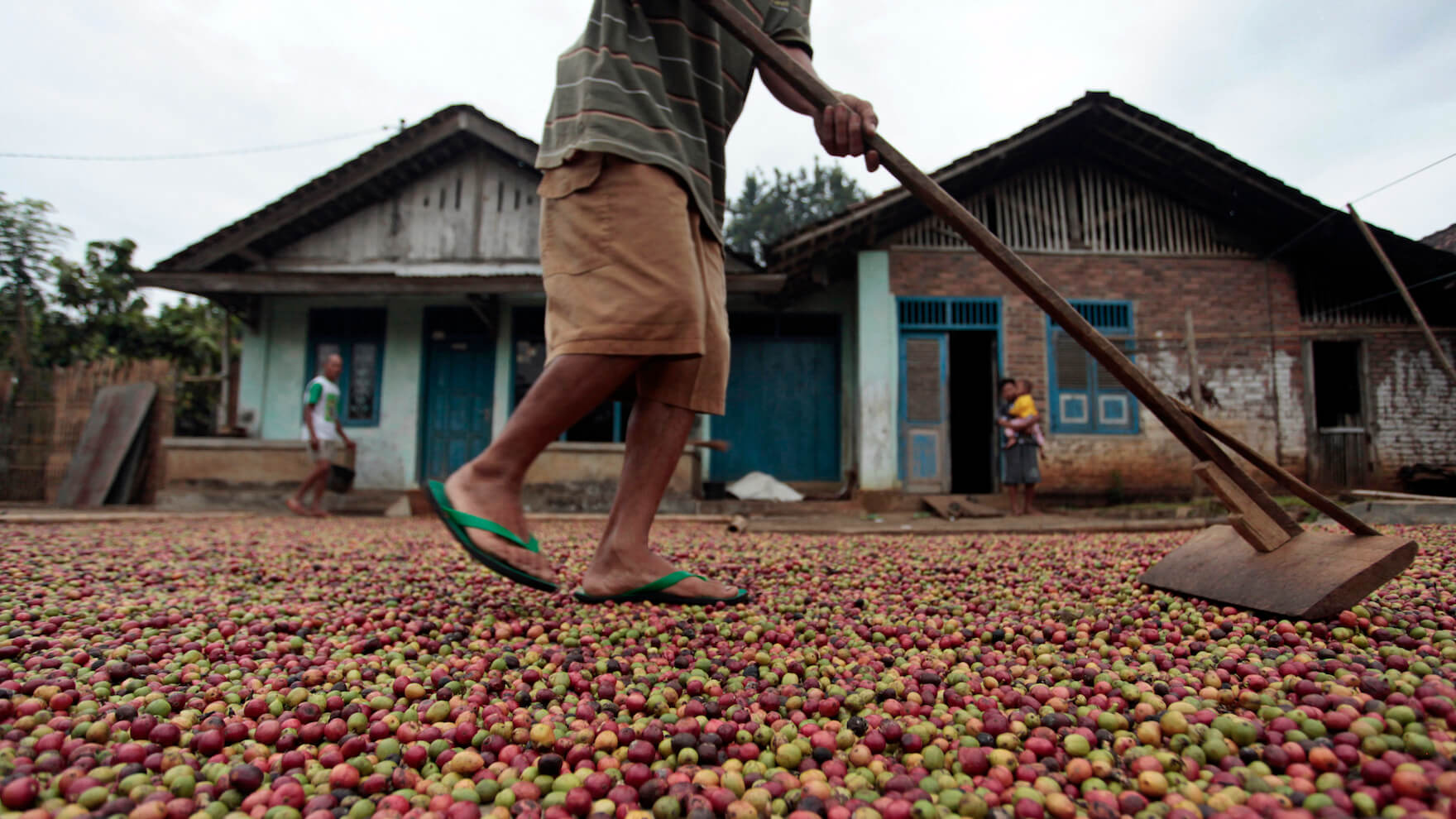
Despite dramatic economic growth across the Association of Southeast Asian Nations (ASEAN) over the past five decades, the world's seventh largest economy continues to struggle with how to feed itself.
Around 30 per cent of ASEAN's total food demands are met through imports, according to research by Australia & New Zealand Banking Group Ltd. (ANZ), even as agriculture accounts for the vast majority of livelihoods in countries like Myanmar, Cambodia and Laos.
Climate change poses another significant obstacle to food security in ASEAN's 10 member states, with severe weather, pests and disease damaging 559,724 hectares of rice land alone in the region between 2016 to 2017, according to ASEAN Food Security Information System statistics.
"The problem now is that changes in environmental conditions have put more stress on the soil, on water availability and ultimately on plant growth” says Jose Ma Luis Montesclaros, associate research fellow at Nanyang Technological University’s S. Rajaratnam School of International Studies. “We’ve had more episodes of extreme weather disruptions, and climate change could make some areas more susceptible to pests and diseases.”
New opportunities for agtech
These challenges have begun to reverse many of the gains of The Green Revolution, the post-war boom in global agricultural production.
What’s more, according to Mr. Montesclaros, “climate adaptive agricultural technologies are hardly being scaled at a level that allows for maintaining, or even increasing, yield growth in the region.” Since 2015, food insecurity is once again on the rise in Southeast Asia, according to a report by the Food and Agricultural Organisation of the United Nations.
Where there are new challenges, however, there are also new opportunities. And a new generation of agricultural innovation and technology, known in industry terms as “agtech”, has brought sophisticated solutions to ASEAN, whether it’s the use of drones to survey fields for dry patches or the application of analytical software to increase yields.
Weather-neutral cultivation methods like indoor hydroponic farms are also growing in popularity, says Mr. Montesclaros, affording consumers high-value products like fruits and vegetables otherwise not native to the region.
According to Michael Whitehead, director of agribusiness research for ANZ, the application of agtech in ASEAN has the potential to add up to US$65 billion dollars to the bloc's economy while also increasing food production volumes by up to 25 per cent by 2025.
"It makes such a huge difference to the food security of so many of these countries when they can produce more locally without being reliant on the same level of imports they are now," says Mr. Whitehead. "If anything, the $65 billion is important, but it's the food volumes which are even more important."
Big data for small farmers
Agtech promises to revolutionise agriculture for ASEAN, from the small farmers of rural Indonesia and Vietnam to urban consumers in Bangkok and Singapore. The Asian Development Bank (ADB) has identified agriculture as an area of great "potential" for more diverse economic growth in ASEAN, according to Ramesh Subramaniam, director general of the bank's Southeast Asia Department. While crops like rice, palm oil and cassava continue to dominate the industry, technology can help the region's farmers to produce better and more diverse products.
"Clearly countries want to diversify their economies and within agriculture, they want to produce more value-adding crops and more value-adding products," says Mr. Subramaniam. "They want to go to the higher segments of the value chain. Here, we are finding technology has been very useful."
Many of the ADB's projects have focused on helping small farmers, who dominate many parts of Southeast Asia, with new tech. Mr. Subramaniam says relatively simple agtech solutions like pest censors and drip irrigation facilities can be of a huge benefit to farmers and collectives. As a secondary bonus, small producers are more likely to be approved for bank or microcredit loans if they show that they are adopting new agricultural methods.
Jiangfeng Zhang, director of environment, natural resources and agriculture for ADB says the bank has also invested in real-time advisory services that farmers can access through their mobile phones: "Through these kinds of services, farmers will be quickly able to get advice on when is the right time to plant the land and a better idea of how much water or fertiliser to use."
From farm to table
A growing middle class across ASEAN will also impact the region's agriculture industry, with the bloc expected to follow in the footsteps of China, whose "agri-consumption" skyrocketed 170 per cent between 1996 and 2016. ASEAN consumers are increasingly seeking a more diverse diet of better quality and safer products.
"It’s utilising blockchain in everything from transport to packaging"
Meeting these demands will translate into huge opportunities for agtech, says Mr. Whitehead, and particularly in the logistics of getting products from the farm to the table—whether by improving cold storage transportation, packaging facilities, geographical indication tagging or tech that can help to move goods more swiftly across borders and through ports.
"It's utilizing blockchain in everything from transport to packaging, so everyone can be assured that the product they are buying or they are processing is exactly the same one that they are being told [it is]—it’s come right from the source, from the farmer themselves," says Mr. Whitehead. "Technology will help that, as it assures people they are getting the safe product they sought."
Source: The Australian
Share:

<p>Time: November 2025<br /> By: WTO and International Trade Group, Legal Department – VCCI</p>
