

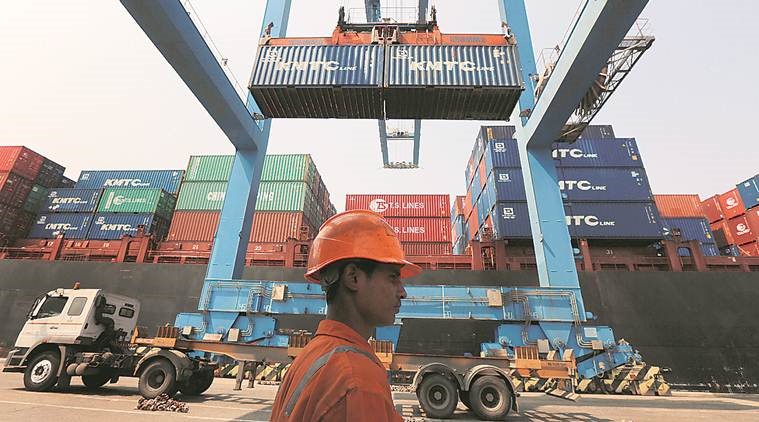
Involving the most dynamic economies in Asia, RCEP promises to transform the region into an integrated market. For India, the megagrouping is in sync with its well-established Look East Policy, now upgraded to Act East Policy.
The Regional Comprehensive Economic Partnership (RCEP) is an ASEAN-centered proposal for a regional free trade area. It includes the ten ASEAN member states and those countries which have existing FTAs with ASEAN — Australia, China, India, Japan, Republic of Korea and New Zealand. The negotiations are comprehensive, covering trade in goods and services; competition policy and investment; economic and technical cooperation; intellectual property and dispute settlement, among other issues.
Involving the most dynamic economies in Asia, RCEP promises to transform the region into an integrated market. For India, the megagrouping is in sync with its well-established Look East Policy, now upgraded to Act East Policy.
The pact provides India an opportunity for closer integration into dynamic and thriving global and regional value chains, where its current presence is low. However, there are several considerations that India needs to keep in mind while undertaking the ongoing negotiations. To begin with, India has a substantial trade deficit with China, which has been recognised by both countries as unsustainable. China’s trade surplus with India has increased from $36 billion in 2013-14 to $63 billion in 2017-18. Its exports to India are almost six times India’s exports to China at $13.4 billion. While India ranks 7th among China’s top export destinations, it ranks a low 27th among China’s sources of imports.
For Indian industry, two matters regarding the Chinese economic model are of concern. First, different forms of pervasive production subsidies have been highlighted in studies by the US and EU as also evident in countervailing duties imposed on Chinese products by the US, India, EU and Australia. The other is the large presence of state-owned enterprises (SOEs) in the Chinese economy.
With lower tariffs arising from RCEP, there is the risk of India’s trade deficit with China being further exacerbated. CII studied this aspect comprehensively in a recent report ‘RCEP: A possible approach considering China’s already large presence in the Indian market’ prepared through consultations with industry stakeholders. This focuses upon both the offensive and defensive concerns of Indian industry and suggests a roadmap for India to best leverage the RCEP. The main issues to be addressed while considering concessions under RCEP to China include the competitiveness of Indian products and economies of scale.
India has already entered into free trade agreements (FTAs) with ASEAN, Japan and Korea and is negotiating FTAs separately with Australia and New Zealand. The closest preferential trading arrangement India has with China is the limited Asia Preferential Trading Agreement (APTA).
Even without a trade agreement, the share of Chinese products in India’s imports has been steadily rising from 11 per cent in 2013-14 to over 16 per cent in 2017-18. With excess capacity in Chinese manufacturing, liberal concessions to China could handicap India’s industrial growth.
Looking at all manufactured imports, including mineral fuels, chemicals, plastics, rubber, leather, textiles, apparel, iron and steel, non-ferrous metals, capital goods etc, over a period of five years, CII recommends that products where China’s share is dominant or monopolistic should not be included for tariff reductions under RCEP. Products on which anti-dumping duties are levied are also recommended for exclusion.
Second, Indian industry is also conscious of the huge opportunities in the Chinese market. By using the revealed comparative advantage (RCA) method, a list of products has been identified wherein India can seek tariff concessions from China. These include marine products, chemicals, pharmaceuticals, textile and apparel, rubber, iron and steel and nonferrous metals, plastics, and machinery, among others. It would be vital to ensure that non-tariff barriers affecting exports are also addressed, particularly for pharmaceuticals.
Three, our study indicates that India will benefit from deferred tariff concessions, which would be implementable over a longer time horizon, perhaps after 2025. This would give our manufacturing sector time to adjust and to build up competencies to leverage RCEP.
Four, a new national industrial policy that fully takes into account the RCEP challenges is required to promote a robust industrial and export-friendly infrastructure. It would integrate industry and trade and aim at lowering transaction costs and enhancing competitiveness. Indian industry should also attempt to better understand the East Asian business culture and suitably orient its business strategies. These actions are in any case necessary, irrespective of India’s membership of the RCEP. However, RCEP lends this strategy greater urgency.
For Indian industry, RCEP as a mega trade agreement for the region is an avenue for huge new opportunities that must be leveraged. In the ongoing dialogue, India must make a persuasive case since the bilateral trade deficit we have with China is of an exceptional kind. For RCEP members, giving India adequate time to enhance its trade capacity and competitiveness will mean a larger and better market for their products after the adjustment period is completed. With this provision, RCEP can fulfill the larger objective of being a potent instrument for growth and development of the Asian region.
Source: Indian Express
Share:

<p>Time: November 2025<br /> By: WTO and International Trade Group, Legal Department – VCCI</p>
