

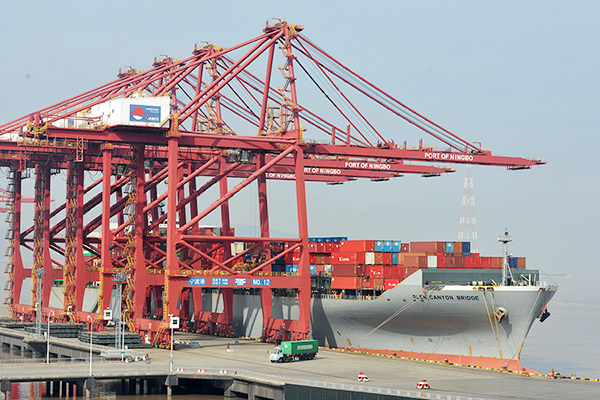
Each time that ASEAN-EU ties appear to be on an upward curve, some mishap occurs. In the past year, due to major geopolitical shifts regionally and globally, particularly over transatlantic ties, the EU has paid more attention to ASEAN, seeking to expand ties beyond trade and investment to include security and strategic matters. Likewise, scenting the US backsliding from multilateral forums, ASEAN is looking toward the EU as the new stabilising force for the region’s economic progress, peace and prosperity. It is a tall order, as the EU is searching for the right approach to win hearts and minds in the world’s second-most successful regional grouping.
Official publicity often labels the two groups as “natural partners”, which is a bit misleading. In fact, ASEAN-EU ties are problematic and best characterised as a “hate-hate”, rather than a “love-hate”, relationship. One non-EU Western diplomat even described the EU as “tone deaf”.
Had it not been for US President Donald Trump’s unpredictability and condescending view of Europe, not to mention the recent drumbeat of a trade war, such a dramatic improvement in ASEAN-EU bonhomie would have been impossible.
How else could one explain that, after 40 years of friendship, given all the generous assistance and capacity-building, the EU is still on the fringes without being asked to be a strategic partner? It is a persistent, frequently asked question that needs to be answered. This time the answer is a bit more interesting.
These days Brussels is in a hurry to make sure that the EU embarks on the broad strategic game in the Indo-Pacific configuration. In the past, the EU focused only on China, Japan and India as the major Asian powers. Its efforts to strengthen ties and work closely with China and Japan are facing difficulties, as the No.2 and No.3 are no longer on as amicable terms as before. Brussels realises that better ties with them would facilitate overall engagement with ASEAN, which remains elusive. Indeed, the free trade deal last July between Japan and the EU, the world’s largest free-trade bloc, put a positive spin on and sense of urgency in ASEAN’s attitude toward the EU.
Now, the EU and ASEAN are discussing whether the free-trade agreement between the two should begin again, picking up where the region-to-region negotiations left off after they were launched in 2007. After two years of hard work, they agreed to pause them in 2009 while Brussels sought bilateral transactions. Singapore was the first to reach a free-trade deal with the EU in 2012 after two years of talks. The same year, the EU made a political decision to begin negotiations with Vietnam, which were completed in 2015 after 14 rounds. Talks with Thailand were launched in 2012 and continue today.
In retrospect, the EU could have been ASEAN’s eighth strategic partner after New Zealand was admitted two years ago. But their inept policymakers had no clue about the group’s thinking and procedures. They thought the EU could link strategic-partner status with its membership in the leaders-only East Asia Summit (EAS), but it was non-starter. In this case, the EU has no leverage with ASEAN.
At this juncture, granted the power shifts, both sides are doing a wary tango. Now the EU agenda for ASEAN is expanding, with a stronger strategic pathway. To be an effective game-changer in the region, the EU also wants to join the ASEAN Defence Ministerial Meeting Plus like other dialogue partners. If possible, it would like to have a one-plus-one with ASEAN defence ministers to discuss things the Europeans could do that other dialogue partners such as China, Japan and the US cannot.
One more area that the EU would like to cooperate on is connectivity, the buzzword of the day. Besides the Master Plan of ASEAN connectivity, there are plans from China, Japan, South Korea and other countries. The EU senses that it is missing out on the big picture. With China’s Belt and Road initiative looming large in the background, it is still too early to say what sort of initiatives and action plans the EU and ASEAN could pursue in this regard.
Since 2014, EU-ASEAN ties have made tangible progress due to [the EU’s] more pragmatic diplomacy toward Southeast Asia ...
China’s rise and its network of connectivity really worry EU bureaucrats, who feel they must seriously engage ASEAN in ways that illustrate a new attitude and approach. In 2005, former Singaporean prime minister Goh Chok Tong described India and China as wings that can lift the ASEAN fuselage to economic growth. A few ASEAN diplomats quipped that the EU could be the much-needed fuel for a long-haul flight. Since 2014, EU-ASEAN ties have made tangible progress due to EU Foreign Minister Federica Mogherini’s more pragmatic diplomacy toward Southeast Asia and strong support from Thailand, the current coordinator.
When EU President Donald Tusk attended the EAS in Manila last November, it changed the dynamics of their relations in positive ways. The presence of such heavyweights, albeit for a symbolic objective, spoke volumes about their future ties as never before. Now the dialogue between ASEAN and EU policymakers flows much better. Gone are the European arrogance and condescending view of ASEAN as being all talk and no action. Last August, for the first time, both sides issued a joint statement on the implementation of the Paris agreement on climate change, much to the chagrin of the US, which decided to pull out. In the future, there will be more joint efforts on non-traditional threats.
As ASEAN-EU ties have grown, new irritants such as the Rakhine State crisis in Myanmar and Cambodia’s domestic politics have come to the forefront of their relations. The recent decision by the EU Council of Foreign Ministers to carefully monitor the situations in both countries could affect those ties, and any drastic actions by the EU could eventually have serious repercussions.
For two decades, Myanmar’s political crises were a black eye on ASEAN-EU cooperation. The EU approach of punishing ASEAN for not challenging Myanmar, a member of the group since 1997, worsened relations. Economic and political reforms since 2011 in Myanmar incrementally paved the way for a normalisation of ASEAN-EU ties. The EU’s more assertive attitude toward Cambodia is unprecedented and could potentially be disruptive.
The EU learned a valuable lesson from its experience in engaging with individual ASEAN members, namely that the stringent value approach has its both pros and cons. The EU has already stopped electoral assistance and could follow up with targeted sanctions against Myanmar and Cambodia, which could impact its overall relationship with ASEAN. For the time being, Brussels must adopt a patient approach with Nay Pyi Taw and Phnom Penh.
Source: Bangkok Post
Share:
<p>Time: November 2025<br /> By: WTO and International Trade Group, Legal Department – VCCI</p>
