

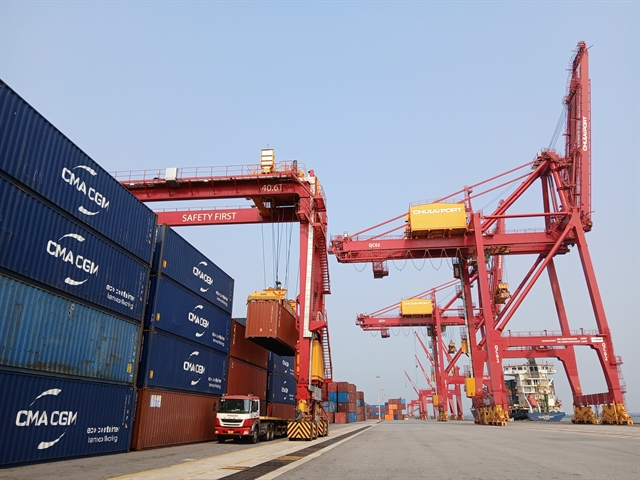
The moves headline 29 agreements inked at the 22nd Joint Council for Bilateral Cooperation, aimed at boosting digital trade, AI rules, and cross-border payments
Singapore and China have launched negotiations to upgrade their landmark free trade pact and unveiled new renminbi (RMB) financing and payment initiatives to boost cross-border trade, digital commerce, and tourism.
Announced following the 22nd Joint Council for Bilateral Cooperation (JCBC) on Monday (Nov 23), the China-Singapore Free Trade Agreement (CSFTA) 4.0 upgrade and expanded RMB channels headline a bumper crop of 29 bilateral deals — the highest tally in recent years.
While all 29 agreements are important, the CSFTA 4.0 upgrade, deeper financial linkages, and increased people-to-people exchanges will have a particularly significant impact, Deputy Prime Minister Gan Kim Yong said at a media wrap-up.
He was speaking as the head of a panel of Singapore representatives following the JCBC meeting, which he co-chaired with Chinese vice-premier Ding Xuexing on Monday.
Joining DPM Gan on the panel were Minister for Digital Development and Information Josephine Teo, Minister for Education, Desmond Lee, Minister for National Development, Chee Hong Tat, Senior Minister of State for Energy, Trade and Industry Low Yen Ling and Senior Minister of State for Sustainability and Environment Dr Janil Puthucheary.
Unlocking digital trade and AI cooperation under CSFTA 4.0
Speaking on the CSFTA upgrade, DPM Gan described it as a "major undertaking" — marking the fourth time both countries are upgrading the pact since it took effect.
He explained that negotiations will take time, but once completed, the upgraded pact will facilitate trade between Singapore and China by incorporating a dedicated digital economy component covering cross-border data flows, digital payment systems, government procurement, and artificial intelligence (AI) governance frameworks.
"This is important as advances in technology, including AI, transform how businesses operate and create new opportunities in the digital economy," he explained. "This is an important driver for growth for both our countries."
He added that both sides hope to work together on AI applications and safety standards to ensure the technology is developed and deployed responsibly.
SMS Low also stated that the CSFTA 4.0 upgrade will help "unlock new market opportunities, facilitate businesses, and ensure that our economic partnership remains responsive to evolving business needs".
"Singapore looks forward to building on this momentum with China to deepen our trade and innovation co-operation," she said.
Expanding RMB and cross-border payment channels
Beyond the trade pact, both sides rolled out new financial measures to make it easier for businesses and travellers to transact across borders.
Minister Chee announced that MAS will introduce a new RMB corporate facility to give businesses longer-tenure RMB funding for trade financing, working capital, and capital expenditure, while exploring the use of China Government Bonds as collateral.
Meanwhile, DBS Bank has commenced RMB clearing services in Singapore to support regional trade and investment flows, and both countries are in discussions to link their fast payment systems for small-value transfers — a move aimed at boosting tourism and everyday commerce.
Beyond trade and finance
More than just an economic benefit, the JCBC with China also deepens collaboration between peoples.
"We have cooperation in terms of cultural exchanges," DPM Gan said. "We also have cooperation in terms of education - partnership in many areas, sports too."
This, he explained, is why the bilateral partnership is termed: the "All-Round High-Quality Future-Oriented Partnership". The term reflects the nature of Singapore's partnership with China, as it covers a wide range of cooperations, he said.
"This also signals the co-operation and partnership between Singapore and China is multifaceted. It's not just economics, but in many areas as well."
Source: Asiaone
Share:


<p style="text-align:justify">By: Multilateral Trade Policy Department</p>
