

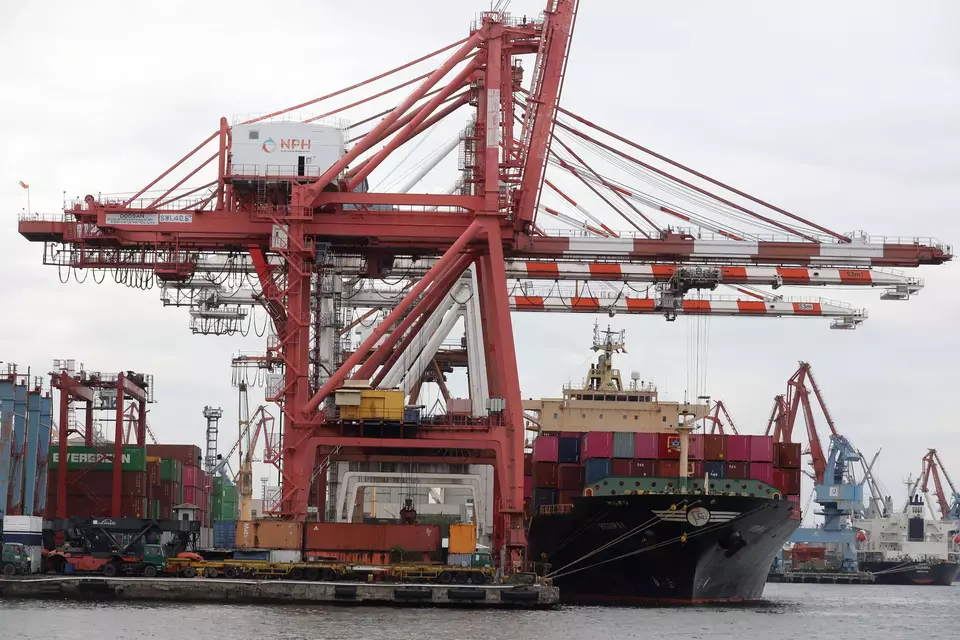
For Vietnam, execution means turning export strength into greater domestic value added before tariff barriers or price volatility undermine growth, said Shan Saeed, global chief economist at Malaysian proptech group IQI Juwai.
Execution, rather than ambition, will determine economic growth among ASEAN’s five standout economies in 2027, with Vietnam expected to lead the region in growth, according to Shan Saeed, global chief economist at Malaysian proptech group IQI Juwai.
In his real GDP growth scenarios for the five economies, Saeed projected Vietnam to grow by 8.2–9.5% in 2027, followed by Malaysia at 5.3–6.5%, Indonesia at 5.3–6.1%, Thailand at 2.7–3.9% and the Philippines at 2.5–3.7%. He stressed that these ranges were indicative scenarios, not official forecasts.
Vietnam is expanding rapidly. The economy grew 9.01% in the first nine months of 2026, with third-quarter growth reaching 9.95%. Disbursed foreign direct investment hit 21.07 billion USD, the highest nine-month figure in five years, according to Vietnam’s National Statistics Office. However, inflation reached 5.08% in September, while fourth-quarter growth would need to exceed 10% to meet the full-year target.
For Vietnam, execution means turning export strength into greater domestic value added before tariff barriers or price volatility undermine growth, Saeed said.
Malaysia, meanwhile, is seeking to upgrade its growth model. Its economy expanded 6.0% in the second quarter of 2026, the strongest second-quarter performance outside the pandemic period since 2014. Exports rose 17.0%, while inflation stood at 1.9%, according to the Department of Statistics Malaysia. The challenge is to translate industrial momentum into higher labour productivity and wages.
Indonesia is scaling up growth, with its economy expanding 5.29% in the second quarter and 5.45% in the first half of 2026. Household consumption accounted for 53.3% of GDP, according to Statistics Indonesia. However, its large economic scale alone is insufficient to secure investor confidence. An MSCI global index provider’s planned reclassification decision, expected in late June 2027, will make market governance a crucial test for the country.
Thailand faces the task of reshaping its growth model. Its economy slowed to 1.9% in the second quarter of 2026, while public investment fell 1.6%, according to the National Economic and Social Development Council (NESDC).
Against the council’s 2026 growth projection of 2.0–2.5%, Saeed said Thailand would need a genuine investment recovery in 2027 rather than a temporary cyclical rebound.
The Philippines is working to rebuild momentum. Its economy grew 2.3% in the second quarter of 2026, the weakest performance since 2009 outside the COVID-19 pandemic, while fixed investment fell 13.7%, according to the Philippine Statistics Authority. The government has lowered its 2026 growth target to 3.5–4.5%. Effective infrastructure delivery will be critical to recovery in 2027.
Saeed said the potential for growth in ASEAN’s five standout economies was quantifiable, but results would depend on sustained effort. Only effective execution, he argued, could turn projected growth into lasting value./.
Source: Vietnamplus
Share:

<p>Time: November 2025<br /> By: WTO and International Trade Group, Legal Department – VCCI</p>
