

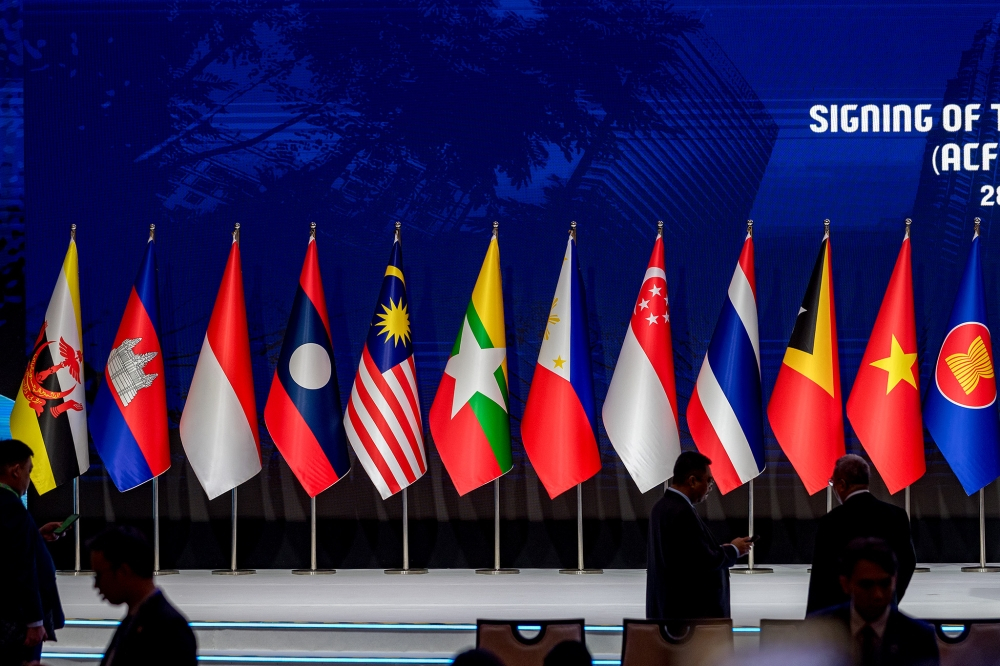
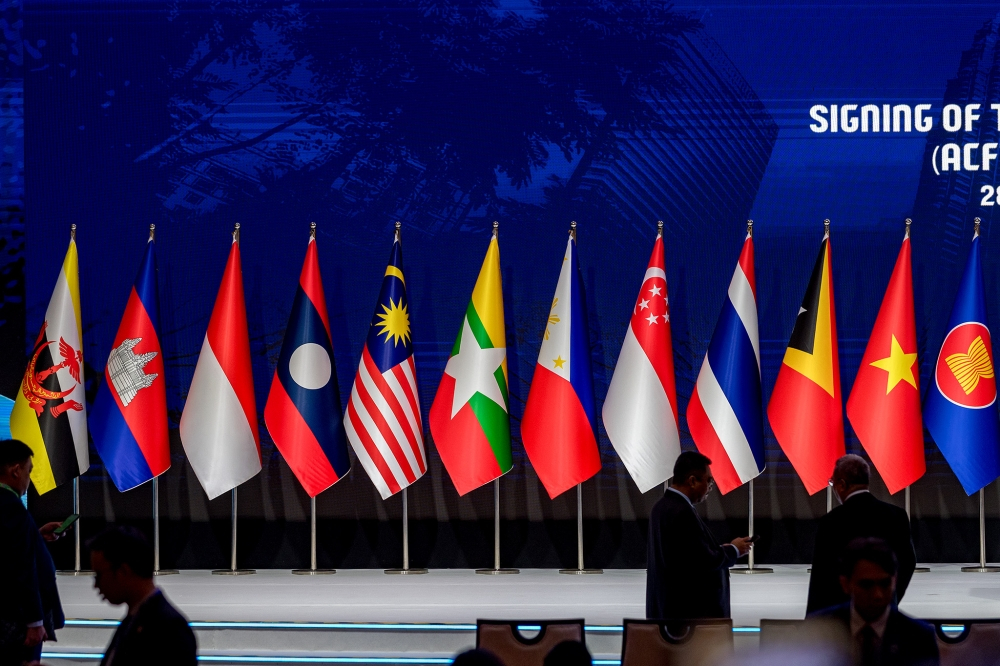
For decades, Asia’s macroeconomic fortunes were viewed through two external lenses: Western demand drove its factories, while the Federal Reserve and the dollar shaped its financial conditions. Both remain important. But this perspective increasingly misses how much the region itself now matters. Across ASEAN+3 (ASEAN, plus China, Japan, and Korea), changing production and demand structures are giving regional developments greater weight in economic fluctuations—and increasingly in financial conditions.
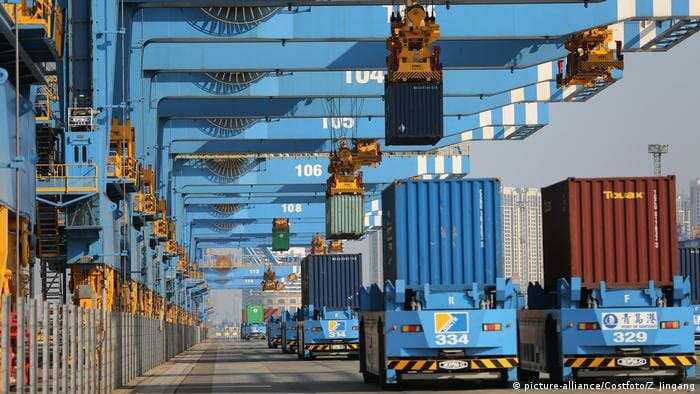
The transformation begins in the real economy. Production networks have become denser, with regional economies increasingly integrated through investment and trade in components and capital goods. Rising incomes and expanding domestic markets have also made Asia a larger consumer of what it produces. Regional integration now connects suppliers to regional customers as well as to factories serving distant markets.
The demand shift is striking. Two decades ago, nearly a third of value-added exports from ASEAN+3 were destined for the US. Today, that share is down to a fifth. Meanwhile, China and ASEAN each now absorb a tenth of the region’s production, up markedly from about 6 percent each two decades ago.
This changes how shocks travel. A manufacturer expanding capacity to meet Chinese demand generates orders for machinery and components elsewhere in Asia; the resulting income supports further spending. A slowdown reverses these effects. Cross-border investment embeds firms in shared production networks, making these connections more durable. The region increasingly generates and transmits its own demand impulses.
AMRO’s ASEAN+3 Regional Economic Outlook 2026 finds that, excluding crisis years, regional factors explained about as much growth variation as global factors during 2016–2024. This does not establish a steady decline in global influence, but it shows why global conditions alone cannot explain Asia’s business cycles. Acute crises can still overwhelm regional differences.
A related pattern is emerging in finance. AMRO’s ASEAN+3 Financial Stability Report 2026 finds that financial conditions in regional economies—the relative ease or tightness of financing, measured using a composite index—have become less synchronized with the global financial cycle outside major stress episodes. Regional and economy-specific influences have gained prominence. A plausible interpretation is that financial conditions increasingly reflect the region’s changing real economy, although the findings do not establish a direct causal relationship.
Stronger regional demand supports firms’ earnings, valuations, and creditworthiness, while increasing financing needs. It also shapes inflation and monetary policy expectations, influencing yields and exchange rates. Financial conditions, in turn, affect spending and investment, reinforcing the link between regional business and financial cycles.
China’s growing influence on regional equity and currency markets is consistent with this interpretation. Investors increasingly need to assess Chinese demand to value businesses across Asia. This channel can operate even when investors themselves are based outside the region: the source of funding and the economic forces shaping asset values need not share the same geography.
Changes in financing structures reinforce this process. A rising share of direct investment and declining reliance on short-term external debt point to a shift toward less market-sensitive and longer-maturity financing, reducing exposure to global repricing and refinancing pressures. Inflation-targeting monetary policy frameworks and more flexible exchange rates allow economy-specific policy responses to modify the pass‑through of common external shocks, while macro‑financial buffers shape economies’ capacity to absorb them.
These developments suggest that finance is becoming more responsive to Asia’s own economic conditions. They do not imply a single Asian cycle or immunity from global stress. Reserves and bank capital help absorb shocks, but buffers remain uneven. Most portfolio investors still come from outside the region. Their sensitivity to dollar returns and exchange-rate risk maintains the links between local-currency bonds with US Treasuries. Stronger regional links also create shared vulnerabilities: a regional downturn can weaken both export markets and financing conditions at the same time.
The first policy implication is greater scope—and greater need—to calibrate monetary policy to domestic and regional conditions. Central banks should assess how regional developments transmit to inflation, demand, and financing, rather than infer the appropriate response from the Fed’s direction alone. Preserving this room for maneuver requires credible policy frameworks and adequate buffers, which are also essential for absorbing major global shocks when they arise.
Second, surveillance should trace the feedback between real and financial exposures. A shock to a regional production hub could weaken suppliers’ earnings and creditworthiness, prompt lenders to retrench, and deepen the initial slowdown. Monitoring trade links separately from bank and market exposures would miss this interaction. Regional dialogue and stress testing should examine these connections without presuming that every economy needs the same policy response.
Third, financial infrastructure should adapt to the region’s economic structure. Greater use of local currencies in trade and deeper hedging markets could reduce currency mismatches. Interoperable payments and tokenized platforms offer an additional route to financial integration, potentially lowering transaction costs and facilitating greater intraregional investment. These initiatives could strengthen the alignment between regional economic activity and its financing.
This agenda remains compatible with the continuing leading role of the dollar. Its liquidity and deep markets will remain essential, especially during stress. Regional arrangements should add options alongside global channels, supported by usable liquidity backstops and effective regional cooperation.
ASEAN+3’s changing cycles call for a wider field of vision. Policymakers must watch Washington, but also understand how decisions and disturbances within the region travel across increasingly connected economies. The opportunity is to turn stronger regional ties into greater policy room and resilience. Doing so requires institutions and cooperation that keep pace with those ties.
Source: Armo Asia
Share:
<p>Time: November 2025<br /> By: WTO and International Trade Group, Legal Department – VCCI</p>
